Politics & Government
5 Past Lynchings In Anne Arundel County Are Topic Of Upcoming Community Meeting
An upcoming meeting will discuss the five lynchings from Anne Arundel County's past. Officials hope to address this history.


ANNE ARUNDEL COUNTY, MD — This weekend, a commission will discuss the five past lynchings in Anne Arundel County's history.
The Maryland Lynching Truth and Reconciliation Commission is hosting the meeting on the racially motivated killings.
A 2019 law established that group and ordered it to research lynchings, hold public hearings in communities where they happened and make suggestions for addressing this history.
Find out what's happening in Annapolisfor free with the latest updates from Patch.
All are welcome to attend the meetings. The hearings may feature the descendants of victims, witnesses and perpetrators.
County Executive Steuart Pittman and Annapolis Mayor Gavin Buckley will speak at the Anne Arundel County meeting, Meanwhile, in Annapolis reported. Journalist Rick Hutzell said County Councilwoman Lisa Rodvien and Annapolis Alderwoman Ellie Tierney will read resolutions apologizing for the past lynchings.
Find out what's happening in Annapolisfor free with the latest updates from Patch.
The Annapolis Police Department will be there, Hutzell said. The story did not mention whether the Anne Arundel County Police Department or the Anne Arundel County Sheriff's Office will attend.
The Victims
The hearing will focus on the lynchings of:
- John Simms
- George Briscoe
- Wright Smith
- Henry Davis
- King Johnson
The Maryland Lynching Memorial Project reported the following accounts of the lynchings.
Simms was accused of assaulting and raping a white woman. Justice Elijah C. Jackson, a half-brother of the victim, presided over the case. Simms was seized from an Annapolis jail and lynched on June 7, 1875.
Briscoe was arrested and charged with a string of robberies. He was intercepted on the way back to an Annapolis jail and killed in Jacobsville on Nov. 26, 1884.
Smith was charged with assaulting a white woman. A mob broke into the jail on Oct. 5, 1898. They repeatedly shot Smith in the Annapolis streets while he ran for his life.
Davis was also accused of assaulting a white woman. A mob overpowered jail guards on Dec. 21, 1906. Davis was then paraded through the streets, shot and hanged in Annapolis.
Johnson faced allegations of fatally shooting a white man during an argument over a pool game. Johnson was jailed in Brooklyn, where he was left unguarded. Eight men seized, beat and shot him on Dec. 23, 1911.
For more detailed accounts of the lynchings, read Hutzell's full story.
The Maryland Lynching Truth and Reconciliation Commission said it will also explore the involvement of the media as well as state, county and local governments. The group pointed to the Maryland General Assembly's failure to pass proposed anti-lynching legislation in 1898 as an example.
"It is also well documented that county sheriffs and jailers allowed mobs to take men from jail with impunity," the commission said in a press release. "County state's attorneys refused to identify and bring charges against members of lynch mobs, county coroners routinely claimed that the victims of lynching died 'at the hands of parties unknown,' and newspaper coverage of these events helped to perpetuate a culture that condoned and encouraged racial terror lynchings."
The Meeting
Here are all the details on this weekend's hearing:
When: Saturday, October 8, 2022
Time (in person and streaming): 9 am to 1 pm; with a 10-minute break
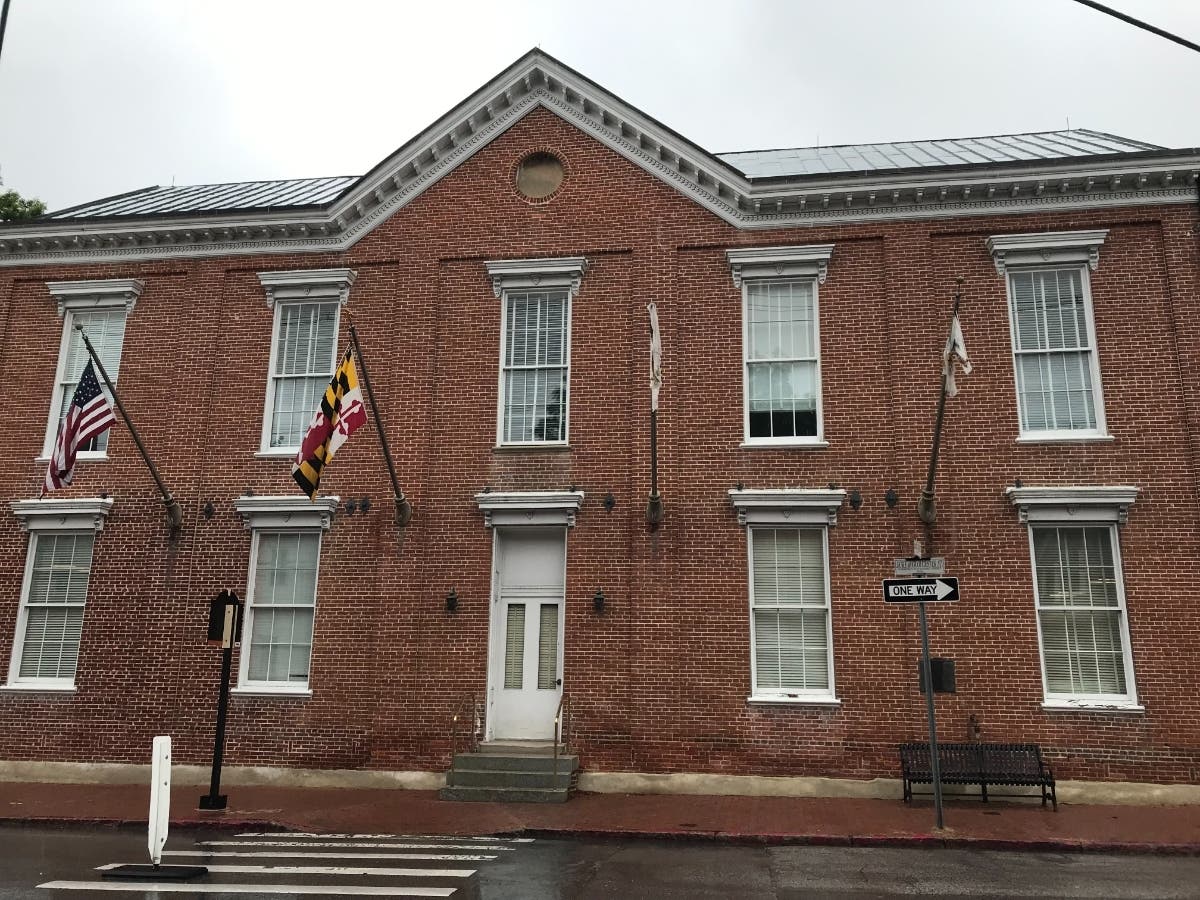
Where: City of Annapolis Council Chambers, 160 Duke of Gloucester Street, Annapolis, MD 21401. There is a side door entrance available for those with handicap/accessibility needs.
Parking near Annapolis City Hall is very limited. Visitors can park at Park Place and take the
free downtown shuttle. Get off at the stop, "City Hall." For more information on accessing
downtown Annapolis, visit www.AccessAnnapolis.com/visiting-downtown/
How You Can Attend:
IN PERSON: Pre-registration is required. We must limit the number of people who can register due to space capacity. Please let us know if you must cancel so that we may honor those on the waiting list. You will pass through security. At this time there are no mask requirements but you will be asked to adhere to any other safety protocols that are required.
STREAMING: A link to stream the hearing will be posted on MLTRC’s website one day
before the hearing.
How You Can Share Your Story:
Members of the public are encouraged to submit written testimony concerning how the lynching
of the victims (or other unidentified County victims) has impacted their lives and their
communities or making recommendations to address the legacy of lynching in Maryland and
promote racial healing. Submit your testimony to mltrc@maryland.gov or bring your written
testimony if you attend in-person and it will be collected.
The Maryland Lynching Truth and Reconciliation Commission can be reached at
https://msa.maryland.gov/lynching-truth-reconciliation/ or via email at mltrc@maryland.gov.
Connecting The Dots Anne Arundel County can be reached at
https://mdlynchingmemorial.wixsite.com/aaco or via email at ctdaaco@gmail.com.
Get more local news delivered straight to your inbox. Sign up for free Patch newsletters and alerts.