Seasonal & Holidays
Did You Turn Your Clocks Ahead? Daylight Saving Time 2018 Begins
We lost an hour of sleep with the start of Daylight Saving Time 2018, but it also means it stays light later in the evening.


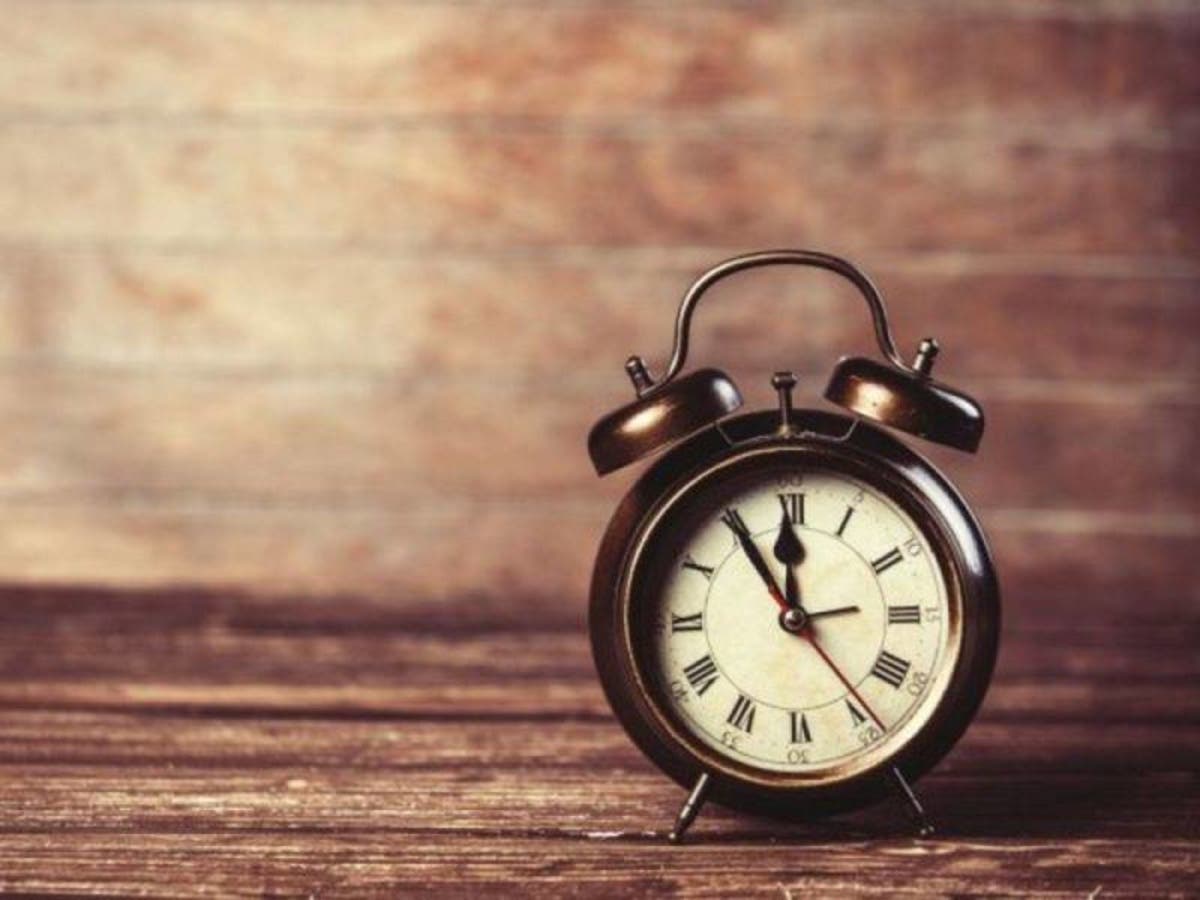
Last night we lost an hour of sleep as we "sprung ahead" into Daylight Saving Time and longer days. Daylight Saving Time began at 2 a.m. Sunday, March 11, which means you should have turned your old-school clocks ahead one hour before you went to bed Saturday night, or you're an hour early for everything this morning.
Of course, the change is automatic for most smartphones, computers, tablets and other digital devices. Emergency officials urge us to make it a habit to test and replace our smoke alarms and carbon monoxide detectors when we mark the time change, too. Push the test button on the smoke and carbon monoxide alarm(s) in your home. If they do not work, replace the battery — unless it is a sealed 10-year lithium battery, in which case you will have to get a new alarm.
Daylight Saving Time — called daylight "savings" time by some — is the practice of setting the clocks forward one hour from standard time during the summer months, and back again in the fall, to make better use of natural daylight.
Find out what's happening in Annapolisfor free with the latest updates from Patch.
The time change means sunset will be at 7:09 p.m. Sunday in Baltimore, 7:11 p.m. in Washington, D.C., and 7:42 p.m. in Atlanta.
Losing an hour of sleep isn't good for drivers, since just 31.9 percent of adults in Washington, D.C. get 7 hours of sleep,” says AAA Mid-Atlantic. It will take two weeks for most of us to get used to the time change, the agency said in a news release. One Canadian researcher has linked an increase in traffic crashes to the onset of Daylight Saving Time.
Find out what's happening in Annapolisfor free with the latest updates from Patch.
Although we lose just one hour’s sleep, with 60 dim minutes in it, physicians warn that “moving our clocks in either direction changes the principal time cue – light – for setting and resetting our 24-hour natural cycle, or circadian rhythm.” That mismatched or out of sync internal clock shouldn’t be taken lightly in view of research showing that it can increase the risks of strokes, heart attacks, disturbed sleep cycles, obesity, diabetes, workplace accidents, and drowsy driving-related traffic crashes. Drowsy driving will be a major threat on area roadways Monday morning as commuters rise earlier to go to work, warns AAA.
In fact, drowsy driving is a bigger traffic safety issue than federal estimates show, according to research released last month by the AAA Foundation for Traffic Safety. It reveals what many have long suspected: Drivers who don’t get enough sleep are putting everyone on the road at risk.
“Driving drowsy is a serious risk. Sleep-deprived drivers need to know the symptoms and get plenty of sleep before hitting the road,” said John B. Townsend II, manager of public and government affairs at AAA Mid-Atlantic. “Like zombies behind the wheel, three in 10 drivers admit to driving when they could hardly keep their eyes open. Be safe. Get at least seven hours of sleep before getting behind the wheel.”
What will you do with your extra hour? Tell us in comments
Arizona, Puerto Rico, Hawaii, U.S. Virgin Islands and American Samoa do not observe daylight saving time.
The end to Daylight Saving Time means drivers should be prepared for sun glare during their morning commute, and again in the late afternoon.
AAA Tips for Drivers
- Slow down, pay attention and eliminate all distractions.
- Watch out for pedestrians when backing up in parking lots or driveways.
- Sun glare can make it difficult to see so:
- increase your following distance from the vehicle ahead of you;
- use your sun visor and invest in polarized sunglasses, as both can help reduce glare.
- Turn on your headlights to make yourself more visible during early morning and evening hours.
- Keep vehicle headlights and windows (inside and out) clean.
- Watch the high beams. Do not use high beams when other cars or pedestrians are around.
- Yield to pedestrians at crosswalks. Do not pass vehicles stopped at crosswalks.
AAA Tips for Pedestrians
- Cross at intersections or crosswalks - not in the middle of the street or between parked cars. Do not jaywalk.
- Avoid walking in traffic where there are no sidewalks or crosswalks. If you have to walk on a road that does not have sidewalks, walk facing traffic.
- Evaluate the distance and speed of oncoming traffic before you step out into the street.
- Wear bright colors or reflective clothing if you are walking near traffic at dawn, dusk and night. Carry a flashlight when walking in the dark.
- Allow extra time and distance for a vehicle to stop in inclement weather.
- While walking, pocket the cell phone and avoid listening to music at a volume.
- Do not let umbrellas or jacket hoods block your view of approaching traffic.
History of Daylight Saving Time
While Daylight Saving Time wasn't adopted in this country until the 20th century, it's hardly a new idea. Several ancient civilizations used water clocks that were adjusted differently throughout the year.
In modern times, none other than Benjamin Franklin wrote an essay in 1784, "An Economical Project," suggesting Daylight Saving Time as a way to save candles. The time shift finally happened in the U.S. in 1918 when President Woodrow Wilson signed it into law to help the war effort during World War I. Back then, it was called Fast Time. It was scrapped after the war. President Franklin D. Roosevelt brought it back in 1942 at the start of World War II. It's been observed in this country ever since, and lengthened in recent years.
Image via Shutterstock
Get more local news delivered straight to your inbox. Sign up for free Patch newsletters and alerts.