Politics & Government
George Washington's Legacy Started In Annapolis, Leader Reflects
Just after Presidents Day, an Anne Arundel leader explained the lessons that George Washington left behind. His legacy started in Annapolis.


ANNAPOLIS, MD — With Presidents Day just past and a new leader in the White House, one Anne Arundel County leader wanted to explore the lessons of George Washington. The legacy of the nation's first president started in Annapolis.
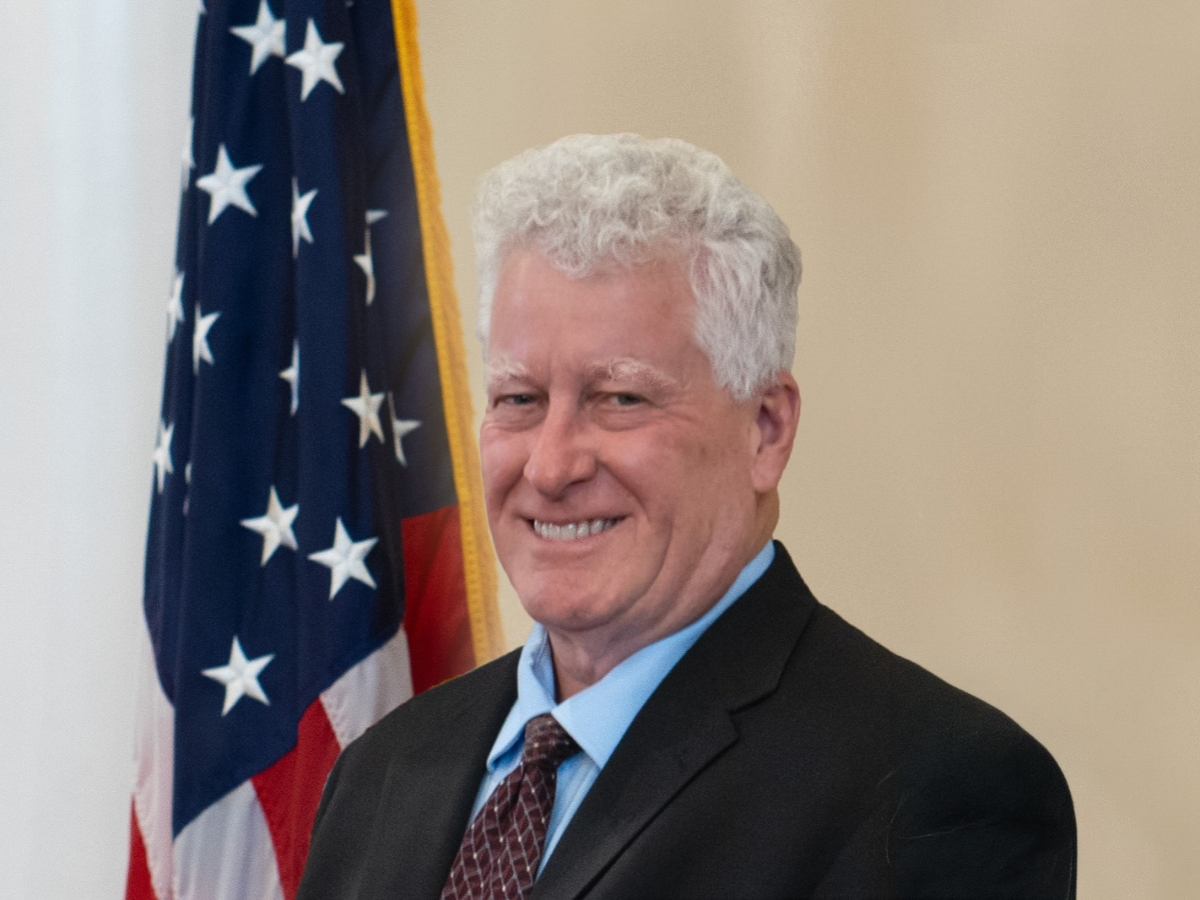
Patch recently partnered with several local organizations to bring you their latest news. This guest contribution comes from the Anne Arundel Chamber of Commerce. Here's what President and CEO Mark Kleinschmidt wrote about George Washington:
"We just celebrated President’s Day which was established to recognize the role and importance of that office. We also just concluded the impeachment trial of a President. Yikes--What a contrast!
Find out what's happening in Annapolisfor free with the latest updates from Patch.
The role of president is defined in the Constitution but [it] was further defined by the actions, attitudes and behavior of our first President, George Washington. The Presidential lessons that he taught started right here in Annapolis in 1783 when he resigned his commission as Commander of the Continental Army. The lessons continued at the Constitutional Convention at Philadelphia in 1787 and during his eight years in office as President and concluded in 1796 with his Farewell Address in New York. Let me walk you through the lessons he left for future Presidents.
The lessons [started] in the Old Senate Chambers of the Maryland State House right here in Annapolis. The Revolutionary War was over the peace treaty was finally signed so, the most respected and powerful man in our fledgling country decided it was time to resign his commission as Commander and Chief of the Army. He did this by submitting his resignation to the elected members of the Continental Congress, which was meeting in Annapolis. This simple act was reinforcing the concept of civilian authority over the military.
Find out what's happening in Annapolisfor free with the latest updates from Patch.
There was no social media in those days to capture the moment, but it has been [memorialized] with a statue of Washington (in the exact spot where he gave the speech) in the Old Senate Chambers and by the famous portrait by [John] Trumbull (which hangs in the Rotunda of the United States [Capitol]).
In his speech, Washington said: “Having now finished the work assigned me, I retire from the great theatre of action, and bidding an affectionate farewell to this [August] body, under whose orders I have so long acted, I here offer my commission, and take my leave of all the employments of public life.”
As news of his resignation spread ordinary citizens and government leaders around the world were awed by his humility and his willingness to transfer power. In fact, King George III of England said, by doing this, “he is the greatest man in the world”. Many others took note of his actions, including three future presidents who were there to witness it: Jefferson, Madison and Monroe.
Washington’s retirement did not last long. Members of the Continental Congress sought him out to chair the Constitutional Convention in 1787, where the delegates would [restructure] the government by drafting and ratifying the Constitution. It was felt that no other citizen or elected official could unify the delegates from the 13 colonies in this task.
After the Constitution was ratified, Washington was unanimously elected to be the first President of the United States and he was sworn in on April 30, 1789. At first, Washington wanted to serve only one term but to ensure that the newly established government was in place, [he] went on to serve a second term.
Historians write about the inner turmoil within his cabinet primarily between Thomas Jefferson and Alexander Hamilton. Even though there were significant differences between them, Washington knew that each man brought an important point of view to the table and he recognized they represented the views of the people scattered throughout the newly formed country.
Compromise was vital to move the country forward and Washington was able to promote cooperation and compromise even among two ideologically different Founding Fathers. This is another lesson of presidential leadership: compromise and cooperation. The current resident of the White House has taken note of this lesson and has a placed portrait of Hamilton and Jefferson hanging together in the Oval Office as a reminder of this lesson.
After completing two terms, Washington was ready to retire but and wanted to provide guidance for future Presidents, so he prepared his “Farewell Address” which was actually a public letter to the American people. Washington wanted [this] to be widely distributed and again without the power of social media, he had it published in newspapers throughout the country. Washington’s letter was significant because it signaled that he was not running for a third term which established the tradition of serving two terms. In addition, he wanted to warn future generations about the danger of political parties and foreign alliances.
Washington did not like the idea of political parties and made that clear by saying. “The common and continual mischiefs of the spirit of party are sufficient to make it the interest and duty of a wise people to discourage and restrain it.” He also warned that the United States should “be aware of the insidious wiles of foreign influence”.
He was not saying that the young nation should be isolationist, but it should “observe good faith and justice towards all nations.” He also shared his thoughts on communicating with the American people, he said, “I hold this maxim no less applicable with the public than to private affairs, that honesty is always the best policy”.
Ok let’s recap Washington’s lesson about the presidency: civilian control of the military, orderly transfer of power, have humility, seek unity, promote cooperation and compromise, beware of political parties, avoid foreign entanglements and be honest.
There is a unique President’s Day tradition that is practiced in the US Senate, Washington’s Farewell Address is read into the record as a message to the current members of the Senate.. Let’s hope that if any future Presidents were listening hopefully they paid attention and took copious notes."
RELATED:
- Coronavirus Complicates MD Taxes: What To Know Before Filing
- Anne Arundel Faces 'New Normal' While Bridging Out Of Recession
Have a story idea? Please contact me at jacob.baumgart@patch.com with any pitches, tips or questions. Follow me on Twitter @JacobBaumgart and on Facebook @JacobBaumgartJournalist to stay up-to-date with the latest Anne Arundel County and Prince George's County news.
Get more local news delivered straight to your inbox. Sign up for free Patch newsletters and alerts.