Politics & Government
GOP Tax Plan: Maryland's Winners And Losers
Proposed Republican tax cuts could lead to uneven benefits for Marylanders, with homeowners potentially being hit the hardest.


A plan rolled out by House Republicans to overhaul the tax code, the first rewrite of tax laws in a generation, and cut taxes by $1.51 trillion, was denounced as a giveaway to corporations and the wealth that "socks it to working" Maryland residents, according to one politician. The plan, to be formally introduced later, preserves pre-tax contributions of up to $18,000 to 401(k) retirement plans, a key savings vehicle for many middle-income Americans, and also reduces the number of tax brackets, slashes corporate tax rates and sharply reduces a cherished deduction for mortgage interest — something that could greatly affect the tax bills of high-value real estate areas like Maryland.
A summary of the plan released Thursday follows months of internal debate, delays and conflict. It is far from a final product, and lobbyists are already lining up in opposition to some of the key provisions, including limits on the amount of mortgage interest homeowners can deduct and a sharp reduction in the corporate tax rate some conservatives argue could mean more overseas outsourcing of American jobs.
One of the things that will hit Marylanders the hardest is a proposed limit on the deduction of local property taxes to $10,000, known as the SALT deduction. The deduction for state income taxes would be eliminated, which generated significant opposition from Republicans in high-tax states such as Maryland, New York, New Jersey and Pennsylvaia.
Find out what's happening in Annapolisfor free with the latest updates from Patch.
Another threat to Maryland homeowners is the plan to limit the deduction on mortgage interest for purchased homes at up to $500,000, while the current limit is $1 million. The National Association of Realtors is lobbying against that provision, warning in ads that could mean a tax increase for middle-class homeowners.
"If you’re a family whose estate is worth more than $11 million, a special interest group with a powerful lobbyist, or Trump and his uber-rich friends, you’re seeing a huge windfall," said Sen. Chris Van Hollen, a Democrat.
Find out what's happening in Annapolisfor free with the latest updates from Patch.
The tax plan will hit those with high medical bills and repeal the state and local income tax deduction to offset the cuts, he said, but still add $1.5 trillion to the debt.
"Republicans refuse to recognize the fact that ‘trickle down economics’ has already failed—here they are, proposing to lift yachts at the expense of everyone and everything else," Van Hollen said. "I stand ready to work with my colleagues on a bipartisan basis to simplify our tax code, put working families first, and create jobs. Unfortunately, the Republicans’ tax plan does the opposite."
Homeowners with mortgages over $500,000 total about 5 percent of mortgages taken out between 2012 and 2014, reports The Washington Post. But those steep loans are most common in blue states led by the District of Columbia with 27 percent of mortgages over $500,000, followed by Hawaii, California, New York, Connecticut, Virginia, New Jersey, Maryland, Massachusetts, Washington and Illinois.
Democratic Sen. Ben Cardin also blasted the tax plan, which he said misses the mark because tax reform should be focused on middle-income Americans and not the top 1 percent. "Republicans seem intent on doing all they can to blow a hole in our budget, adding trillions of dollars to the national deficit," Cardin said in a statement.
Both parties agree the tax code is too complicated, and not working for Americans, he said, but added that Democratic proposals have been rebuffed. He urged the GOP to work across the aisle to overhaul the tax system.
"No one likes to pay taxes, but we pay them to cover the cost of important things. Things like defending our nation, building roads and schools, and recovery after devastating tragedies like hurricanes, floods, and droughts. Our taxes support law enforcement," Cardin said. "They fund life-saving research at places like the National Institutes of Health and protect our national parks."
Jerry Howard, chief executive of the National Association of Homebuilders, told the New York Times the provision limiting mortgage interest deduction could create a recession in the housing market, and picks "rich Americans and corporations over small businesses and the middle class."
"It puts such severe limitations on home buyers ability to use the mortgage interest deduction that home values will fall," he said. "If a home seller takes a loss, that's money they were counting on for retirement."
Also seen as a benefit to the wealthy is a provision that would immediately double exemption for inheritance taxes and repeal the tax after six years.
The Clinton-era 39.6 percent income tax rate for the wealthiest Americans was retained, but a minimum level of income to qualify for the bracket increases to $1 million for couples or families from the current $470,000, which would reduce tax revenue. The brackets announced Thursday are:
- 12 percent: Individuals earning up to $45,000 and married couples earning up to $90,000 would file in this bracket.
- 25 percent: Individuals earning up to $200,000 and married couples earning up to $260,000 would fall in this bracket.
- 35 percent: Individuals earning up to $500,000 and married couples earning up to $1 million would fall in this bracket.
- A fourth bracket is yet to be determined.
Among the details released Thursday:
- The plan increases the child tax credit from $1,o00 to $1,600, but repeals the $4,050 per child exemption. It also adds a $300 credit for parent and non-child dependents.
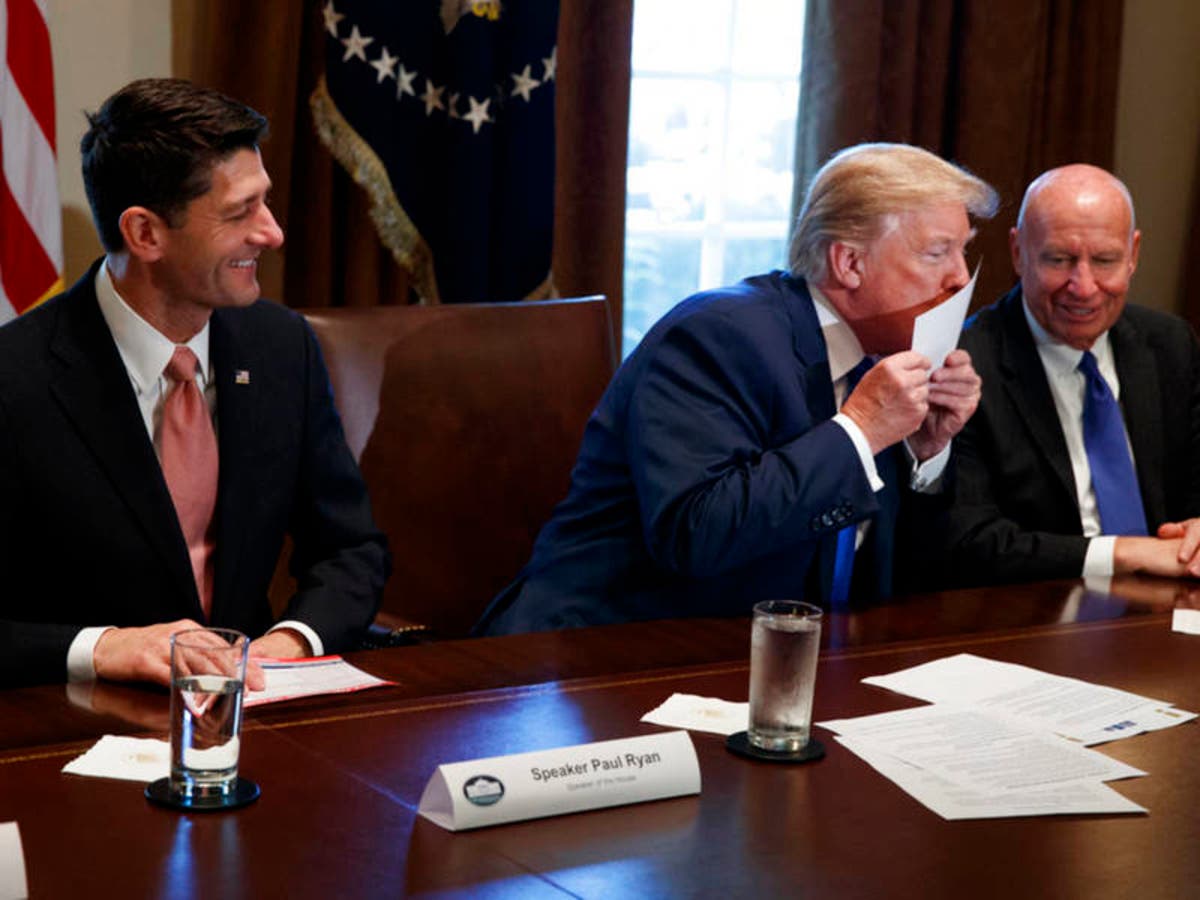
- The number of tax brackets would be reduced from seven to three or four with rates of 12 percent, 25 percent, 35 percent and a category that is yet to be determined. Most people would be able to file their taxes on a postcard-sized form under the simplified tax system outlined in the plan, Republicans said.
- The standard deduction used by most average Americans would nearly double — $12,000 for individuals and $24,000 for families.
- Deductions for medical expenses are eliminated in the plan, which Republicans said would be offset by an overall lowering of tax rates.
Though some Republicans are against the bill, some critics see the GOP's support of Trump's other policies as a reason why this bill is even being considered.
In a statement, Trump said:
"We are just getting started, and there is much work left to do. The special interests will distort the facts, the lobbyists will try to save their special deals, and some in the media will unfairly report on our efforts. But my administration will work tirelessly to make good on our promise to the working people who built our nation and deliver historic tax cuts and reforms — the rocket fuel our economy needs to soar higher than ever before."
Rich Scinto, Beth Dalbey and The Associated Press contributed to this report.
Photo: President Donald Trump kisses a printed example of what a new tax form may look like during a meeting on tax policy with Republican lawmakers in the Cabinet Room of the White House, Thursday, Nov. 2, 2017, in Washington, as House Speaker Paul Ryan of Wis., and chairman of the House Ways and Means Committee Rep. Kevin Brady, R-Texas, watch. (AP Photo/Evan Vucci)
Get more local news delivered straight to your inbox. Sign up for free Patch newsletters and alerts.