Community Corner
Horseshoe Crab Migration Begins On Maryland Beaches
Maryland beach-goers will soon see horseshoe crabs coming onto beaches to spawn. Here's what to do if you see one flipped over.


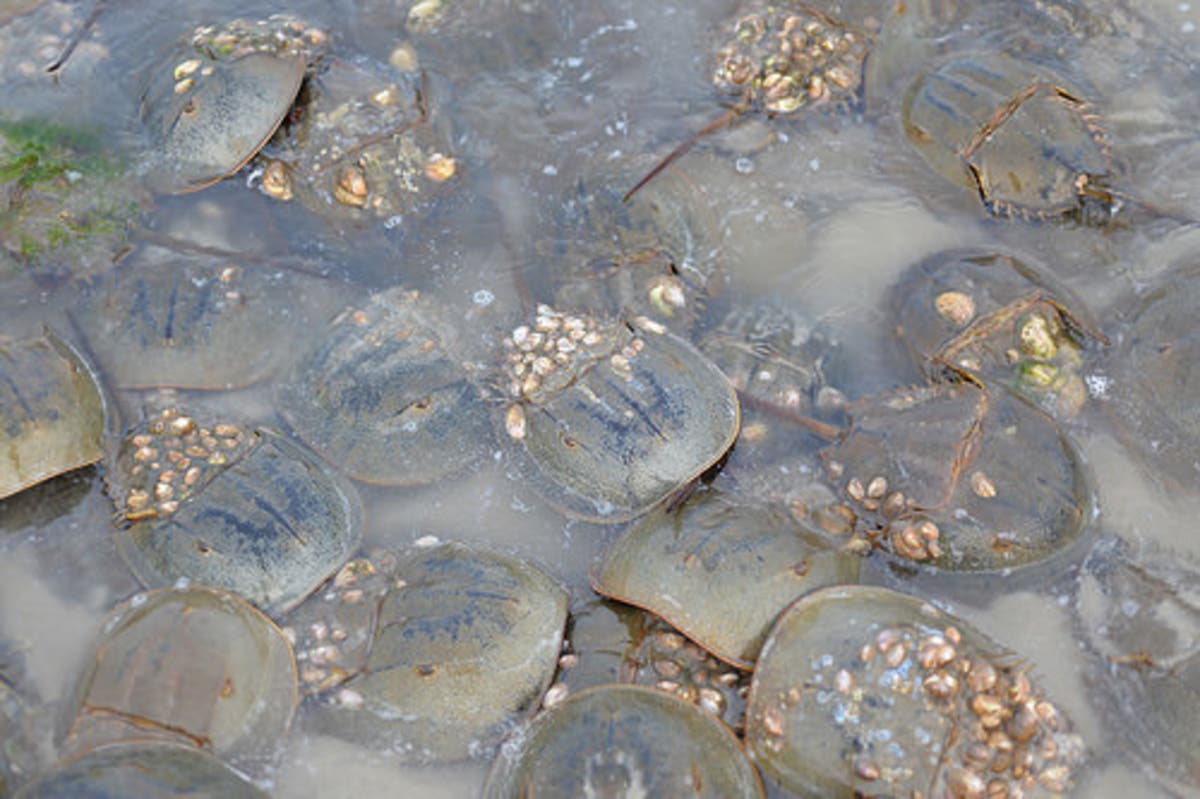
ANNAPOLIS, MD — If you head to Maryland’s coastal bays and beaches Memorial Day weekend, you could see one of the world’s oldest migrations – horseshoe crabs emerging to spawn, as they’ve done here for the last 350 million years, says the Department of Natural Resources. Beach-goers lucky enough to see the ancient ritual can help the creatures thrive, a press release says.
Massive numbers of these “living fossils” will come out of the depths of the Atlantic Ocean in May and June to lay their eggs on shore. The greatest number of horseshoe crabs can be found on Maryland beaches during the full moon on May 29 and June 28, and new moon, June 13 and July 12.
“The horseshoe crab is such a unique species here in Maryland,” said Maryland Department of Natural Resources biologist Steve Doctor, who conducts an annual horseshoe crab survey. “During peak egg-laying times, the horseshoe crabs are so abundant you can’t even see the sand.”
Find out what's happening in Annapolisfor free with the latest updates from Patch.
One horseshoe crab can lay nearly 20,000 eggs but many do not survive. Crustaceans, fish and migrating shorebirds, including the red knot, prey on the eggs for food. Adult horseshoe crabs are also vulnerable to predators if they get stuck on their backs, the DNR news release says.
Maryland Patch Photo Contest: Submit Your Best Pics
To help ensure the survival of the species, anyone who spots a horseshoe crab flipped on its back is asked to gently flip the crab over so it can return to the water. The best practice for flipping over a horseshoe crab is to pick up the animal by its sides using two hands; never by its telson (tail).
Find out what's happening in Annapolisfor free with the latest updates from Patch.
While the horseshoe crab may look menacing, it is actually harmless and a gentle creature; the crabs do not bite or strike. And despite their name, they’re not crustaceans, but are in a separate sub-phylum of arthropods. They are generally not fished for consumption, but have long been used as bait, and in recent years, have proven invaluable to cutting-edge biomedical research due to unique, copper-based blue blood, the DNR says.
Photo of horseshoe crab courtesy of the Maryland Department of Natural Resources
Get more local news delivered straight to your inbox. Sign up for free Patch newsletters and alerts.