Community Corner
Lecture Series Ends with a Look at South River Restoration
The last lecture scheduled for Aug. 4 has been canceled. The Friends of Quiet Waters Parks will sponsor a new set of environmental lectures next spring.
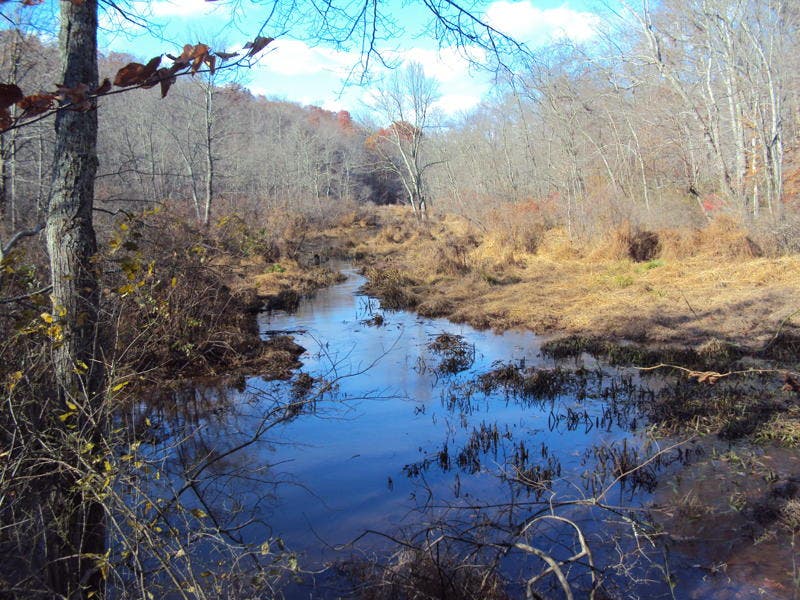


Two weeks after a lecture encompassing the entire Chesapeake Bay, Thursday night’s lecture at Quiet Waters Park—Chesapeake Bay Part II—narrowed the focus to the restoration of the South River.
The South River borders Quiet Waters Park. Its watershed encompasses 60 square mile and houses 545 miles of streams. Although it mostly runs through a suburban landscape, its water quality is on a par with the Anacostia River in Washington, D.C.,
and Baltimore Harbor.
On Thursday, three speakers discussed the status of the river and the efforts to restore its water quality. Rick Leader, the executive director of the Scenic Rivers Land Trust, Diana Muller, the South RIver Riverkeeper in Edgewater, and Erik Michelsen, the executive director of the South River Federation, offered three perspectives on
the river and its restoration.
Find out what's happening in Annapolisfor free with the latest updates from Patch.
Leader dealt with what he termed the “boring” part of South River conservation: the legal and real estate law slice. The land trust has designated 6,000 acres in the river’s headwaters—the South River Greenway—as prime land, critical to the restoration of the watershed.
This area has large tracts of forest, some farms, and wetlands. Mostly undeveloped, this land block has potential to become a natural primitive park for Maryland, and includes the newly acquired Bacon Ridge Natural Area. Over time, hiking trails should open to the public.
Surprisingly, it’s only 10 minutes from Annapolis.
Find out what's happening in Annapolisfor free with the latest updates from Patch.
The trust’s approach to land conservation in the watershed is simple.
“Our job is to lock up the land…to permanently protect it one parcel at a time,” Leader said.
Naturally, it’s a lot more difficult than that. The trust works with willing landowners who voluntarily want to protect their lands (with “willing” and “voluntarily” being the operative words).
For those who want to see that their land becomes guaranteed to never change, the trust can offer tax incentives and estate benefits to
make the deal more attractive, he said.
As riverkeeper on the South River, Muller sees the waterway up close every day. She has a widespread monitoring system in place across the watershed that offers snapshots of the river’s water quality over time.
With this information, she said she can create a scorecard of the river’s status—a score Muller said would provoke serious consequences if her children brought a similar score home from school.
Muller likes to describe the problems facing the South River (and much of the bay) as S3—septic, sewer, and stormwater.
Septic systems that have not been upgraded or are failing tend to bleed nutrients and bacteria into the river’s waters.
Sewer systems need to be fully maintained.
Stormwater can erode soils and stream banks, wash waste products into tributaries, and reduce water clarity.
The water quality in the river can get so bad that Muller advises people not to swim in its water for at least 48 hours after a rainstorm. Otherwise, she said in way-too-graphic phrasing, “You are sucking in poop water.”
Although much of the river’s problems stem from modern usage and influences, some of them are historic.
Michelsen said the watershed was largely cleared of forest in Colonial times, exposing the watershed to serious erosion and buildup of sediment in the stream valleys. This accumulation is known as legacy sediment.
To help revitalize the basin, Michelson suggested that the reintroduction of beavers in the area can help, as the dams they construct trap sediment and inundate stream valleys.
While this approach might prove problematic in an area with homes, it
becomes a helpful tool in a natural area, keeping sand and silt out of the main river.
Michelson also said he sees the need for economic incentives to drive people toward good, environmentally sound behavior. And some are moving in that direction even on their own, he said.
The public is demanding more environmentally friendly development, Michelsen said.
“People are getting more inclined to do the right thing,” he said.