Politics & Government
Recreational Marijuana Has Majority Of Support As MD Nears Referendum: Poll
Should Maryland legalize recreational marijuana? Most voters said yes in a new poll before this fall's referendum.


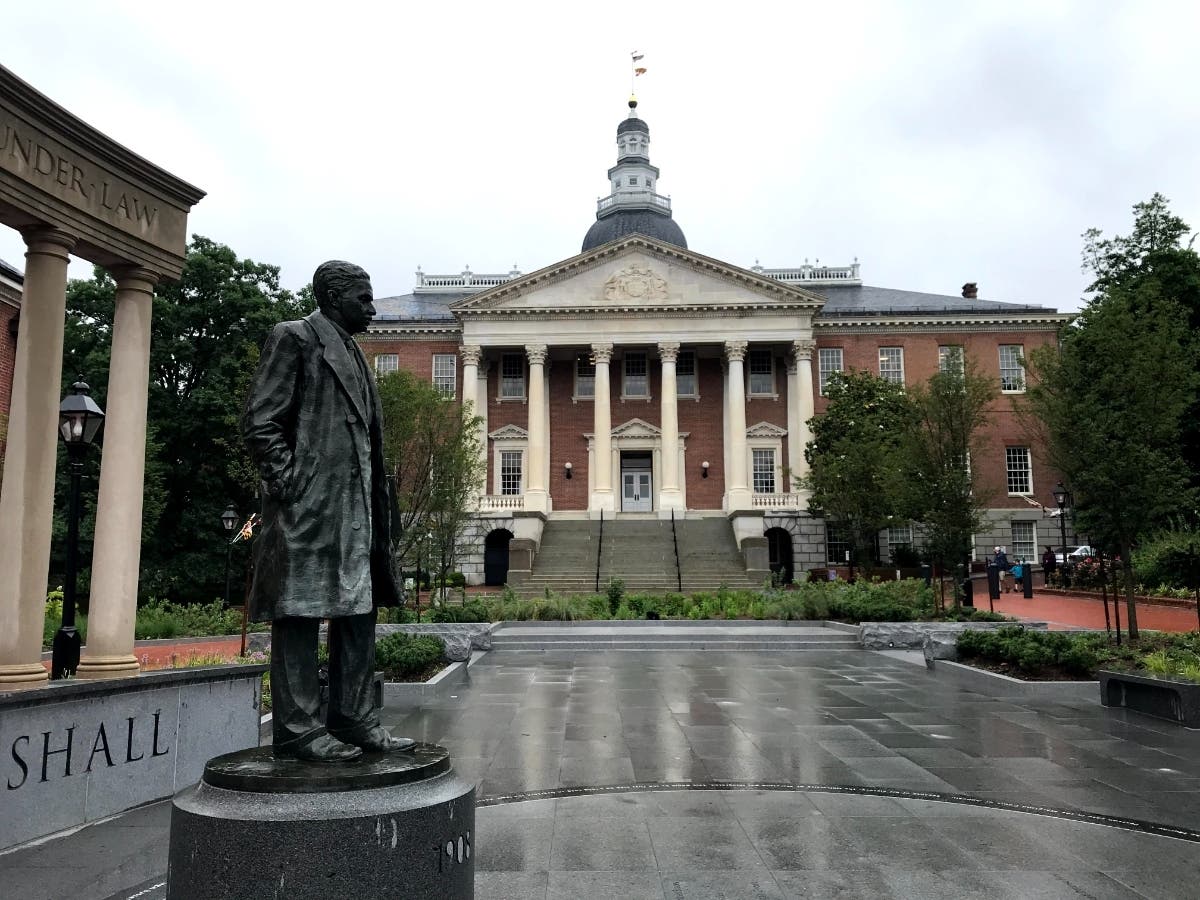
MARYLAND — The majority of Maryland's likely voters support legalizing recreational marijuana, a new poll found. Residents will settle this debate with a referendum in the Nov. 8 general election.
Goucher College on Monday released its latest poll on recreational marijuana and other social issues affecting this election season. The pollsters found a few causes with widespread support and others with mixed reactions across Maryland.
Recreational Marijuana
A total of 59 percent of Marylanders said they will vote to legalize recreational marijuana for residents 21 and older in this fall's referendum. Another 34 percent plan to vote against the ballot question. Seven percent are still undecided on the measure, which would legalize the use and possession of up to 1.5 ounces of usable cannabis or 12 grams of concentrated cannabis.
Find out what's happening in Annapolisfor free with the latest updates from Patch.
The exact ballot question will ask "Do you favor the legalization of the use of cannabis by an individual who is at least 21 years of age on or after July 1, 2023, in the State of Maryland?"
If the referendum passes, 62 percent of voters think Maryland should expunge and erase the records of those charged with or convicted of marijuana use and/or possession crime. About 29 percent believe the state should not expunge those records.
Find out what's happening in Annapolisfor free with the latest updates from Patch.
The law that would regulate marijuana if the measure passes will automatically expunge prior weed convictions that would become legal after the referendum, Ballotpedia reported. Anybody currently serving time for those crimes would then have permission to file for resentencing.
Related: Moore Leads Cox In MD Governor Race, Hogan Approval High: Goucher Poll
The current 59 percent support is down slightly from the 62 percent that Goucher estimated this March. That difference is within the survey's margin of error, however, so pollsters think the support for legalizing recreational marijuana has remained fairly consistent in Maryland.
Medical marijuana is already legal in the state.
Marylanders can learn more about the issue by reading the law that ordered the referendum, the legislation that would regulate marijuana and the nonpartisan summary from Ballotpedia.
Economy, Pandemic, Race Issues
More residents think the state has a positive outlook, as 45 percent said Maryland is heading in the right direction. On the other hand, 39 percent think the state is on the wrong track.
Marylanders reported feeling the effects of inflation. About 31 percent have endured major financial hardship, 37 percent had minor challenges and 31 percent have not experienced a change.
Residents' views on the economy were a mixed bag. Around 45 percent hold a mostly positive view of Maryland's economy, while 42 percent feel mostly negatively and 12 percent don't know.
Approaches to the COVID-19 pandemic also differed. A total of 45 percent think the pandemic isn't over, but we should learn to live with it without any additional mitigation measures. About 41 percent said the pandemic is ongoing and we should continue taking preventative precautions. Another 11 percent believe the pandemic is over.
Race relations in Maryland leaned positive with 54 percent saying they are "fairly good" and 7 percent reporting they are "very good." Twenty-two percent said race relations are "fairly bad," and 9 percent think they are "very bad."
Education
Around 69 percent of Marylanders agreed that "parents should have a say over the curriculum or what is taught to students in K-12 schools." About 26 percent disagreed.
Roughly two-thirds agreed that "schools should teach students about how racism exists in society and its institutions," while just over a quarter disagreed.
A total of 30 percent agreed that "critical race theory, commonly referred to as C-R-T, is currently being taught in Maryland K-12 schools," and 44 percent disagreed.
Finally, 54 percent agreed that "students should be required to be vaccinated against COVID-19 to attend public schools," Another 40 percent disagreed.
Crime
Marylanders want to battle crime, but there were mixed opinions on how the state should make communities safer.
Around 46 percent want more money to address the social and economic causes of crime like mental health issues, drug addiction, housing insecurity and poor education.
About 27 percent think Maryland should allocate more money to strengthen the criminal justice system and train police officers.
Roughly 22 percent said the state should prioritize both approaches.
Methodology
Pollsters surveyed 1,008 Maryland adults, including 748 likely voters, from Sept. 8 through Sept. 12. Interviews were conducted via random digit dialing over landlines and cell phones between 1 p.m. and 9 p.m. each day.
The sample was weighted to match the local trends in gender, age, race, region of residency and educational attainment. The sample was not weighted for party, ideology or income.
The poll had a margin of error of +/- 3.1 percentage points for all state residents. That means there is a 95 percent chance that the actual portion of residents who share those beliefs falls within 3.1 percentage points in either direction of the values listed in the survey.
If you only count the likely voters, the margin of error was +/- 3.6 percentage points.
The Goucher College poll came in partnership with the Baltimore Banner and 88.1 FM WYPR.
The full results are posted here.
Get more local news delivered straight to your inbox. Sign up for free Patch newsletters and alerts.