Community Corner
Maryland Blue Crab Female Numbers Hit Record In Bay Survey
Chesapeake Bay's blue crab population includes spawning-age female crab numbers up 31 percent to historic highs, officials say.


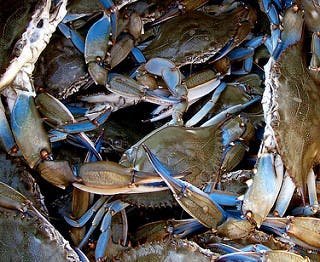
ANNAPOLIS, MD — Maryland should have a great blue crab harvest from April to July, state officials said Wednesday, with a stable population found in the Chesapeake Bay, and the count for female crab numbers up significantly. The Maryland Department of Natural Resources just released the results of the 2017 Blue Crab Winter Dredge Survey, which shows that the population of crabs remains resilient and steady.
While the survey indicates the blue crab population has slightly decreased due to what the DNR called lackluster recruitment, it showed a surge in spawning-age female crabs to the highest level recorded in the 28-year history of the baywide survey.
Blue crab reproduction is naturally highly variable due to the complex life cycle of the animal, which spends the first part of its life in the Atlantic Ocean and relies on favorable currents, temperatures and winds to bring it into the Chesapeake Bay, where they grow, says the DNR. Optimal conditions do not occur every year, so a decrease in the number of young crabs this year was neither unexpected nor unprecedented, the experts said.
Find out what's happening in Annapolisfor free with the latest updates from Patch.
SIGN UP: Get Patch’s daily newsletter and real-time news alerts, or like us on Facebook. Or, if you have an iPhone, download the free Patch app.
“Despite the modest number of young crabs, the total population remains stable and the number of spawning age females – a major scientific benchmark for the health of the species – rose,” Maryland Department of Natural Resources Fishing and Boating Services Director David Blazer said in a news release. “This is testament to the state’s adaptive and effective management of the fishery.”
Find out what's happening in Annapolisfor free with the latest updates from Patch.
The overall population of crabs was estimated at 455 million, the 11th highest level recorded by the survey. The spawning female stock increased 31 percent, from 194 million to 254 million, exceeding the healthy target level of 215 million for the first time since 2010. While the adult female segment increased, the adult male stock decreased 16 percent.
The healthy abundance of adult crabs in the Chesapeake Bay bodes well for crabbers in the first half of the 2017 crabbing season (April-July). When the young crabs begin to enter the fishery in midsummer, crabs will be harder to find later this year and next.
The 2016 baywide crab harvest increased for the third consecutive year for a total harvest of just under 60 million pounds. The Maryland harvest was a bit over 30 million pounds; it continues to operate at sustainable levels.
“We will now discuss the survey results with the Blue Crab Industry Advisory Committee and Tidal Fisheries Advisory Commission to determine next steps,” Blazer said. “Any adjustment, be it catch limit or season length, will only be considered after we receive input from all parties involved.”
In the survey, biologists use dredge equipment to capture, measure, record and release blue crabs at 1,500 sites throughout the Chesapeake Bay from December through March. Crabs tend to bury in the mud in the winter, which makes it possible for scientists to develop accurate estimates.
»Photo of blue crabs by Maryland Department of Natural Resources
Get more local news delivered straight to your inbox. Sign up for free Patch newsletters and alerts.