Schools
Maryland Leaders Propose Limiting Standardized Tests
'...we have a real problem...with over-testing our kids in school...' —Maryland State Education Association President Betty Weller


By LEXIE SCHAPITL, CAPITAL NEWS SERVICE
A trio of Maryland bills would limit the influence of standardized testing in schools, which some educators and legislators from both parties say has become excessive and burdensome to both teachers and students.
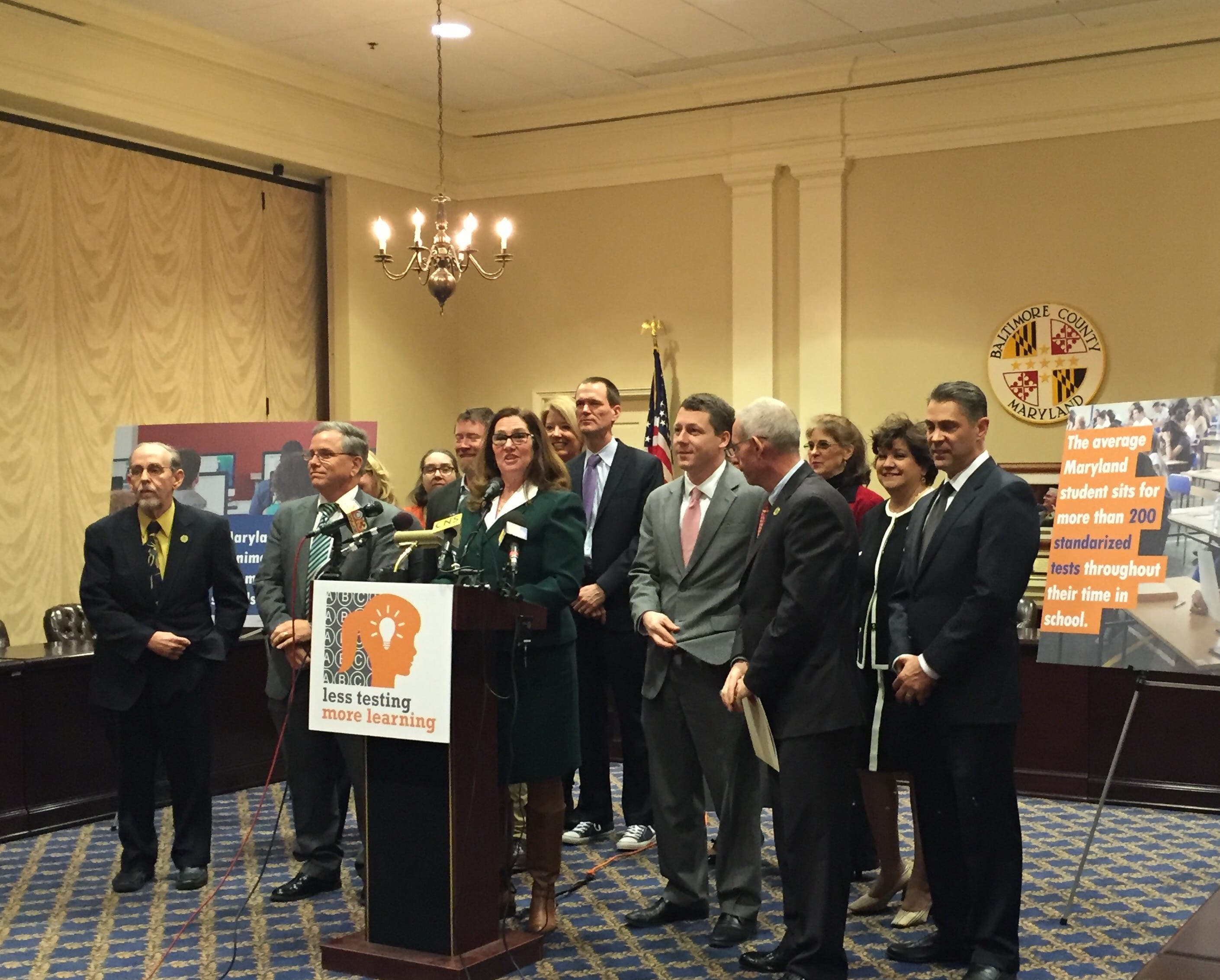
Supporters said these bills would allow teachers to focus on providing students with a well-rounded education, at a press conference this week. An overemphasis on testing narrows curriculum, detracts from arts and elective courses and can cause students to become anxious about and disengaged from school, they said.
Find out what's happening in Annapolisfor free with the latest updates from Patch.
Maryland State Education Association President Betty Weller said standardized testing has “changed what school is about,” and added that tests are more beneficial when they are teacher-developed and align with classroom curricula.
“It’s no secret that we have a real problem in this state, much like the rest of the country, with over-testing our kids in school,” Weller said at Thursday’s press conference. “Far too many of these top-down, mandated tests that students take when they could be learning an instrument or doing a science experiment, never result in useful information.”
Find out what's happening in Annapolisfor free with the latest updates from Patch.
Is the state of testing in Maryland schools excessive or necessary? Tell us your take in the comments!
One bill, with versions filed in both the House and Senate, would limit the amount of time spent on standardized testing to 2 percent of annual instruction time—about 21 hours in elementary and middle schools and 23 hours in high school. There are currently no restrictions in Maryland on the amount of time spent on federal, state and local mandated tests, according to a legislative analysis.
The bill would not impose limits on time spent preparing for standardized tests, but the bill’s House sponsor, Delegate Eric Luedtke, D-Montgomery, said he hopes by reducing the amount of testing, time spent on test prep would decline as well.
As a parent and a former middle school social studies teacher, Luedtke said children can lose passion and interest for learning when overtested. Two percent of instruction time spent on standardized testing is “more than enough time to get the data that we need,” he said.
Another bill in the House would eliminate a state requirement that districts include Partnership for Assessment of Readiness for College and Careers test scores in teacher and principal evaluations. The PARCC test, a new exam that aligns with Common Core State Standards, has created controversy among parents and teachers in Maryland and throughout the country. Fewer than half of elementary and middle school students in Maryland passed the PARCC test last year.
Paul Lemle, a high school social studies teacher and president of the Howard County Education Association, said PARCC scores are not a valid way to measure student growth, and it is “unfair to teachers and impractical for school districts to make staffing decisions” based on this data.
A third bill, also cross-filed in the House and Senate, would limit a statewide kindergarten readiness test to a random sample of students from each district. Supporters of the bill said the Kindergarten Readiness Assessment, or KRA, takes teachers out of the classroom and does not provide useful data in a timely manner.
The Maryland House Ways and Means Committee on Thursday heard testimony on the bills regarding kindergarten testing and teacher and principal evaluations. The same committee on Feb. 11 held a hearing on the bill that would limit testing time.
Opponents of the kindergarten testing bill, including teachers and an examination specialist, said the KRA was designed to provide data on individual students rather than sampling results. The KRA often relies on observation rather than traditional testing practices, they said, and teachers also have discretion in how to implement the test.
Get more local news delivered straight to your inbox. Sign up for free Patch newsletters and alerts.