Community Corner
MD Black Bears Eating For Winter May Mean Close Encounters
Maryland's black bears are basically binge eating for winter, which might bring them to close to people and homes, DNR officials warn.


MARYLAND — Black bears are beginning to binge eat as they store up for winter, and that could bring them closer to people than normal, the Maryland Department of Natural Resources warns. Residents and visitors should remember that black bears are beginning a period of increased feeding activity in preparation for winter hibernation or torpor. Black bears in Maryland are concentrated in Allegany, Frederick, Garrett and Washington counties.
During this time, bears may become more attracted to human-provided food sources and lose their natural fear of people, which can lead to potentially dangerous encounters.
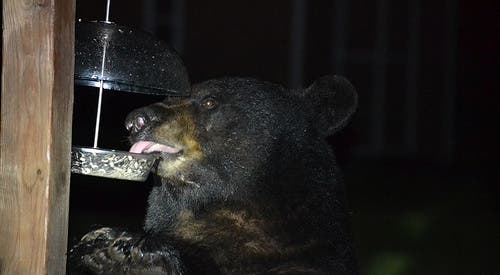
“Keeping bird feeders, pet food and trash in a place where bears can’t get to them is the best way to avoid interactions,” Wildlife and Heritage Service Director Paul Peditto said in a news release. “Marylanders should delay filling songbird feeders until the winter to avoid attracting these mammals.”
Find out what's happening in Annapolisfor free with the latest updates from Patch.
Since bears may travel many miles in search of food, drivers in Maryland’s western counties, especially Allegany and Garrett, should watch for them crossing roads, especially during October and November. Bears will begin entering dens in mid-November; most will be inside dens by mid-December.
Just last month, a school in Howard County alerted families that black bear sightings were reported in the area. Hammond Middle School said people spotted the animals in the area, including on the main campus of the Johns Hopkins Applied Physics Laboratory on Johns Hopkins Road. The other sighting was in the 7700 block of Montpelier Road.
Find out what's happening in Annapolisfor free with the latest updates from Patch.
More information about living with black bears can be found online or by calling 410-260-8540 or 301-777-2136.
- Bears Make Rounds in Central Maryland Suburbs
- WATCH: Bear Climbs Behind Officer's Back In Maryland Park
- June Deadly For Bears On Maryland Highways: Natural Resources Police
Keeping Bears Away From Homes and Cabins
Trash and bird feeders can lure bears to homes. Pet food, charcoal grills, fruit trees and gardens may also attract bears. Once a bear finds food around your home it will likely return.
To minimize bear problems on your property:
- Reduce garbage odors. Rinse food cans and wrappers before disposal.
- Compost vegetable scraps properly away from house.
- Keep meat scraps in the freezer until garbage pickup day.
- Wash garbage cans regularly and use lime to cut odors.
- Keep garbage cans in a bear-proof container or in an enclosed building until trash pickup.
- Remove bird feeders in the spring. If you persist in feeding during summer, remove seed, suet and hummingbird feeders at night.
- Keep pet food inside.
- Keep barbecue grills and picnic tables clean.
- Use an energized fence to keep bears out of beehives, sweet corn, fruit trees and berry patches. (An energized fence is powered by a low-impedance, high –voltage energizer that provides a short-duration, high-energy impulse.)
- Barking dogs, bright lights and noisemakers will sometimes discourage bears from coming into an area.
If a bear comes into your yard:
- Don't panic, shoot or approach it.
- Back away slowly.
- Go inside and wait for the bear to leave.
- Most bears fear people and will leave when they see you.
- If a bear woofs, snaps its jaws, slaps the ground or brush, or bluff charges: YOU ARE TOO CLOSE!
- Learn to tolerate bears. Many bears are killed or injured when not causing problems.
If a bear refuses to leave:
- Be sure you have allowed the bear an escape route.
- Make loud noises to scare it away. If a bear is treed:
- Leave it alone. The bear will usually go away when it feels safe.
- Have people leave the area.
- Remove your dog from the area.
Bear Encounters With Campers
If you encounter a bear while in the outdoors, remain calm. Don't panic. Leave the area. To reduce the chance of experiencing bear problems:
- Move to another campsite if fresh bear signs are present.
- Never keep food in your tent.
- Use canned and dried foods to minimize food odors.
- Store foods out of a bear’s reach, in a vehicle or enclosed building if possible.
- Use airtight or bear-proof containers.
- Burn waste paper in your campfire.
- Do not burn or bury food scraps.
- Remove all garbage and fish remains from camp every evening.
If a bear comes into camp:
- Don't feed it. Scare it away.
- Make loud noises, bang pans, yell or use air horns.
Image via Shutterstock
Get more local news delivered straight to your inbox. Sign up for free Patch newsletters and alerts.


