Home & Garden
Peak 2016 Perseid Meteor Shower's Best Show in 20 Years
Star-gazers should see up to 150 "shooting stars" or meteors per hour when the Perseid Meteor Shower peaks this weekend, says NASA.


Expect to be dazzled this weekend when the Perseid meteor shower hits its peak, with up to 150 "shooting stars" streaking across the skies.
The peak comes the night of Aug. 11 into the early morning hours of Friday, Aug. 12. The best views will come after 1 a.m. Friday when the moon has sets, says Astronomy magazine.
In a typical year, observers under a clear dark sky can expect to see up to 100 meteors per hour. But the planet Jupiter recently nudged the debris from the Swift-Tuttle comet closer to Earth, which could mean up to 150 meteors per hour the night of Aug. 11-12.
Find out what's happening in Annapolisfor free with the latest updates from Patch.
NASA meteor expert Bill Cooke says the Perseids will be in "outburst" this month, which means they'll appear at double the usual rates. Learn more about the 2016 Perseid meteor shower in this video.
"This year, instead of seeing about 80 Perseids per hour, the rate could top 150 and even approach 200 meteors per hour," Cooke told Space.com.
Find out what's happening in Annapolisfor free with the latest updates from Patch.
The Perseids are the only comet known to have damaged satellites orbiting satellites and delayed the launch of a space shuttle, says NASA. Their regular swings past Earth are recorded 2,000 years ago, with the meteors we see today likely were ejected from the Swift-Tuttle comet hundreds, or even thousands, of years ago.
The key to seeing a meteor shower is to go to a dark area, in the suburbs or countryside, and prepare to sit outside for a few hours. It takes about 30 minutes for your eyes to adjust to the dark, and the longer you wait outside, the more you'll see, Cooke says.
Chicago area skywatchers should have the best views of the shower on Thursday night, says the Weather Channel, while Atlanta may miss out on the show since the forecast calls for overcast skies. New York, New Jersey, Pennsylvania, Virginia and Maryland will have rain overnight, with mostly cloudy skies.
On Friday and Saturday, people in Illinois, Virginia and Maryland will have the best chance to see the meteor shower, and on Saturday, those in the I-95 corridor in the Northeast should have clear viewing.
The weather forecast for Thursday night gives us a good chance at seeing the celestial show, with the National Weather Service predicting partly cloudy skies -- but no chance of rain -- Thursday evening.
MORE ABOUT METEOR SHOWERS: Patch’s Complete 2016 Meteor Shower Guide
If you want to impress your stargazing friends, point out the concept of radiant points for the meteor shower.
The Perseids radiate from the constellation Perseus. In the Northern Hemisphere, it’s located in the northeast to high in the north part of the sky, and it’s visible between midnight and dawn, which also happens to be the best time to watch the Perseids.
Fall/Winter 2016 Meteor Showers
Oct. 7, Draconids
This shower also favors the Northern Hemisphere. Great news! You don't have to stay up late to view this one, because the Draconids are most likely to fly in the evening hours. It’s usually a sleeper of a sky show, earthsky.org says, but in rare instances, the constellation Draco the Dragon in the northern sky can fire off hundreds of meteors in a single hour.
Oct. 20-21,Orionids
The glare of a waning gibbous moon in the early morning hours just before sunrise could intrude with the Orionids, which typically produce 10 to 20 meteors per hour. Most meteors in this shower tend to fall after midnight, and they’re typically at their best in the wee hours just before dawn. The Orionids also sometimes present bright fireballs.
Nov. 4-5, South Taurids
Though the best viewing conditions are likely to be after midnight on Nov. 5, the Taurids are very long-lasting, from Sept. 25-Nov. 25. They only offer about seven meteors an hour, but the Taurids are known for having a high percentage of fireballs. This is the first of two Taurid meteor showers, and it always adds a few more meteors to the South Taurids’ peak night.
Nov. 11-12, North Taurids
This shower is long-lasting, too, from Oct. 12-Dec. 2, but modest as well with only about seven meteors an hour, with most of the activity taking place around midnight. The meteors are slow moving, but very bright. The waxing gibbous moon could outshine this year’s shower.
Nov. 16-17, Leonids
Some of the greatest meteor storms in history have been associated with this event, which can produce rates of thousands of meteors per minute during a span of 15 minutes, as occurred on Nov. 17, 1966. “ Some who witnessed the 1966 Leonid meteor storm said they felt as if they needed to grip the ground, so strong was the impression of Earth plowing along through space, fording the meteoroid stream,” earthsky.org says.
Dec.13-14, Geminids
The last meteor shower of the year is usually one of the finest meteor showers visible in either the Northern or the Southern Hemisphere, but a full moon will be out all night, subduing the typically prolific Geminids, which can produce up to 120 meteors per hour. The shower peaks around 2 a.m.
Dec. 21-22, Ursids
This minor meteor shower often goes unnoticed. Produced by the dust grains left behind by the comet Tuttle, it produces only about five to 10 meteors an hour. The shower runs from Dec. 17-25, but it should peak around Dec. 21. The moon will be 23 days old at the time of peak activity, so it shouldn’t present too much of a problem.
— Patch Editor Beth Dalbey contributed to this story
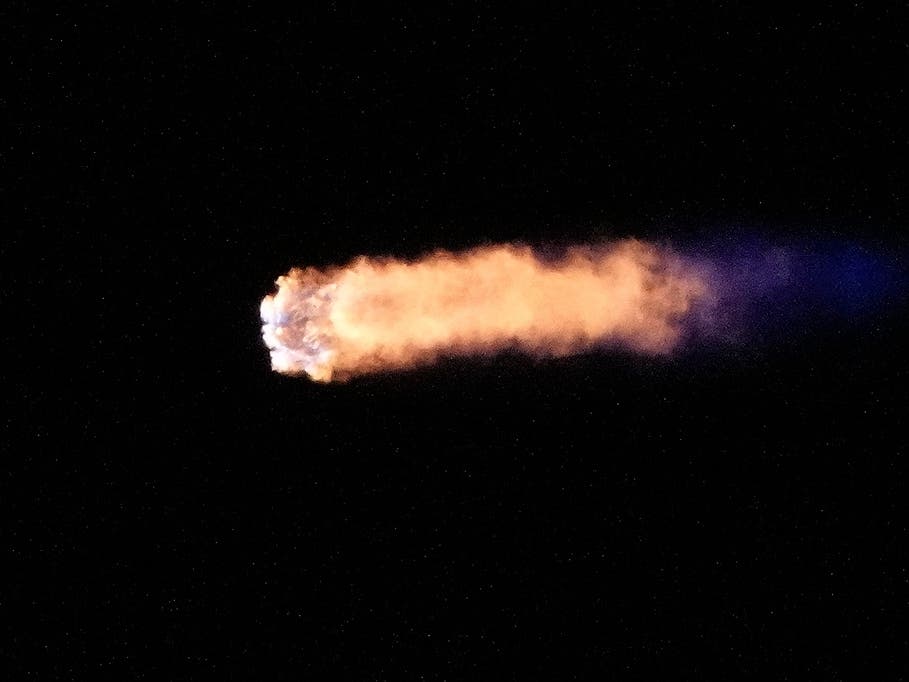
»Image: John Fowler via Flickr / Creative Commons
Get more local news delivered straight to your inbox. Sign up for free Patch newsletters and alerts.