Business & Tech
Pregnant UPS Worker Who Lost Job Takes Case to Supreme Court
The former Maryland worker lost her pay and benefits when she became pregnant; the company has since changed its policy.


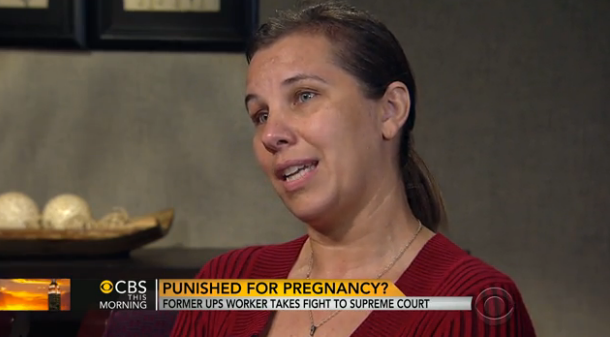
The question of what accommodations a business must make for pregnant employees was argued before the U.S. Supreme Court Wednesday, an issue sparked by a Maryland woman who lost her United Parcel Service delivery job.
Peggy Young, who lived in Annapolis in 2006, had been driving a UPS delivery truck for four years when she became pregnant. UPS asked for a doctor’s note on Young’s health status, and the doctor recommended that Young not lift more than 20 pounds.
Young lost her job and UPS health insurance for nine months; her attorneys argue the company discriminated against her, while allowing men with high blood pressure and other medical conditions to switch to light duty.
Find out what's happening in Annapolisfor free with the latest updates from Patch.
“When I took the note to the nurse, she basically said, ‘Well, we don’t give alternative work or light duty to off-work incidents.’ I’m like, ‘I‘m pregnant, there’s not an incident here, and I can do my regular job.’ They would not allow me to,” Young told National Public Radio.
NPR says that pro-life and pro-choice groups are supporting Young’s case, while business groups oppose her lawsuit.
Find out what's happening in Annapolisfor free with the latest updates from Patch.
Wednesday’s case is a test of what is now required under the Pregnancy Discrimination Act, says NPR. Young sued and lost in lower courts, reports CBS News, arguing the 1978 Pregnancy Discrimination Act required the company to make reasonable accommodations.
Young sued UPS for back pay and damages under the federal law. UPS says it treated Young just as it treated other workers with a limited ability to lift as a result of factors occurring outside the job.
According to ScotusBlog, which covers the workings of the country’s highest court, the justices posed questions to sort out how the company treats pregnant workers vs. those with medical ailments. Question include: which UPS employees get assigned to light duty to accommodate their condition, how large a part of the company payroll is entitled to that treatment, are there any other conditions but pregnancy that put a worker outside that group, and how does UPS justify the differences?
The company’s attorney argues that the Pregnancy Discrimination Act was not intended to accommodate pregnancy; instead, it only bans intentional discrimination by an employer.
Young’s attorney disagrees, arguing federal law requires pregnant women to be treated the same way as other workers are treated who have temporary disabilities.
Since Young’s initial dispute and pregnancy in 2006, UPS has changed its policy for pregnant workers.
The company now offers more accommodations for pregnant women, says CBS News, a change the company says is “actually ahead of many companies and government agencies.”
The months of unpaid leave were a financial hardship on Young’s family, she says, and she’s continued the legal fight to help other women who want to help support their family and work at the same time.
Women’s rights advocate Marcia Greenberger told CBS: “What it speaks to is fundamental fairness, a fundamental recognition that women do not lose rights when they become pregnant.”
»Screenshot of Peggy Young, formerly of Annapolis, MD, who took UPS to the Supreme Court. Courtesy of CBS News
See Also:
Get more local news delivered straight to your inbox. Sign up for free Patch newsletters and alerts.