Crime & Safety
Heroin Addicts Dealt Hope By County Police Chief
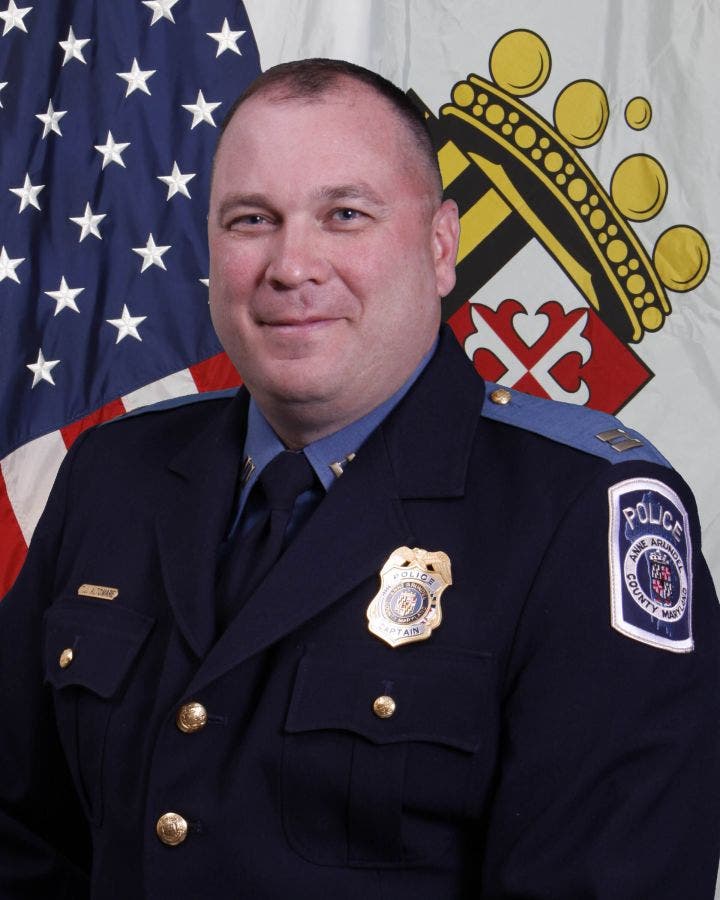
Anne Arundel County Police Chief Timothy Altomare has a message of hope given to heroin addicts his officers arrest and encounter.



ANNAPOLIS, MD — Some people view heroin addicts as trash, disposable people.
Others see users gripped by the often deadly drug as children, family members, friends or co-workers.
As more residents battle with addiction, and more police and first responders rescue users who have overdosed on an opiate, they have a supporter urging them to seek treatment.
Find out what's happening in Annapolisfor free with the latest updates from Patch.
Anne Arundel County Police Chief Timothy Altomare penned a letter early this year that officers give to drug addicts they arrest and overdose victim they deal with on the streets. Its message is simple: Drug treatment is always available to help.
“We have had to look too many mothers in the eye and tell them their child is gone,” Altomare wrote. …“It takes a lot of courage to seek help. … Drug treatment can work. People recover from addiction every day. WE BELIEVE YOU CAN DO IT BUT WE CAN’T DO IT FOR YOU.”
Find out what's happening in Annapolisfor free with the latest updates from Patch.
At the end of the letter is a resource: Addicts who are seeking help are urged to call the county's WARMLINE at 410-768-5522. It is staffed 24 hours a day, seven days a week.
As of Aug. 31, Anne Arundel County has seen 566 overdoses; double the 249 total for 2015. Of this year’s overdoses, 79 cases have been fatal and 487 have not, police said.
"Our police department is willing to do whatever it takes to beat this heroin epidemic. We are continuing to keep an open mind and think outside the box,” police spokesman Lt. Ryan Frashure told Patch. “We have seen that we cannot arrest our way out of this problem, so we need to be creative. The traditional avenues are not working, so we need to combine enforcing the law with follow-up treatment.”
SEE ALSO:
Heroin Crisis: Desperate Families Wonder If Anyone Cares
Heroin Epidemic Escalates Across Maryland
According to county statistics, heroin, a mix of heroin and fentanyl, or fentanyl on its own was the drug used in a majority of the incidents. By police district. the number of overdoses reported so far in 2016 are:
- Northern: 182 non-fatal; 32 fatal
- Eastern: 101 non-fatal; 23 fatal
- Southern: 91 non-fatal; 6 fatal
- Western: 72 non-fatal; 11 fatal
- Annapolis City: 41 non-fatal; 7 fatal
“Beating this addiction takes a lot work and addicts need support from everyone, including law enforcement,” Frashure said. “While we will most certainly fight the good fight by arresting heroin dealers, we will continue to build relationships with the programs in the community that provide help. Wanting to get clean is only a small portion of recovery, staying clean is the hardest part. We need people to know that we are here to help and they can count on us."
Police and emergency responders have seen an increasing number of instances where fentanyl is mixed with heroin, which has accelerated the number of overdoses. The drug given by hospitals to surgery patients is much stronger, and users are taking the same dosage, which their bodies can’t handle.
In the past an officer who found someone unconscious would merely call for EMTs, now police have been trained to tell if heroin was used and give the person a shot of Narcan, which can restore normal breathing. Every Anne Arundel County police officer is trained to use Narcan, it was one of first departments in the state to carry it.
The Maryland Good Samaritan Law, which protects users from arrest for possession of controlled dangerous substances and calling 911, has encouraged people with a heroin user to call 911 if a user has overdosed.
The state’s Overdose Response Program law and other longtime existing laws protect people who prescribe, dispense, carry and use naloxone or Narcan, which can reverse the affects of an overdose.
State Needs More Treatment Facilities
Maryland needs residential treatment beds, say Carin Callan Miller, the president and co-founder of Maryland Heroin Awareness Advocates, and group member Melissa Eppinger of Edgewater. Addicts are dying while waiting for in-patient treatment spots to open up, Eppinger said, and her own son is in North Carolina at a residential program.
Once patients have completed treatment, aftercare is imperative, Miller says, as addicts learn to cope without the drug.
“It’s two steps forward, 10 steps back half the time, it’s so frustrating,” Miller says. “Just as if these kids had cancer, the first five years is considered early recovery. After that, you’re in remission. It should be the same for addiction.”
Where to Get Help in Maryland
Maryland residents who need help finding substance abuse treatment resources should visit the Department of Health website for links to substance abuse treatment facilities. Or call the Maryland Crisis Hotline, which provides 24/7 support, at 1-800-422-0009.
If you know of someone who could use treatment for substance abuse, treatment facilities can be located by location and program characteristics online.
State Grants to Fight Heroin
Police departments will receive money to track heroin coming into their areas, share that information on a state database, and hire recovery specialists to work with addicts under a $3 million grant program announced in August by Maryland Gov. Larry Hogan.
Police departments in Anne Arundel County and the Harford County Sheriff's office are among the recipients of the grants.
In 2015, the state saw a 21 percent increase in the number of deaths from drug and alcohol intoxication, according to the Maryland Department of Health and Mental Hygiene. A total of 1,259 overdose deaths occurred in Maryland last year. And the state is on pace to equal or surpass that tragic number in 2016. The most recent tally from the health department shows that from January to March this year, Maryland saw 383 deaths related to overdose.
According to a news release from the governor's office, a total of $931,371 will go toward funding a heroin coordinator in law enforcement agencies in every region of the state, while about $2 million will go to nine jurisdictions to continue the Safe Streets Initiative, a program that tracks down and arrests the most serious, violent, and repeat offenders while connecting those offenders struggling with substance abuse to drug treatment, health care, education, and other services.
This year, five Safe Streets sites will be funded to hire peer recovery specialists to integrate treatment into the model. The goal is to track down drug traffickers, protect young people from becoming involved with illegal drugs, and provide treatment and resources for those struggling with substance abuse and addiction.
The grants will pay for heroin coordinators in Anne Arundel, Baltimore, Harford, Howard, and Montgomery counties, among others.
The Safe Streets Initiative will send money to nine police departments, including:
- Annapolis City Police Department: $345,147
- Anne Arundel County: $289,807
One City’s Fight Against Drugs
The movie “Generation Found” about the city of Houston’s community-wide effort to fight drugs will air at 7:30 p.m. Wednesday, Sept. 21, at Annapolis Harbour 9. The film looks at how a system of treatment centers, sober high schools, alternative peer groups, and collegiate recovery programs was used to intervene in the city’s “War on Drugs.” Tickets are available online at http://gathr.us/screening/17079.
Full text of Chief Altomare's letter to overdose victims:
Anne Arundel County Police Chief's Message by Deb Eatock Belt on Scribd
»Photo of Police Chief Timothy Altomare, courtesy of Anne Arundel County Police; photo of heroin from the DEA website
Get more local news delivered straight to your inbox. Sign up for free Patch newsletters and alerts.