You keep hearing more and more in the news about concussion, but where do you even start to learn? Start right here! The key is going to be prevention. First, a few simple facts...
1. Concussion can occur in every sport, contact or not.
2. You can get a concussion without getting hit on the head.
Find out what's happening in Anne Arundelfor free with the latest updates from Patch.
3. Helmets and mouth guards do not prevent concussion. (but they are great for saving on head injuries and high dental bills)
For our purposes, let's focus on kids. Should youth football players wear mouthpieces and helmets? Absolutely yes, but equally important is that the helmet and mouthpiece fit well and are in proper operating order. But with all this equipment, why doesn't it help with concussion?
Find out what's happening in Anne Arundelfor free with the latest updates from Patch.
Think of your brain as an egg yolk and your skull as the shell. Wrap it in bubble wrap and drop it, the shell may or may not break. However, the yolk will surely be sloshed around. This is what happens to your brain at various contact and non-contact events. This does not even factor in the rotation of the head and the angles and speed of the force.
What is important to note is that the structures that hold the brain in place are not as strong in the younger, developing cranium, making our children more susceptible to traumatic brain injury. (TBI)
If your child or athlete has experienced a bump or blow to the head during a game or practice, look for the following signs and symptoms of a concussion. Conversely, these signs and symptoms can manifest themselves without direct head contact so always be on the alert.
- Appears dazed or confused
- Is confused about assignment or position
- Forgets an instruction
- Is unsure of game, score or opponent
- Moves clumsily
- Answers question slowly
- Loses consciousness (even briefly)
- Shows mood, behavior or personality changes
- Headache or "pressure" in head
- nausea or vomiting
- Balance problems or dizziness
- Double or blurry vision
- Sensitivity to light or noise
- Centers for Disease Control and Prevention
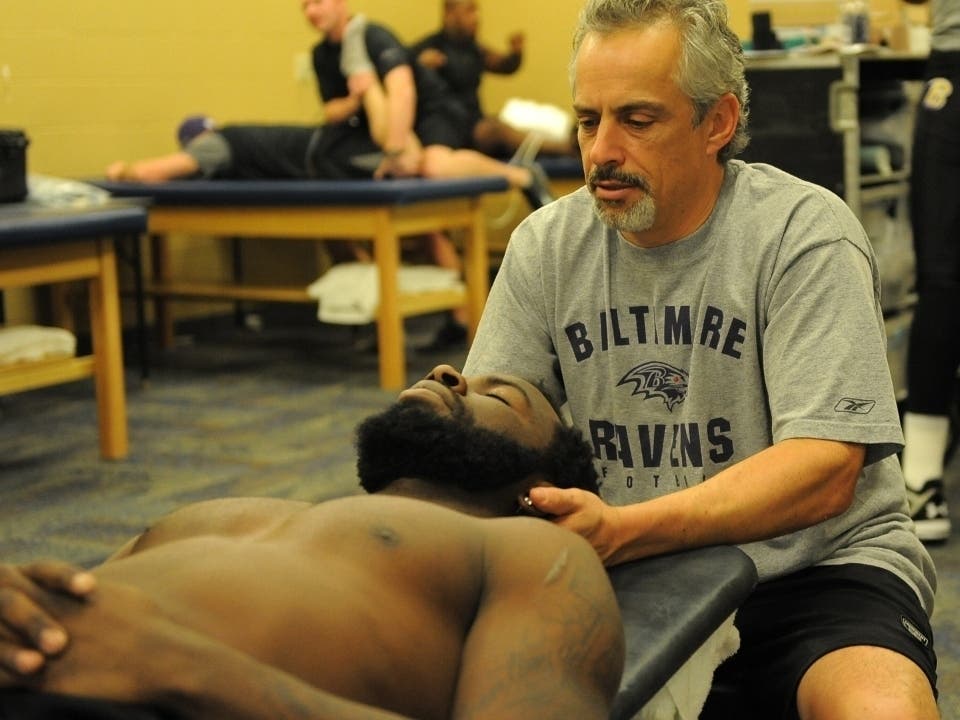
Alan K Sokoloff, D.C. is in his 33rd year of practice at the Yalich Clinic of Glen Burnie and is the team chiropractor for the Baltimore Ravens, Bowie Baysox and University of Maryland Terps and Retrievers.