Neighbor News
Frosh Calls For Legal Banking System For Marijuana Businesses
Maryland Attorney General Frosh request "Advanced Legislation" to provide "Safe Harbor" for banking institutions.
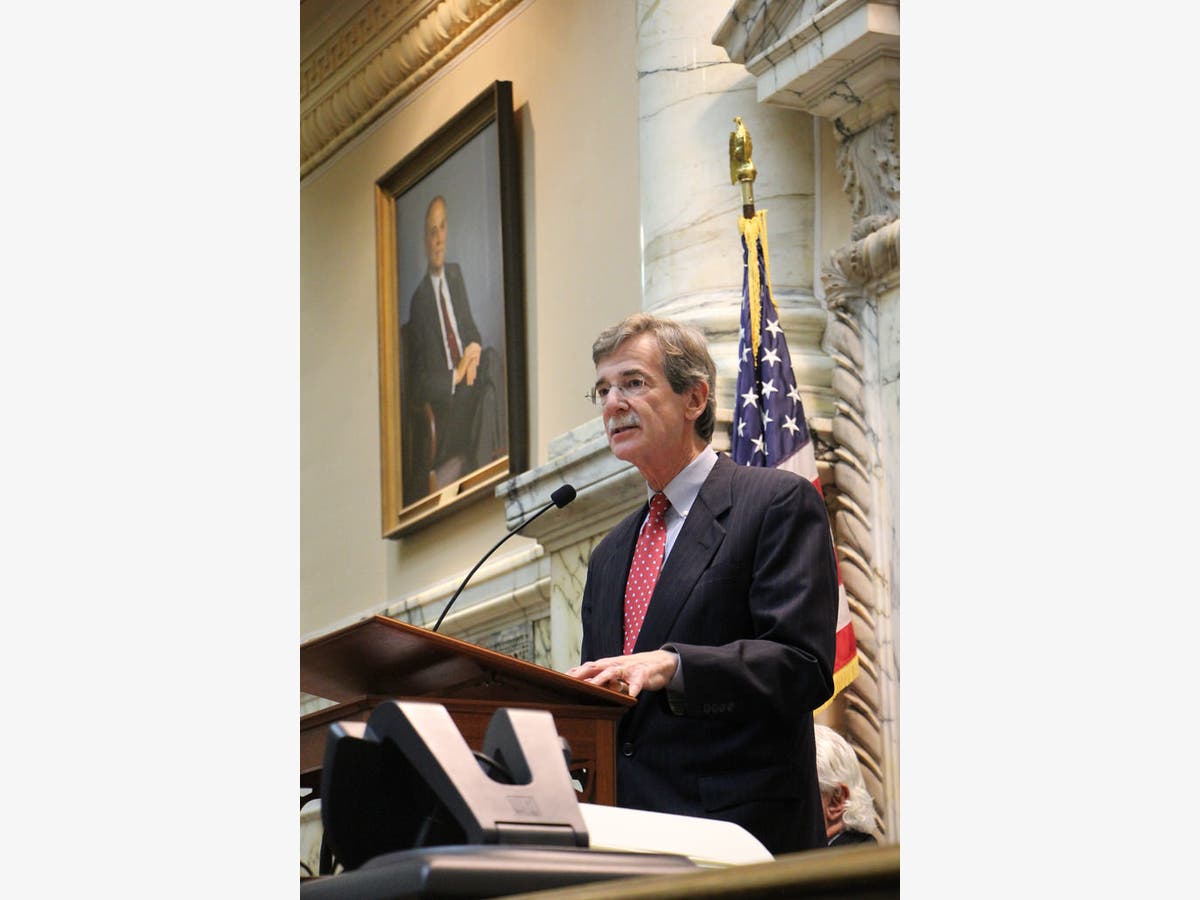
Attorney General Frosh Joins 18 Attorneys General in Calling for
Banking Legislation for Legalized Use of Marijuana
BALTIMORE, MD (January 16, 2018) – Maryland Attorney General Brian E. Frosh
today joined a coalition of attorneys general urging Congress to advance legislation allowing states
with legalized medical or recreational marijuana to bring that commerce into the banking system.
Banks and other depository institutions are currently hindered by federal law from providing
financial services to marijuana businesses, even in states where those businesses are regulated.
Find out what's happening in Baltimorefor free with the latest updates from Patch.
The letter, sent to congressional leaders, requests legislation that would provide a legal “safe
harbor” for depository institutions that provide a financial product or service to a covered
business in a state that regulates its marijuana industry.

“Twenty-nine states and several U.S. territories have legalized the medical use of marijuana. Among those, eight states and the District of Columbia also allow recreational use by adults over 21 years of age. However, because federal government classifies marijuana as an illegal substance, banks providing services to state-licensed cannabis businesses could find themselves subject to criminal and civil liability under the Controlled Substances Act and certain federal banking statutes,” the letter states.
Find out what's happening in Baltimorefor free with the latest updates from Patch.
The attorneys general also note a recent decision by the U.S. Department of Justice to rescind
guidance outlining how financial institutions could provide services to state-licensed marijuana
businesses consistent with federal law. That rescission, the attorneys general argue, has made
even more urgent the need for congressional action to get the cash generated by this industry into
a regulated banking sector.
The requested legislation would not only protect public safety by bringing gray-market financial activities into the banking sector and thus subject to law enforcement monitoring, but would also result in billions of dollars infused into the banking industry.

Joining Attorney General Frosh in today’s letter are attorneys general from Alaska, California,
Colorado, Connecticut, District of Columbia, Guam, Hawaii, Illinois, Iowa, Maine,
Massachusetts, New Mexico, New York, North Dakota, Oregon, Pennsylvania, Vermont, and Washington.
The letter is as follows:
January 16, 2018
Hon. Paul Ryan Hon.
Speaker of the House
H-232, The Capitol, Washington, DC 20515
Hon. Nancy Pelosi
Minority Leader
H-204, The Capitol
Washington, DC 20515
Hon. Mitch McConnell
Majority Leader
317 Russell Bldg, Washington, DC 20510
Hon. Charles E. Schumer
Minority Leader
322 Hart Bldg.
Washington, DC 20510
Hon. Kevin McCarthy
Majority Leader H-107, The Capitol, Washington, DC 20515
Hon. Steny Hoyer
Minority Whip
1705 Longworth Office Building, Washington, DC 20515
Hon. John Cornyn
Majority Whip
517 Hart Bldg. Washington, DC 20510
Hon. Richard J. Durbin
Minority Whip
711 Hart Bldg.
Washington, DC 20510
Hon. Mike Crapo
Chair
Senate Committee on Banking,
Housing & Urban Affairs
534 Dirksen Senate Building
Washington, DC 20510
Hon. Sherrod Brown
Ranking Member
Senate Committee on Banking,
Housing & Urban Affairs
534 Dirksen Senate Building
Washington, DC 20510
Dear Congressional Leaders:
We are a bipartisan group of state attorneys general who recognize that the states and federal
government share a strong interest in protecting public safety and bringing grey market activities
into the regulated banking sector. To address these goals, we urge Congress to advance
legislation that would allow states that have legalized medical or recreational use of marijuana to
bring that commerce into the banking system.
Twenty-nine states and several U.S. territories have legalized the medical use of marijuana.
Among those, eight states and the District of Columbia, also allow recreational use by adults
over 21 years of age. However, because the federal government classifies marijuana as an illegal
substance, banks providing services to state-licensed cannabis businesses could find themselves
subject to criminal and civil liability under the Controlled Substances Act and certain federal
banking statutes. This risk has significantly inhibited the willingness of financial institutions to provide services to these businesses.
Despite the contradictions between federal and state law, the marijuana industry continues to
grow rapidly. Industry analysts report that sales grew by 30% to $6.7 billion in 2016 and expect
those totals to exceed $20 billion by 2021. Yet those revenues often exist outside of the regulated
banking space. Businesses are forced to operate on a cash basis. The grey market makes it more
difficult to track revenues for taxation purposes, contributes to a public safety threat as cash
intensive businesses are often targets for criminal activity, and prevents proper tracking of large
swaths of finances across the nation.
To address these challenges, we are requesting legislation that would provide a safe harbor for
depository institutions that provide a financial product or service to a covered business in a state
that has implemented laws and regulations that ensure accountability in the marijuana industry
such as the SAFE Banking Act (S. 1152 and H.R. 2215) or similar legislation. This would bring
billions of dollars into the banking sector, and give law enforcement the ability to monitor these
transactions. Moreover, compliance with tax requirements would be simpler and easier to
enforce with a better-defined tracking of funds. This would, in turn, result in higher tax revenue.
Prior Department of Justice guidance outlined how financial institutions could provide services
to state-licensed marijuana businesses consistent with their obligations under federal law and
created some space for the banking industry to work with those businesses, though challenges
remained in many areas. The recent rescission of that guidance has made the need for
Congressional action to get the cash generated by this industry into a regulated banking sector
even more urgent.
Our banking system must be flexible enough to address the needs of businesses in the various
states, with state input, while protecting the interests of the federal government. This includes a
banking system for marijuana-related businesses that is both responsive and effective in meeting
the demands of our economy. We look forward to working with you as you move forward in this
process and lending our voice and expertise as you develop legislation.
Sincerely,
Jahna Lindemuth Karl A. Racine
Alaska Attorney General District of Columbia Attorney General
Doug Chin Wayne Stenehjem
Hawaii Attorney General North Dakota Attorney General
Xavier Becerra Cynthia Coffman
California Attorney General Colorado Attorney General
George Jepsen Elizabeth Barrett-Anderson
Connecticut Attorney General Guam Attorney General
Lisa Madigan Tom Miller
Illinois Attorney General Iowa Attorney General
Janet T. Mills Brian Frosh
Maine Attorney General Maryland Attorney General
Maura Healey Hector Balderas
Massachusetts Attorney General New Mexico Attorney General
Eric T. Schneiderman Ellen F. Rosenblum
New York Attorney General Oregon Attorney General
Josh Shapiro T.J. Donovan
Pennsylvania Attorney General Vermont Attorney General
Robert W. Ferguson
Washington Attorney General
Before the Lottery was legalized...it was the "Poor Man's" game. An illegal game of chance called, "The Numbers Game." If you played; if you payed, you could go to jail. It was a kin to being a drug dealer. A serious crime: with serious time. However in 1934 the government decided to take the numbers racket out of the hands of the number's backers, bookies, and runners, and legalize it for profit. They renamed it and called it "The Lottery." They legalized this crime as they once viewed it, and today it brings in billions of billions of dollars for local, state and federal government. At last check, (2014) it has brought in at least 70 Billion dollars. (1.)
Alcohol was once considered the sinners drink. The Prohibition Law was passed in the 1920's because of the social and moral issues brought about because of alcohol consumption. Eventually in 1933 that Prohibition was repealed., and the "Sin Tax" came into play. Alcohol, cigarettes and a host of other consumables once considered socially undesirable, are now under the umbrella of the "Sin Tax." (2.)
While a lot of states would like to find ways to raise more revenue, lawmakers frequently resist tinkering with income or sales taxes. One of the more politically feasible options in today’s political climate is to instead raise sin taxes. States collectively took in approximately $32 billion in taxes on tobacco, alcohol and gambling in fiscal year 2014. Sin taxes not only raise money but are often intended to curb consumption on goods or services deemed harmful. However, they’re not without their shortcomings, particularly when it comes to generating revenue over the longer term. (3.)
Eventually there will be a marriage between Mary Jane and Fed. G., just as there was between The Numbers Game, Hooch, White Lighten, Bathtub Gin, Coffin Nails, and Fed. G.. This marriage will make Mary Jane respectable and most profitable for all branches of the government. While at this time Marijuana is viewed as one of the ills of society...it does far more good than Alcohol or Cigarette could ever do. Medical Cannabis has more of a redeeming value and overall will do more good than harm, than those products that have been legitimized and taxed under the Sin Tax. (4.)
Article (1.) Press Release From The Maryland Office Of The Attorney General
Aujunai Charpentiair (1,2,4)
Mike Maciag, Governing The States And Localities August 21,2015 (3.)