Neighbor News
Frosh Condemns Rollback Of Protection For Seniors
Attorney General Frosh Joins Coalition of Attorneys General Condemning Rollback of Protections for Seniors in Nursing Homes

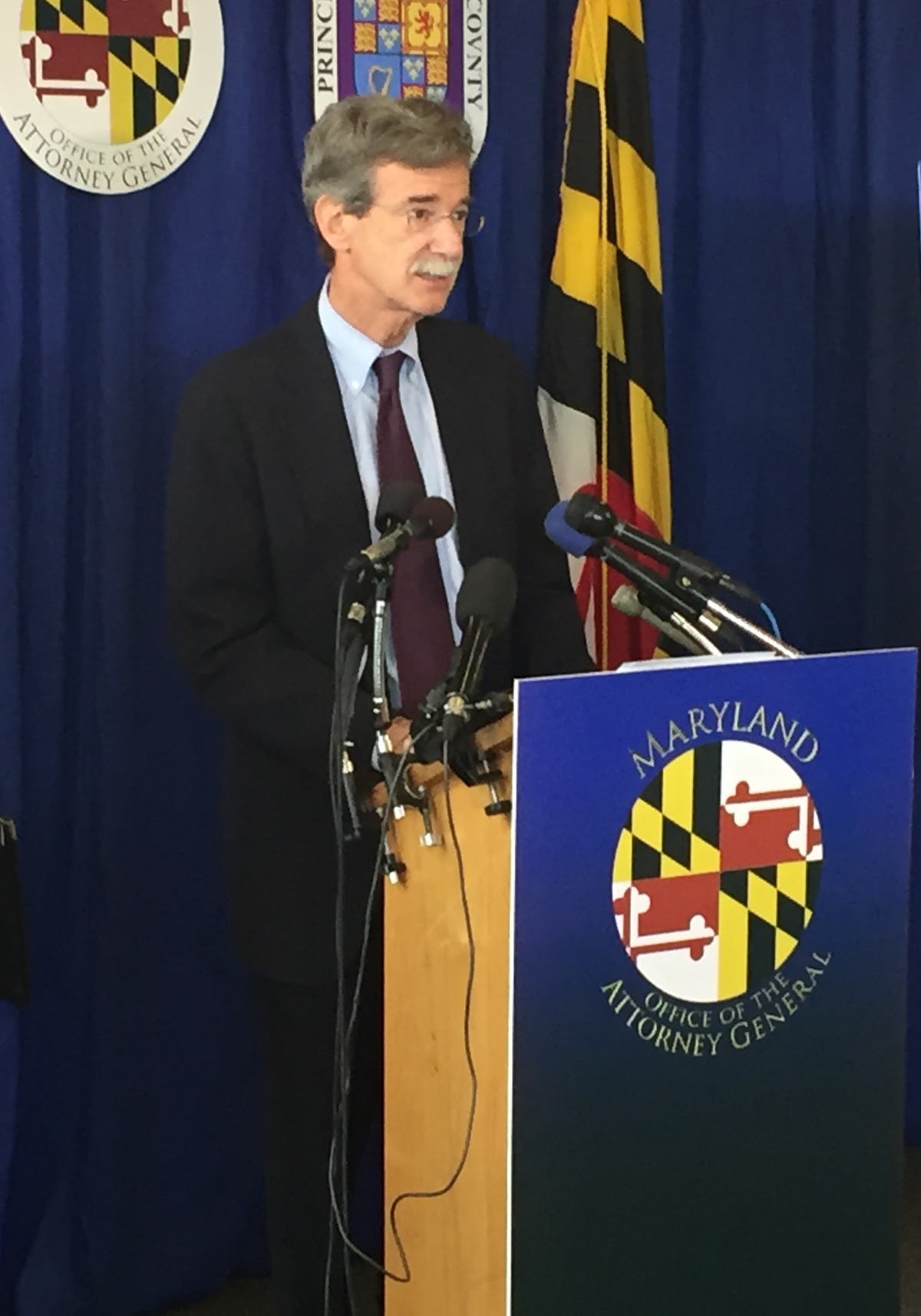
Attorney General Frosh Joins Coalition of Attorneys General Condemning Rollback of Protections for Seniors in Nursing Homes
By Aujunai Charpentiair
BALTIMORE, MD (May 31, 2018) – Maryland Attorney General Brian E. Frosh today joined
a coalition of 17 Attorneys General in submitting a letter to the U.S. Department of Health and
Human Services and its Center for Medicare and Medicaid Services (CMS) condemning
federal actions that would delay the enforcement of protections for Medicare and Medicaid
beneficiaries who receive care in skilled nursing facilities (SNFs).
“Residents of nursing homes are among the most vulnerable people in our communities,” said
Attorney General Frosh. “Our federal government should be strengthening protections for them,
not tearing them down. And the last thing the Trump Administration should be doing is reducing
penalties for nursing homes that abuse, neglect or exploit our neighbors who are in their care.”
In 2016, a set of CMS long-term care reforms was instituted to prevent the spread of infections in
nursing homes; improve training for staff; provide protections against abuse, neglect, and
exploitation of Medicare and Medicaid beneficiaries; and ban arbitration agreements. These
standards were scheduled to take effect in three phases. The second set of reforms was scheduled
to take effect on November 28, 2017. However, CMS delayed the implementation of
certain penalties by 18 months and lowered the frequency and amount of penalties for past
violations. Civil monetary penalties are an essential tool to ensure nursing facilities comply with
care standards and protect their residents.
Find out what's happening in Baltimorefor free with the latest updates from Patch.
In the letter to HHS, the Attorneys General warned that CMS’ recent actions to roll
back protections, if allowed to advance, would not only threaten the mental and physical security
of seniors in nursing homes, but also would potentially create additional challenges for the
Medicaid Fraud Control Unit of the Attorney General’s Office. Rolling back these important
and much needed long-term care regulations will result in greater challenges for holding
criminals and other violators accountable.
Joining Attorney General Frosh in sending today’s letter, led by California, are the Attorneys
General of Connecticut, Hawai’i, Illinois, Iowa, Massachusetts, Minnesota, Mississippi, New
York, Oregon, Pennsylvania, Rhode Island, Vermont, Virginia, Washington, and the District of
Columbia.
Find out what's happening in Baltimorefor free with the latest updates from Patch.
This is a partial reprint from the aforementioned letter. To read the letter in its entirety click on medicaid rollback
May 30, 2018
The Honorable Alex M. Azar II, Secretary
U.S. Department of Health and Human Services
200 Independence Avenue, S.W.
Washington, D.C. 20201
The Honorable Seema Verma, Administrator
Centers for Medicare & Medicaid Services
U.S. Department of Health and Human Services
200 Independence Avenue, S.W.
Washington, D.C. 20201
RE: Regulation of Skilled Nursing Facilities
Dear Secretary Azar and Administrator Verma:
As State Attorneys General, we take seriously our responsibilities to eradicate fraud,
abuse, and neglect in the provision of health care and to safeguard the health of the people of our
states. Our State Medicaid Fraud Control Units (MFCUs) recover taxpayer money and protect
the integrity of the health care system by investigating and prosecuting those responsible for
fraud and substandard care, which harm both individual patients and the larger health care
system.
We write this letter to express our concern and to alert the Centers for Medicare &
Medicaid Services (CMS) about the substantial and foreseeable detriment of CMS’ actions to
delay enforcement of protections for Medicare and Medicaid beneficiaries who receive care in
skilled nursing facilities (SNFs). The recent CMS guidance significantly decreases the
protections in SNFs by rolling back reforms to improve the safety and wellbeing of nursing
home residents. If allowed to proceed, recent regulatory changes will not only threaten the
mental and physical security of some of the most vulnerable residents of our states, but also
potentially create additional challenges for MFCU investigation and prosecution of grievances,
violations, and crimes occurring in SNFs. We therefore urge you not to lower the level of
regulatory oversight.
The proposed regulatory roll-back comes at a time when the U.S. population is aging and
in need of quality care in safe facilities. The number of people dependent on SNFs for healthcare
is growing: the population aged 65 and older is expected to double by 2060, and one in three
people turning 65 will require nursing home care during their lives.1
In 2015, 1.4 million people werewere in nursing homes, and over 60 percent of them had a cognitive impairment.2 Ensuring that this expanding vulnerable population receives quality care will require significant resources, including those for reporting abuse and for enforcement activity against bad actors.
1 “Medicaid’s Role in Nursing Home Care,” Kaiser Family Foundation, June 20, 2017, available at
https://www.kff.org/infographic/medicaids-role-in-nursing-home-care/. 2 Ibid.
On May 4, 2017, as part of a proposed rule published in the Federal Register, CMS
requested feedback on “Possible Burden Reduction in the Long-Term Care Requirements.”3
Since then, despite the fact that no formal rulemaking has taken place, CMS has issued
memoranda to decrease the amounts of Civil Money Penalties levied against non-compliant
SNFs and to delay the enforcement of the 2016 long-term care regulatory reform.4
These actions weaken existing protections for SNF residents and roll back critical reforms.
We as State Attorneys General recognize that Civil Money Penalties are an essential tool
for regulators to ensure SNF compliance and guarantee better performance in the future.
Consequently, weakening or delaying their application hampers our ability to both punish bad
actors and ensure improvement, thereby putting beneficiaries’ lives at risk.
For instance, the July 7, 2017 guidance instructs CMS Regional Offices to impose lower per-instance penalties rather than per-day penalties for past violations. These changes decrease the dollar amount and frequency of penalties that—though rare and low in amount—nonetheless did help safeguard Medicare and Medicaid beneficiaries.
The threat of penalties is a deterrent to SNFs engaging inabusive behavior. Eroding even these penalties enables unscrupulous SNFs to providesubstandard care and receive minimal penalties, if these lapses are even brought to light.
The 2016 long-term care regulatory reform included provisions to increase infection
control; improve training for SNF staff; and provide protections against abuse, neglect, and
exploitation of Medicare and Medicaid beneficiaries.
5 The components of these regulations were scheduled to take effect in three phases, the second of which was due to take effect on November 28, 2017, before CMS acted to delay implementation of certain penalties by 18
months. Enforcement of these reforms keeps SNF residents safe and healthy. They should not
be put off or discarded.
Even at present, the quality of care a beneficiary receives can be shockingly low. In 2016,
for example, 34.3 percent of SNFs had a violation for quality of care, and 20.1 percent for actual
harm or jeopardy to a resident.
6 Only 6.5 percent of facilities nationwide had no deficiencies in 2016.
7 In just the first four months of 2018, California regulators issued 170 citations to SNFs
3 82 FR 21088-21089, available at https://www.gpo.gov/fdsys/pkg/FR-2017-05-04/pdf/2017-08521.pdf.
4 “Revision of Civil Money Penalty (CMP) Policies and CMP Analytic Tool,” S&C: 17-37-NH, July 7, 2017,
available at: https://www.cms.gov/Medicare/P... and Certification/Survey Certification GenInfo/Downloads/Survey-and-Cert-Letter-17-37.pdf;
“Revised Policies regarding the Immediate Imposition of Federal Remedies- FOR ACTION,” S&C 18-01-NH, October 27, 2017, available at https://www.cms.gov/medicare/provider-enrollment-andcertification/survey...
and “Temporary Enforcement Delays for Certain Phase 2 F-Tags and Changes to Nursing Home Compare,” S&C 18-04-NH, November 24, 2017,
available at https://www.cms.gov/Medicare/Provider-Enrollment-andCertification/Survey....
An August 24, 2017 report by the Office of the
Inspector General (OIG) found that CMS has inadequate procedures to ensure proper
identification and reporting of incidents of abuse or neglect at SNFs.9 The OIG report detailed
that an estimated 22 percent of Medicare beneficiaries experienced adverse events—including
infections, pressure ulcers, and medication-induced bleeding—during their SNF stays. Nearly 70
percent of these adverse events could have been avoided if the SNF had provided better care, and
over half of residents who were harmed required hospital care.10 The number of violations at
SNFs demonstrates that beneficiaries are in need of more protection, not less.
To remove important protections for SNF patients amounts to a devaluation of human
wellbeing. Further, these actions to arbitrarily delay or capriciously remove protections are an
abuse of federal law. Rolling back regulatory reform and decreasing penalties for
non-compliance will result in less governmental oversight of behavior in the long-term care
industry, potentially diminishing the government’s ability to ascribe criminal intent to specific
actions in appropriate cases.
Investigations by State MFCUs will be further hampered by these regulatory changes,
because MFCUs rely on CMS to provide beneficiary protections through a strong regulatory
structure. The absence of a reliable regulatory backstop could pose challenges to prosecutions of
a variety of infractions, including wrongful evictions; inadequate staff training; and the absence
of protections against abuse, neglect, and exploitation. And with fewer safeguards to protect
them, nursing home patients will be subject to diminished standards of care and will be more
vulnerable to abuse, neglect, and exploitation.
We urge you to reconsider this ongoing regulatory rollback. Protecting the health and
security of some of our most defenseless people is a special charge we as States, together with
CMS, must uphold.
Nursing home photo compliments of Pinterest