Weather
Hurricane Irma: Maryland Ready With 'Any And All Resources,' Governor Says
As Hurricane Irma heads toward Florida, Maryland emergency officials are preparing to help neighboring states.


BALTIMORE, MD - Hurricane Irma is expected to arrive near Florida this weekend, and Maryland's governor is encouraging people to take precautions now. The state's emergency manager also gave tips for what to do.
“I urge all Marylanders to prepare now for the potential effects of Hurricane Irma," Maryland Gov. Larry Hogan said in a statement. "While we have the benefit of time, review your family emergency plans and ensure you have supplies on hand."
As of 8 a.m. on Saturday, the Category 4 storm was located 225 miles south of Miami, Florida, according to the National Hurricane Center. It was packing maximum sustained winds of 130 mph. Irma traveled over the Bahamas Friday night and made landfall in Cuba as a Category 5 hurricane. The center of Hurricane Irma is expected to travel along the Cuban coast Saturday and turn northwest by the evening. It should arrive around the Florida Keys Sunday morning and near the southwest coast of Florida Sunday afternoon, the National Hurricane Center advised. (Get Patch’s real-time news alerts, like us on Facebook or get the free iPhone app.)
Find out what's happening in Baltimorefor free with the latest updates from Patch.
The Maryland Emergency Management Agency (MEMA) said it appeared Maryland would not experience the severe impact other areas were anticipating.
"The most intense threats from Hurricane Irma are not predicted to hit Maryland at this time," MEMA Executive Director Russell Strickland said in a statement Friday night.
Find out what's happening in Baltimorefor free with the latest updates from Patch.
While MEMA is monitoring the storm and preparing for any possible hazards, the state has committed to help neighboring areas that may be hit.
“Thankfully, Maryland appears to be out of harm’s way from the worst impacts of Hurricane Irma; however there are millions of people in our region and surrounding states in the path of this deadly storm,” Hogan said. "We are prepared to provide any and all resources needed in the wake of Irma, as well as continued help for those recovering from Hurricane Harvey.”
First responders from both Baltimore and Montgomery counties have already deployed to help respond to areas impacted by Hurricane Irma and Hurricane Harvey.
Analysis: Irma's 'Cone Of Uncertainty' Is Massive
Here are the latest updates for Friday, Sept. 8:
- Classified as a Category 4 hurricane, Irma was packing maximum sustained winds of 155 mph Friday evening and was expected to maintain that power as it nears Florida.
- Evacuations have been ordered from Florida to the Carolinas. The governor of Virginia also declared a state of emergency on Friday.
- The hurricane has been blamed for more than 20 deaths.
- A cone predicting Hurricane Irma's path as it moves north shows the storm's center could be anywhere from Roanoke, Virginia, to Louisville, Kentucky, according to the National Weather Service. "While it's good for us that the storm has been trending further west, there still is a lot of uncertainty 5 days out with this," weather officials said Friday morning. "If it did track on the east side of the cone, we would have more substantial impacts."
- The effects of Hurricane Irma in Maryland, if any, would be "significantly less" than in the Caribbean and southeastern U.S. and would not be felt until "later Monday through Wednesday," according to the Baltimore-Washington office of the National Weather Service.
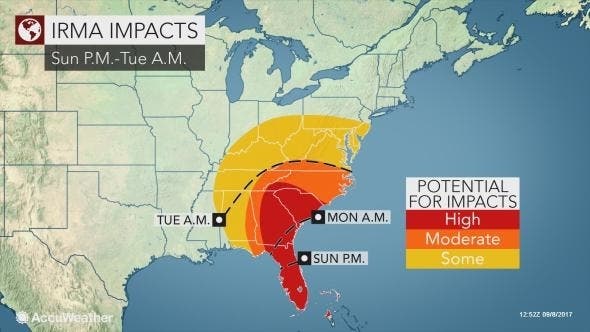
Map via Accuweather.
- Hurricane Irma: Marylanders Urged To Prepare For Storm
- Montgomery County First Responders Stationed In Georgia For Hurricane Irma
- 4 Baltimore County Firefighters Helping FEMA With Irma Response
- Will Hurricane Irma Hit Maryland?
- Hurricane Irma: Pet Safety Tips Before Storm
"Hurricane tracks can shift quickly," Strickland said. "Everyone in our area should regularly check forecasts, build an emergency kit and always listen to the directions of local officials."
MEMA On How To Prepare
- Get your emergency kit in order. Plan for at least three days of supplies. Recommended items to include are bottled water, non-perishable food, battery-operated radio, flashlight, extra batteries, toiletries, first aid kit, pet food, prescription medications and copies of important documents (i.e., insurance policies, bank accounts, identification).
- Have a hurricane communication plan. Your family may not be together when a hurricane strikes, so plan on how you will contact one another. Locally, stay in touch with friends, relatives and neighbors. Designate someone out of town, not in the impacted area, to be a backup point of contact.
- See if you are in a flood-prone area. Take any necessary steps if so to get flood-ready.
For now, the National Hurricane Center says the deadly storm, which was the strongest hurricane in the Atlantic's history, will make landfall in southern Florida this weekend.
But forecasters are warning everyone in coastal areas to be prepared, with some models suggesting the storm will turn north and follow the coast of Florida into Georgia, the Carolinas, and possibly the mid-Atlantic states. The unpredictable nature of hurricanes makes an exact forecast difficult.
People can stay informed by monitoring the forecasts from the National Weather Service for the Baltimore-Washington area and the National Hurricane Center for refined projections as the storm takes its course.
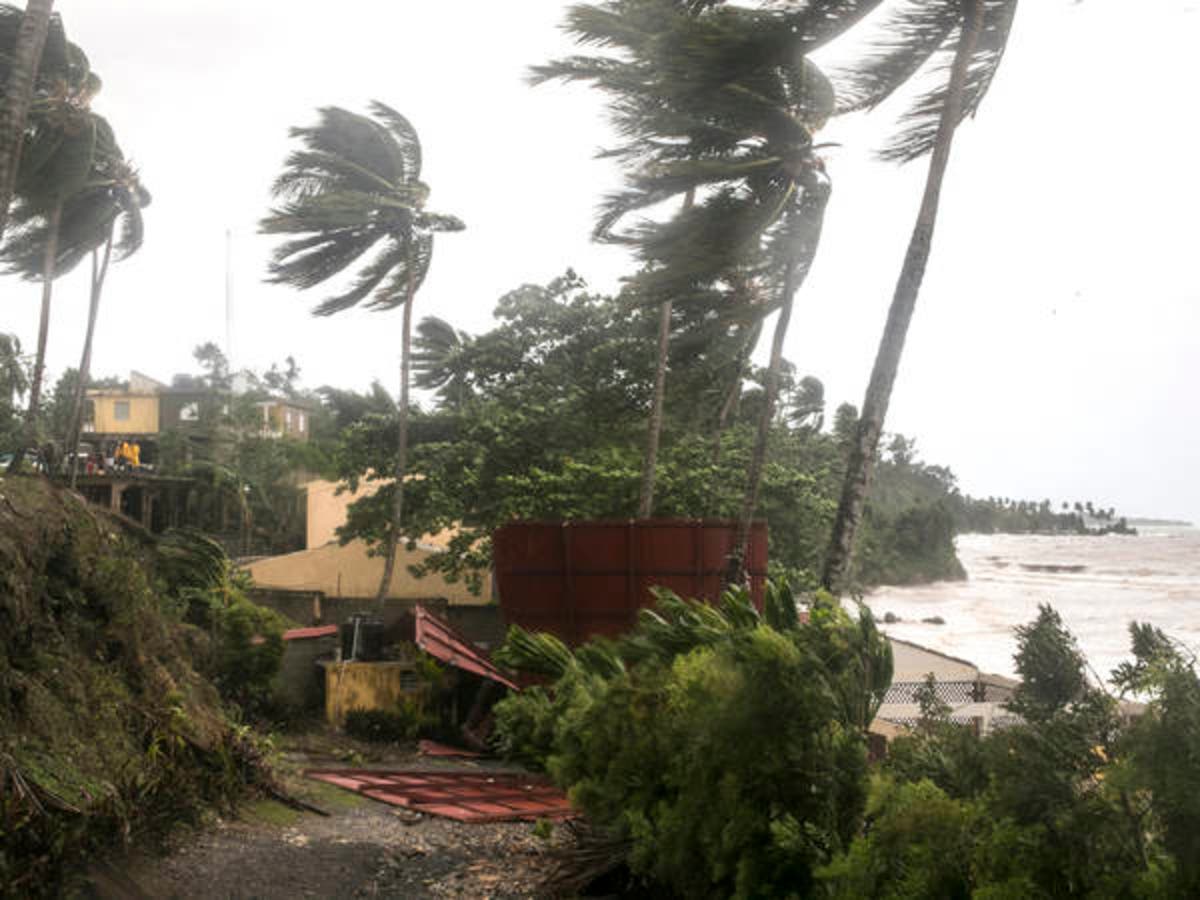
Photograph by the Associated Press.
Get more local news delivered straight to your inbox. Sign up for free Patch newsletters and alerts.