Arts & Entertainment
'Daybreak' Before Bypass on Ma & Pa Trail
Richard Brink's design was decades in the making.

Richard G. Brink could not have expected that his college notes would come in handy decades after graduating from the University of Massachusetts Amherst with a civil engineering degree in 1987. But when the Ellicott City resident came across a sketch from his design class, he was inspired.
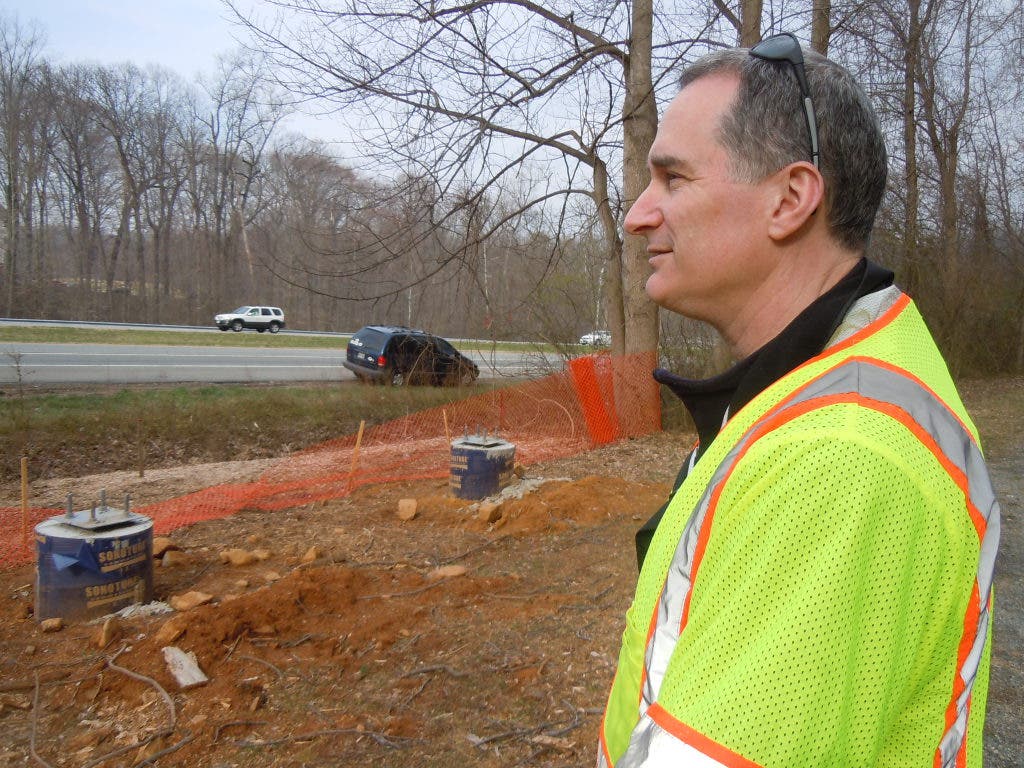
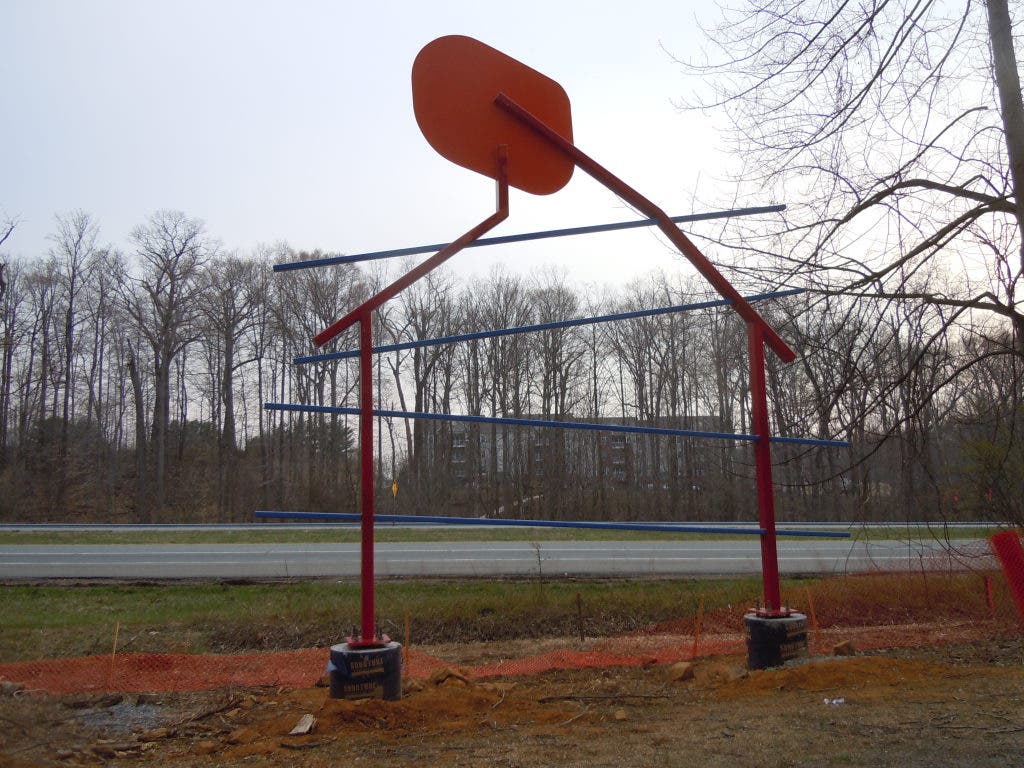
“As soon as I saw it I said, ‘Bingo! That’s it,’” said Brink, 51, the designer of the “Daybreak” sculpture erected Thursday on the Ma & Pa Trail along Maryland Route 24.
The bridge engineer combined the college model with his knowledge of the area—acquired, he said, by inspecting "every" bridge in Harford County—to enter a sculpture design contest with the Town of Bel Air a few years ago.
Find out what's happening in Bel Airfor free with the latest updates from Patch.
He did not win, but Natalie Weeks, a Harford County Cultural Arts Board coordinator, was a contest judge. Brink’s design caught her eye and she asked the KCI Technologies employee to submit it for a sculpture on the Ma & Pa Trail.
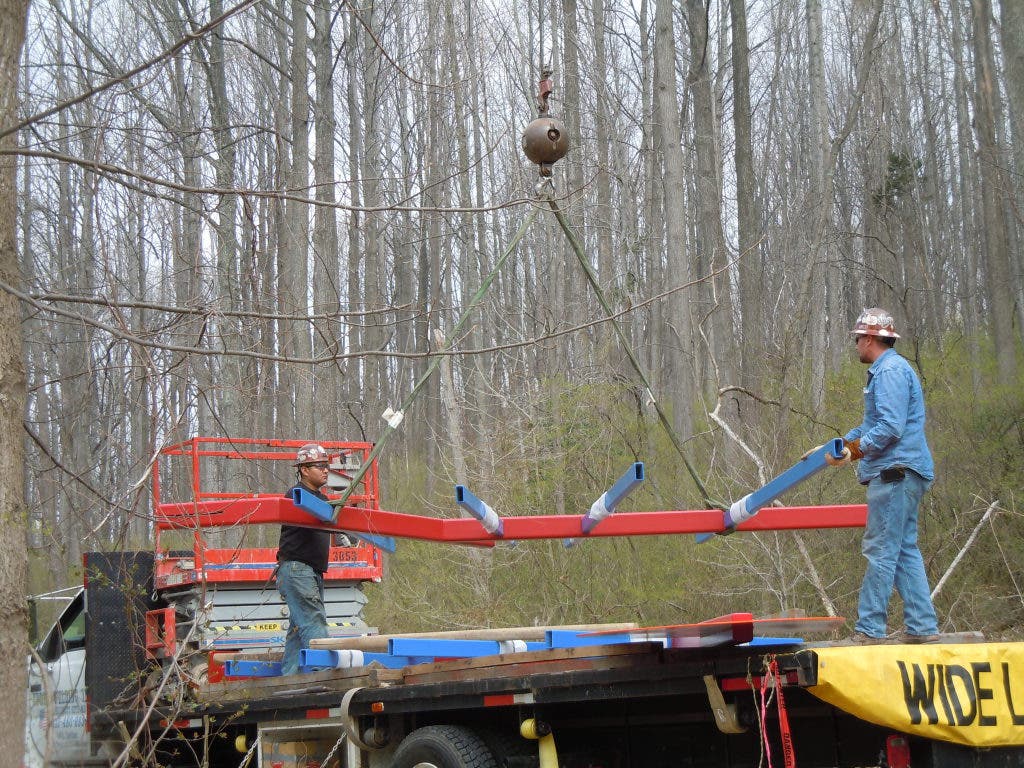
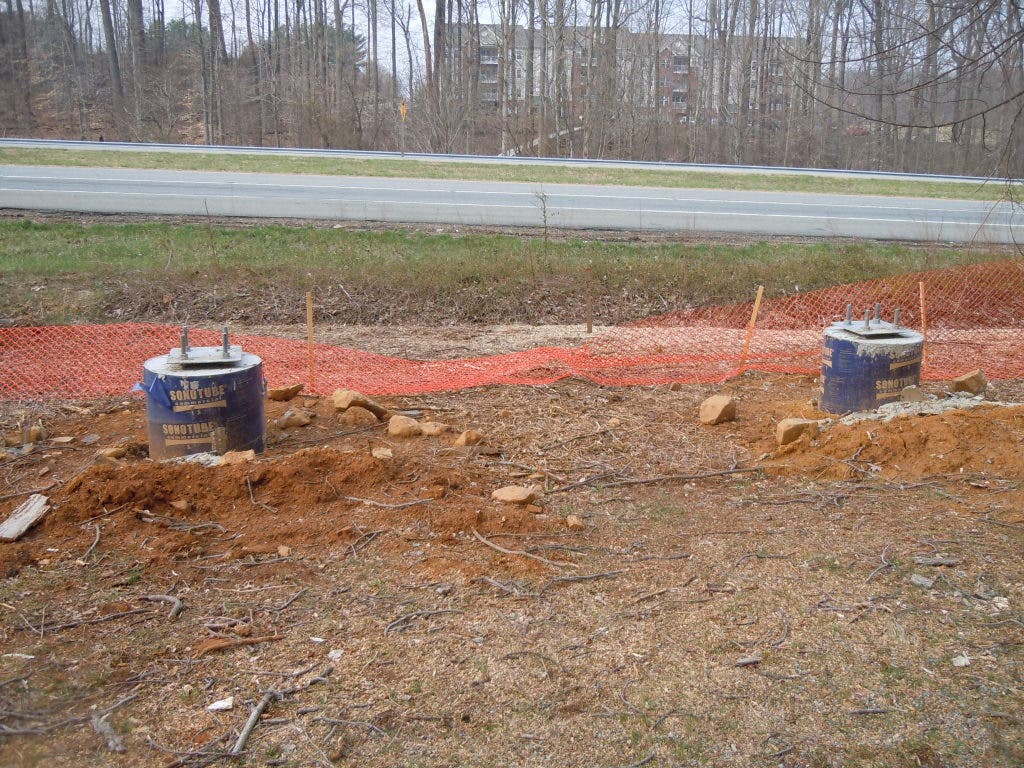
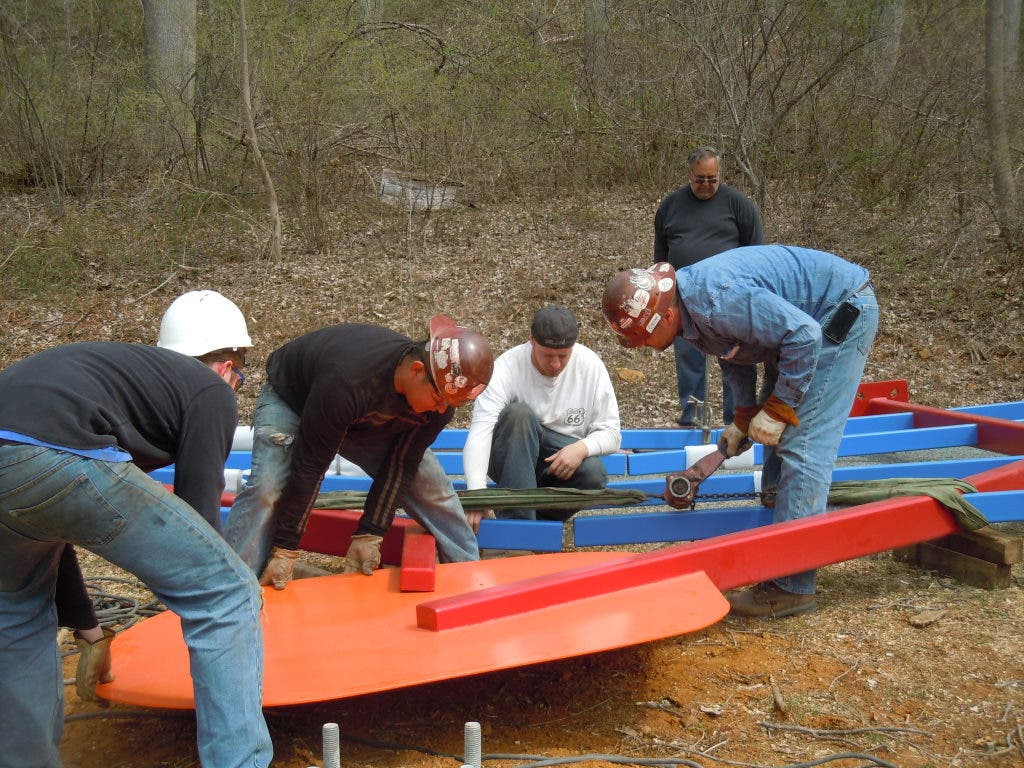
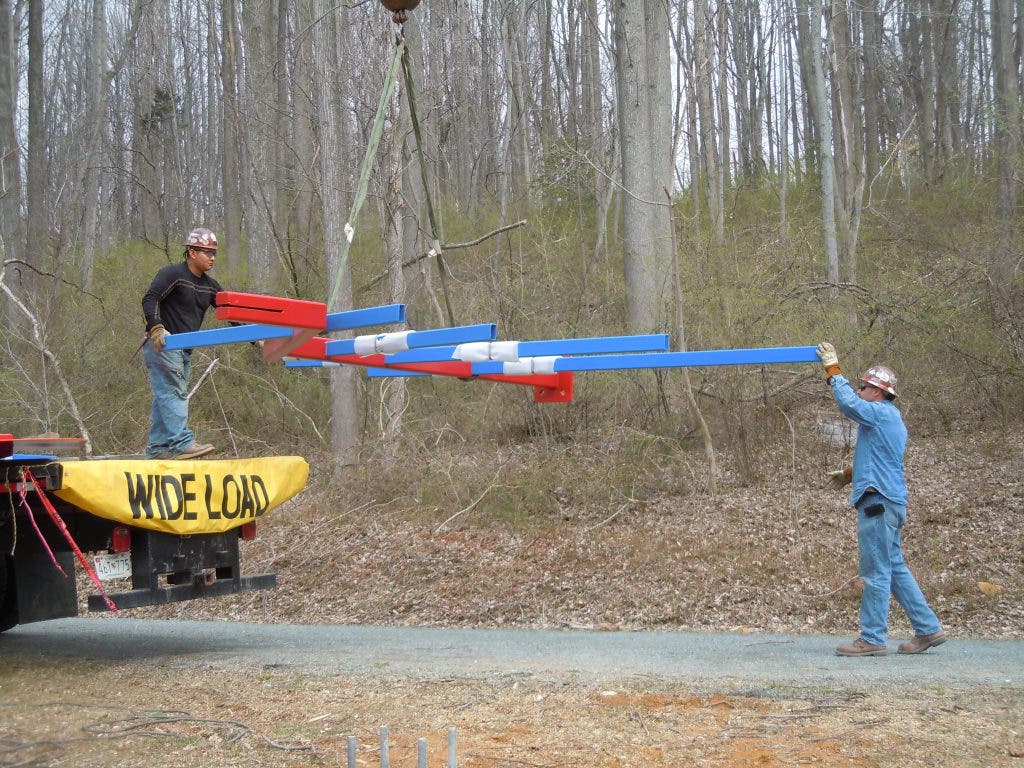
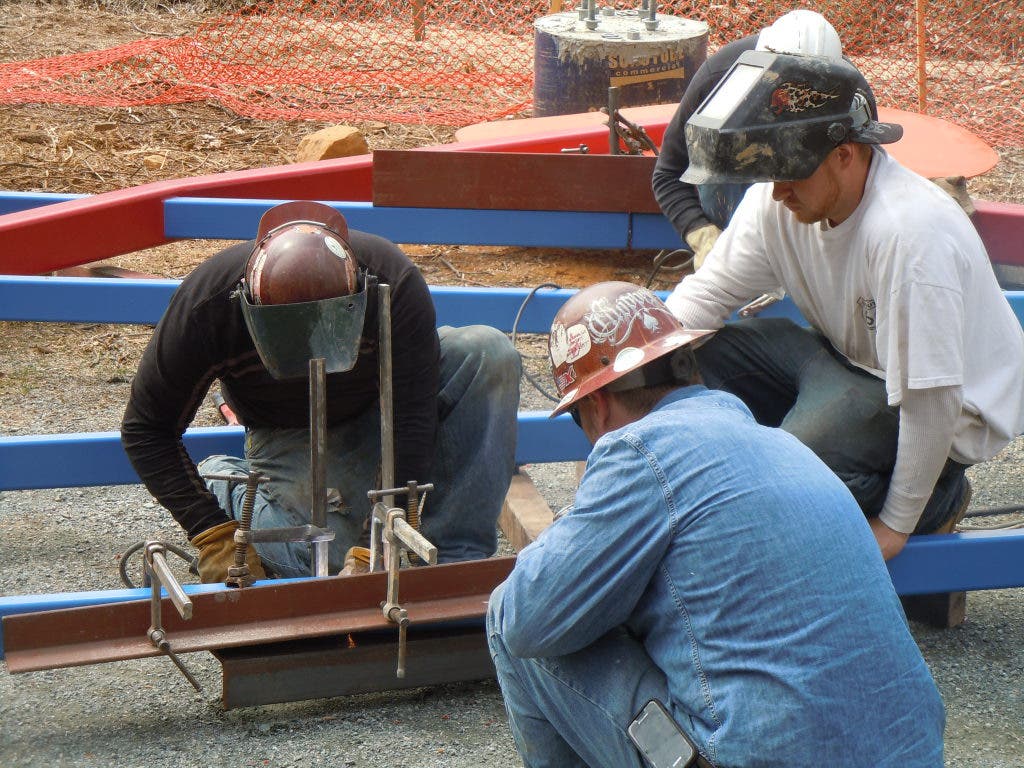
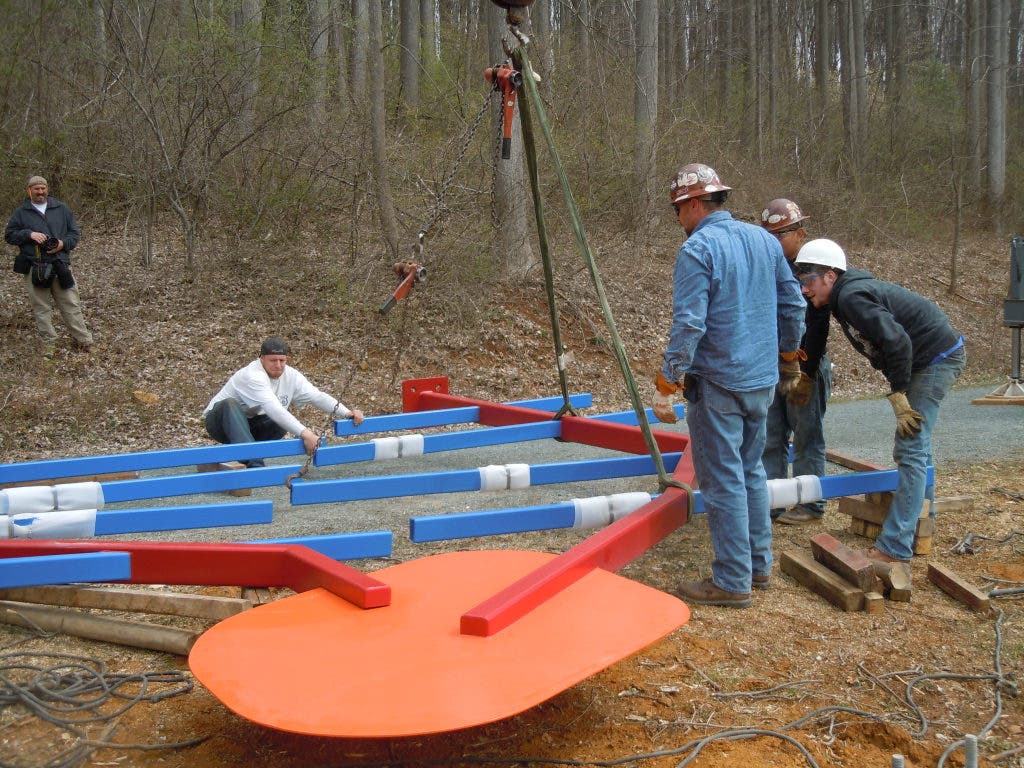
The plan came to fruition Thursday when Eddy’s Welding, also of Ellicott City, delivered the steel sculpture in two pieces before welding them together and erecting "Daybreak."
Find out what's happening in Bel Airfor free with the latest updates from Patch.
“It’s very colorful,” said Brink, seeing the finished product for the first time Thursday. “I’m a more subdued kind of person.”
Weeks said the structure cost between $20,000 and $25,000 and was funded by Harford County government, parks and recreation, the Maryland Arts Council, the Cultural Arts Board and local resident Richard Streett.
Brink based part of the structure on Streett’s business, Spenceola Cannery. Streett also donated spurs from the railroad near his business to the sculpture.
Weeks hopes the structure will be complete with planters around the foundation by June, when a dedication ceremony is planned.
“In my view, the purpose of sculpture is to put a physical shape to metaphors,” Brink said.
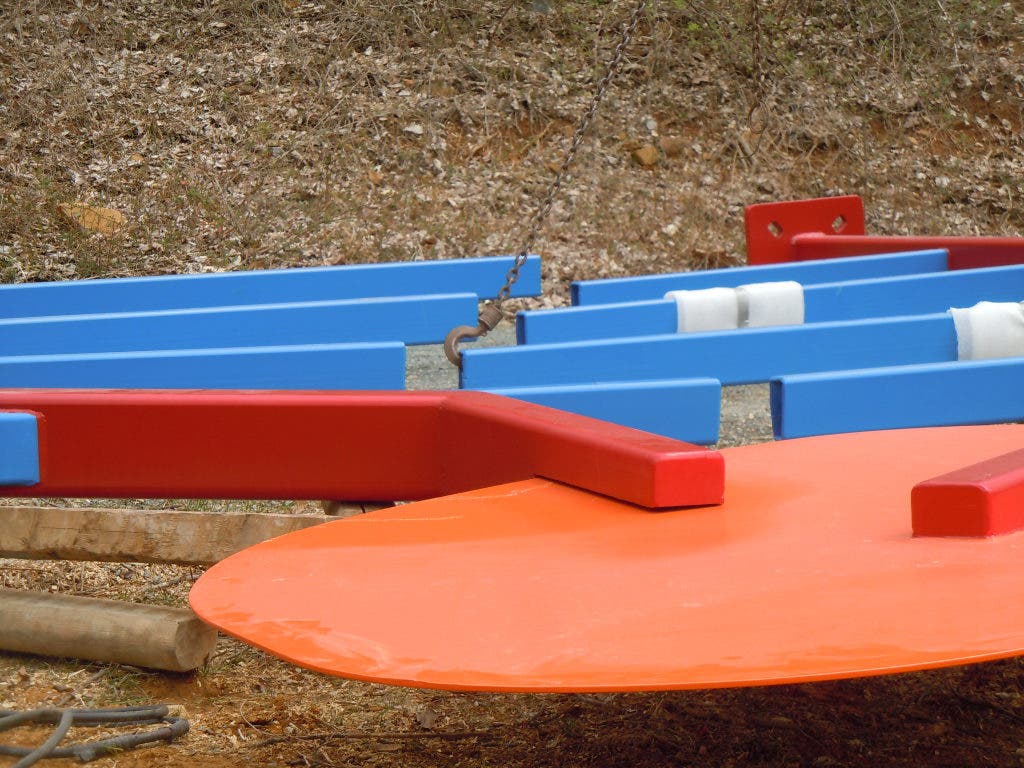
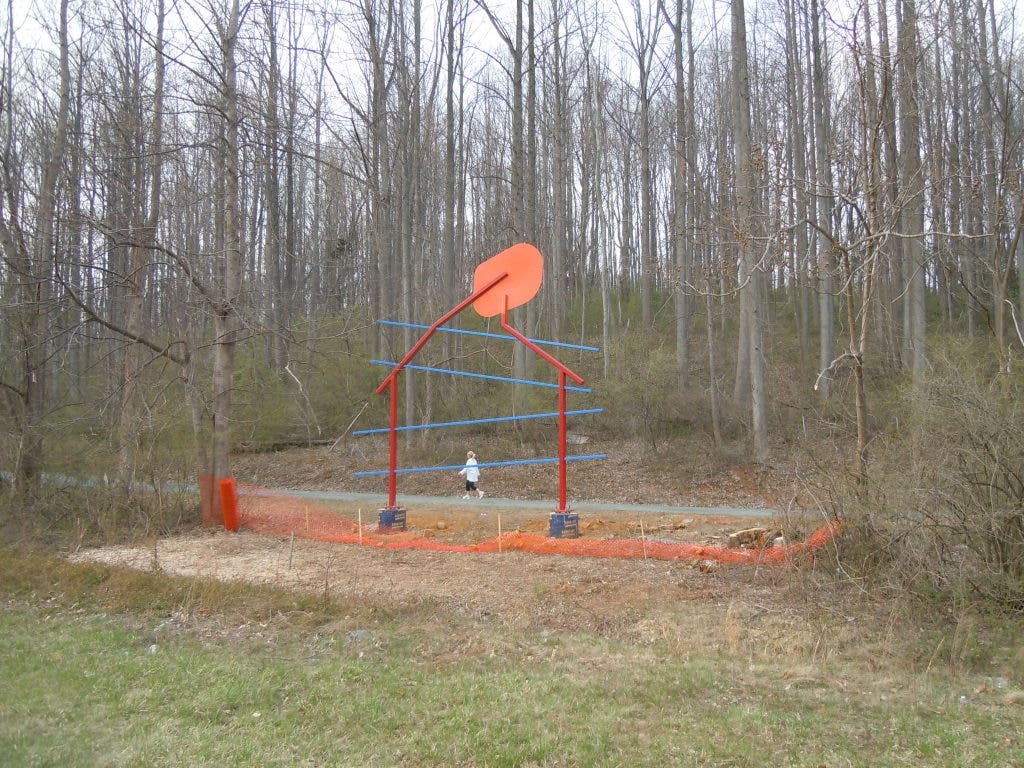
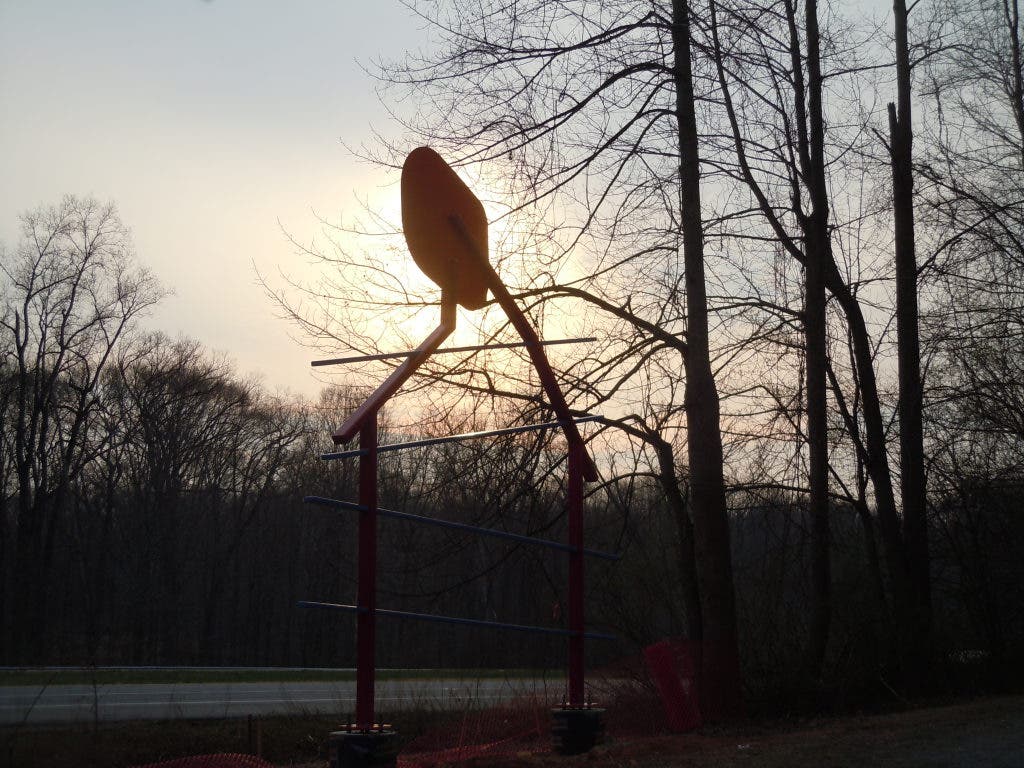
Atop the structure is an orange sun (“I didn’t want a perfect circle,” he said) on a crooked red house (“based on the roof at Spenceola”) with blue railroad tracks running through it (“into the horizon”).
“My big fear was that people would mistake it for a sign … but it’s not looking like a sign,” Brink said. “I like the way it turned out. It has a nice, clean look to it.”