Politics & Government
Maryland's Top 30 Interstate Traffic Bottlenecks
While Maryland has spent more on roads and bridges, the state needs to do more to help commuters, says a new report.


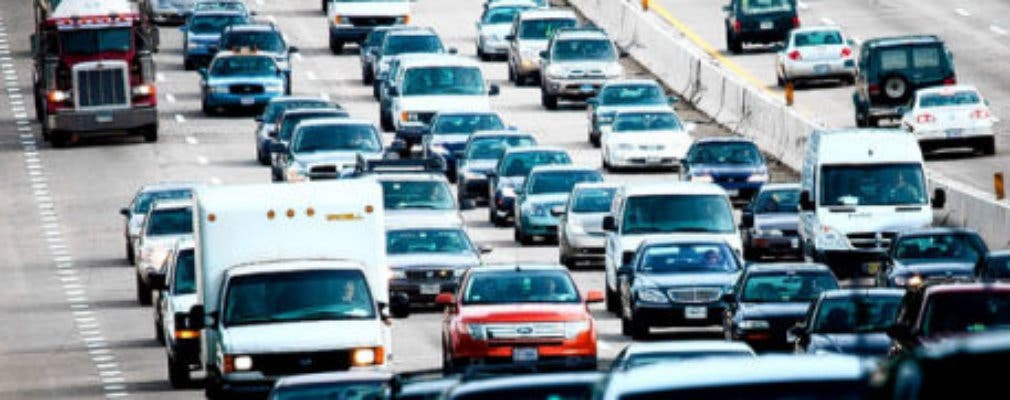
BETHESDA, MD — While commutes in both the Washington, DC, and Baltimore suburbs in Maryland are a nightmare, there is now a ranking of the 30 biggest traffic bottlenecks in the state.
TRIP, a national transportation research group, has listed the worst areas for backups in the state’s interstate system.
And the winner – or loser, depending on how you look at it -- for biggest bottleneck is I-495 inner loop at I-270 spur in the Bethesda area.
Find out what's happening in Bethesda-Chevy Chasefor free with the latest updates from Patch.
At No. 2 on the list is I95 outer loop at the Greenbelt exit in Prince George’s County.
No. 3 on the list is a tangle for Baltimore area commuters: I95 northbound at MD 100, exit 43 in the Hanover area.
Find out what's happening in Bethesda-Chevy Chasefor free with the latest updates from Patch.
Route 50 on either side of the Bay Bridge -- a perennial traffic sore spot in the summer -- isn't on the report because it only includes roads with an Interstate designation.
Six intersections on the Baltimore Washington Parkway are included on the top 30 list, says The Capital Gazette, and six Baltimore Beltway are also included. Five intersection on Interstate 95 made the list.
»TELL US: What is the worst traffic bottleneck you encounter on Maryland highways? Tell us in comments below.
But there is plenty of commuter pain to share across Maryland, which adds up to several days just spent sitting in traffic each year.
Two of the nation’s 25 most congested urban areas are located in or include parts of Maryland. The Washington metro area is ranked first nationally in the cost of traffic congestion per commuter, with congestion costing $1,834 per commuter and causing 82 hours of delay annually.
The Baltimore urban area ranked 25th in the cost of traffic congestion per commuter at $1,115, with the average Baltimore drivers losing 47 hours annually.
The new report by TRIP applauds a 2013 state transportation funding boost and the 2015 approval of a long-term federal surface transportation program, which the study authors say have significantly increased state transportation investment.
The TRIP report, “Keeping Maryland Mobile: Progress and Challenges in Providing an Efficient, Safe and Well-Maintained Transportation System,” singles out construction of the final section of the Intercounty Connector, construction of two toll-lanes on eight miles of I-95 from I-895 to MD 43, widening I-70 to six lanes at South Street/Monocacy Boulevard, widening several sections of US 40, and widening and reconstruction of I-695/Wilkens Avenue as projects that have improved traffic conditions.
Get more local news delivered straight to your inbox. Sign up for free Patch newsletters and alerts.