Sports
Western Tech's Slepesky Harnessing His Intensity
Wolverines head coach Mike Slepesky works toward finding the most effective combination of a fiery, but composed coaching style.
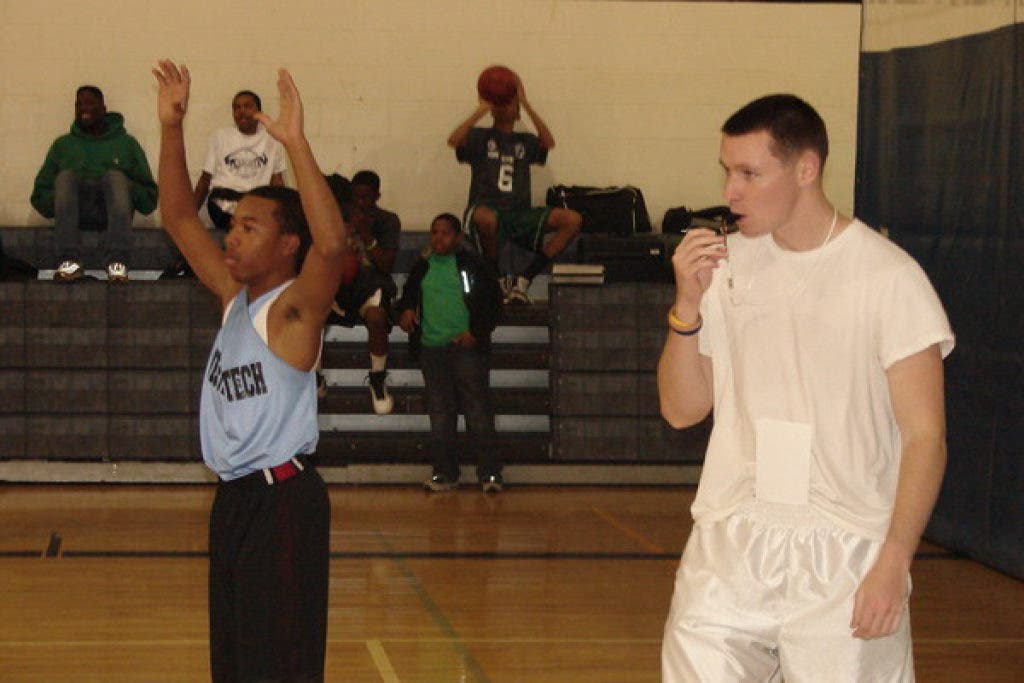


In only his second year as varsity head coach at Western Tech, Mike Slepesky is still shaping his identity as the head man for the Wolverines basketball program. However, there is one thing he is certain on: the days of being a constant, shouting, in-your-face, high intensity coach are over.
The byproduct of player feedback, self reflection and a tale from a fellow coach helped Slepesky realize that perhaps a style change in coaching would help get more out of his players and place less of a strain on his overall health.
At a youthful 26 years old, Slepesky is far from chronic health problems, but a word of advice from Owings Mills coach Richard Epps really helped put the job in perspective.
Find out what's happening in Catonsvillefor free with the latest updates from Patch.
During a playoff game last season Epps was forced to leave the game and head to the hospital with chest pains.
“I had to change my coaching style because of my health,” said Epps, who was unaware that his message really hit home with Slepesky. “I don’t want to catch a heart attack or a stroke coaching high school basketball. It’s not worth it. He might have caught on that family and health is more important.”
Find out what's happening in Catonsvillefor free with the latest updates from Patch.
Not only that, Slepesky grasps the fact that, although there are certain times when players need the yelling and a kick in the butt, a lot of athletes simply don’t respond to that approach to coaching. He’s eased off some of the pressure and his players have rewarded him with their performance.
The Wolverines have gone from a losing record a year ago (8-12) to a solid 12-8 season in 2011.
“I was very over the top in terms of berating the players and being all over them and boisterous if they did something wrong,” Slepesky said, looking back at his past coaching demeanor.
“I’ve tried to become more laid back. In some sense, I’ve been scaring the players and it was like they were playing on eggshells. That’s the reason I started to peel back a little bit. I didn’t have any complaints, but I was worried I was putting the players under too much pressure.”
Slepesky also admitted that entering the scene as a young coach, whose playing career came to an end after high school, he eagerly wanted to secure his players’ respect when it came to carrying out his instructions.
However, having coached a lot of the same students over three seasons (he coached the junior varsity in 2009), Slepesky and his players have formed a fluid and positive working relationship with one another.
The players understand that their coach can be effective playing both sides, eliciting a calm presence on the sideline yet capable of being fiery when the situation calls for it.
“There are times when it’s necessary and we need the angry coach to get us back on track,” senior Keith Meyer said. “He’s aggressive as a coach. He demands what he wants and what he wants is what we give to him, so I like that aggression.”
Still, Meyer added that he likes that Slepesky has evolved into more than just a one-dimensional coach, attitude-wise. “I like the mixture of both. He’s come a long way in our three years. He’s a good coach.”
Fellow senior Theo Pitts, who Slepesky tabs as one of his hardest working players, chalks up a lot of his maturation and improvement on the court to his coach’s modified attitude along with his flexibility and willingness to listen—even as a person in a position of authority.
“Nowadays he’s pretty laid back. I think he realized that he can get more out of us if he was calmer with us instead of screaming at us, things like that,” Pitts said. “He’s a lot more flexible. He’s not set in his ways. He’ll listen to you. I can come to him about a whole bunch of things about the game.
“I’m a lot more comfortable on the floor [as a result].”
Still, Slepesky has his moments where he’ll slam his hands on the hardwood or leap into the air like a frog on steroids—and that’s okay.
As he logs more years of experience walking the sidelines and coaching up his kids, he’ll continue to develop that balance of when to remain tranquil and when to let-a-rip.
Looking at his year-to-year improvement and talking to his players, you can tell he’s well on his way.
“The maturity of coaching will help me with that in terms of, when did I blow up and did it help or hurt?” Slepesky said. “You definitely have to switch it up and you learn that over time. But more so it deals with your personnel. Certain players are receptive to you getting intense. Certain players don’t respond to people being in their face. It comes with maturity and knowing your personnel.”
Slepesky thinks back to a loss this year versus Loch Raven where his squad nearly eliminated a 15-point fourth quarter deficit to capture a comeback victory. That game provided an example of where he found the vital equilibrium between intensity and composure.
“I started getting animated on the sideline, yelling directions, clapping, trying to make some noise so they realize that you are in it with them and you’re a sixth man,” Slepesky said. “It sparks them in a positive manner and vice versa. I try to stay intense on the sideline but I’m trying to get better at picking and choosing battles.”