Arts & Entertainment
Mural is Symbol of Berwyn Community Through the Years
More than 10 years ago, artists, community members strived to depict Berwyn train station exactly as it was.
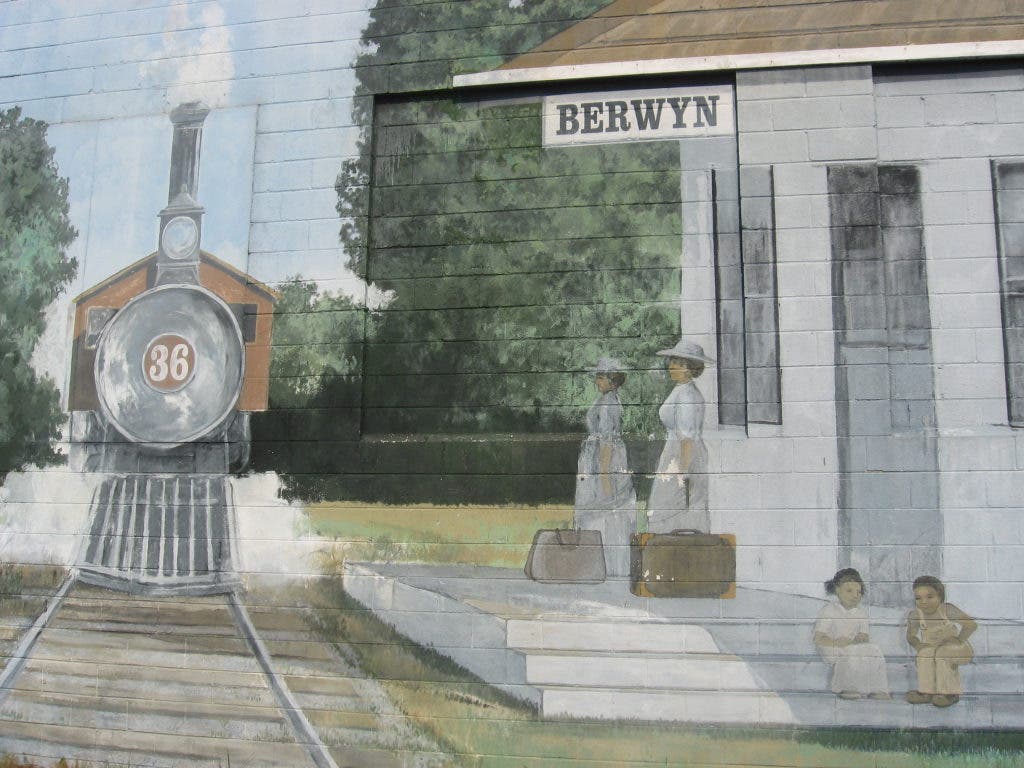


It’s hard to miss the Berwyn train station mural on the side of an auto shop on U.S. Route 1, but with only a quick glance most drivers won't catch the impressive details or the story behind it.
The former head of the Berwyn Arts Exchange, which organized the project, knows the story. Although the mural is faded now, Sandy Tyler remembers when the paint met the brick wall more than 10 years ago, and the planning that went into its creation.
She said the mural is a glimpse into the community as it was in the 1800s, when there was a railway station at the end of Berwyn Road.
Find out what's happening in College Parkfor free with the latest updates from Patch.
"The Berwyn Train Station was extremely important to the community," Tyler said. "People were very insistent that the mural look as the station originally did," she said.
“There were actually arguments in the end about the smoke coming from the train. The volunteers and community all wanted more billowing clouds of smoke," Tyler said.
Find out what's happening in College Parkfor free with the latest updates from Patch.
She said that the wall that the mural now covers used to be bare and dirty.
“It all started because the neighbors were complaining about having a dirty wall,” Tyler said. “Someone suggested painting a mural.”
Once progress on the mural officially began, it took about three months, Tyler said.
The mural project was the epitome of the purpose of the Berwyn Arts Exchange, a non-profit organization originally started to get kids and adults to engage in the community. The artist, who was from Greenbelt, was selected because of his expertise in mural painting. The Berwyn Arts Exchange also enlisted the help of several Greenbelt High School art students to assist.
In the end, some of the small details were what made the mural most special, like the number 36 on the front of the train, which indicates the number of volunteers who helped with the mural.
Those looking closely at the mural will also notice a Bank of America, which was a major contributor to the project.
Even the decision to include people in the mural was a major debate. When the hired artist wouldn’t do it, the high school students who were helping stepped up to give the mural a human aspect.
“When we presented the finished mural, many members of the community came to speak and show their support for what we had done,” said Tyler.