Traffic & Transit
Maryland Car Vs Deer Crashes Jump As Mating Season Begins
Here are the odds drivers will strike a deer on Maryland roads this fall and some tips to avoid a crash as deer mating season begins.


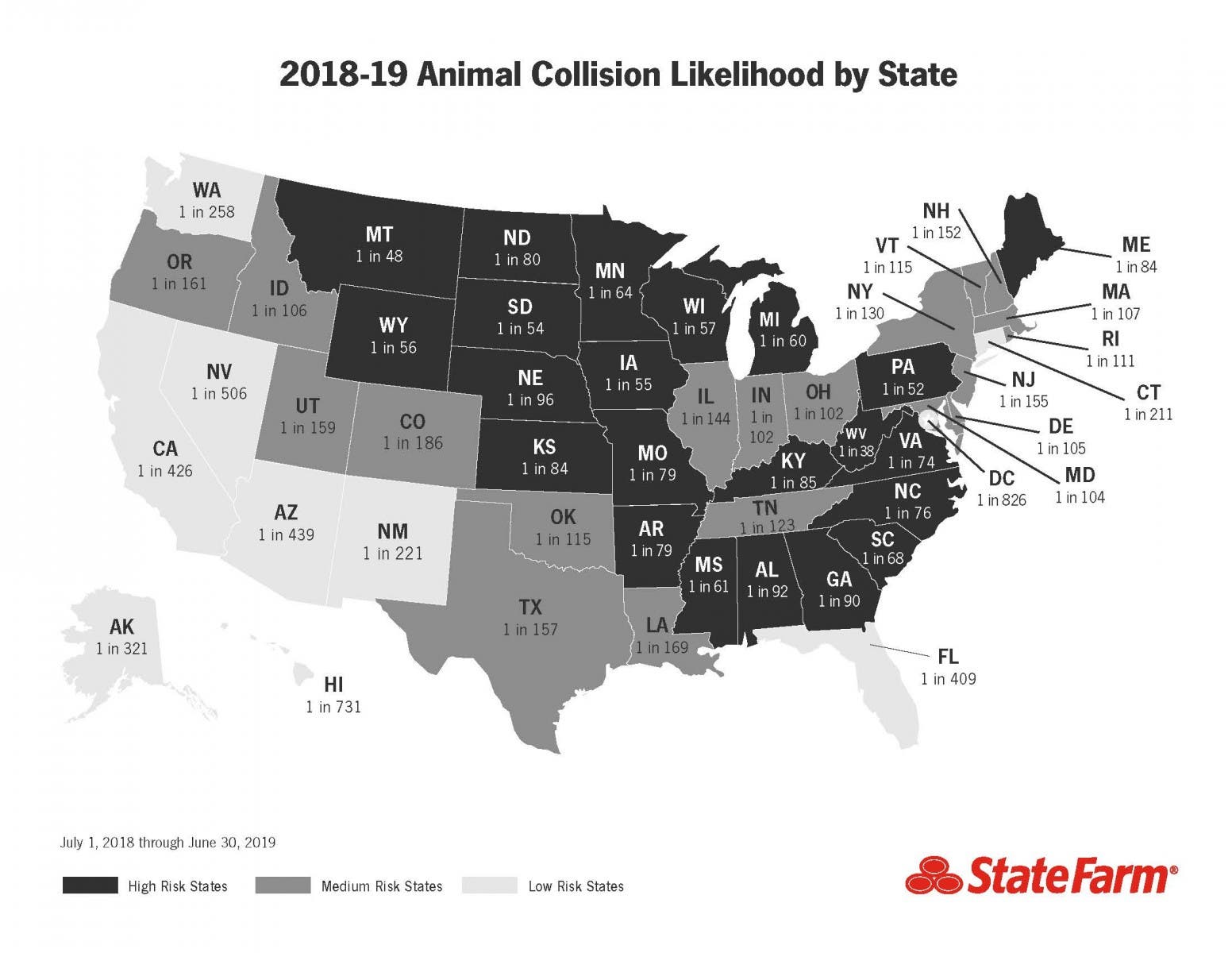
MARYLAND — Chances are good that drivers are going to have a close and expensive encounter with a deer on a Maryland road this fall. Deer — especially frisky bucks looking for a mate from October through December — are creating hazards on roads across the country. The odds a motorist will hit a deer or other animal are 1 in 116, according to State Farm Insurance.
In Maryland, drivers have a 1 in 104 chance of a collision with an animal. Most animal-involved crashes occur around dawn and dusk as deer look for food.
“Deer greatly increase their movements during the breeding season from mid-October through November as they search for mates,” Wildlife and Heritage Service Director Paul Peditto said. “Motorists should be especially cautious from dusk to dawn when deer are most active and likely to be encountered on the road.”
Find out what's happening in Columbiafor free with the latest updates from Patch.
The likelihood of a vehicle-animal collision is based on the insurer’s estimate that U.S. drivers made more than 1.9 million animal collision claims from July 1, 2018, to June 30, 2019.
The 10 states with the greatest likelihood for an animal-vehicle collision are:
Find out what's happening in Columbiafor free with the latest updates from Patch.
- West Virginia (1 in 38)
- Montana (1 in 48)
- Pennsylvania (1 in 52)
- South Dakota (1 in 54)
- Iowa (1 in 55)
- Wyoming (1 in 56)
- Wisconsin (1 in 57)
- Michigan (1 in 60)
- Mississippi (1 in 61)
- Minnesota (1 in 64)
Maryland Department of Natural Resources officials say drivers can try to avoid deer collisions by taking these steps:
- Be extra attentive in the early morning and evening periods.
- Gradually brake to avoid hitting a deer; do not swerve since this may cause you to lose control of your vehicle.
- Slow down if a deer crosses the road ahead of you. Deer often travel in groups and others may be nearby.
- Stay alert and slow down in areas where deer crossing signs are posted. These indicate locations of frequent deer activity.
- Watch the shoulder of the road. Be alert for deer standing along the shoulder as they may suddenly move into the roadway. Slow down and sound your horn to scare them away.
For some perspective, State Farm actuaries say Americans have a 1 in 175 chance of being audited by the IRS, a 1 in 215 chance of dating a millionaire, a 1 in 220 chance of writing a New York Times bestseller, a 1 in 250 chance of learning their child is a genius and a 1 in 563 chance of catching a ball at a Major League Baseball game.
Any of those outcomes would be preferable to having your vehicle become one with an animal. State Farm said it expanded its annual analysis of deer-vehicle collisions this year to include other animals including ostriches, owls and more, because they, too, can be dangerous for all involved.
A 2016 study in rural southwest Virginia found that among the 1,837 cases of road kill were 64 different species, including 1,415 mammals, 188 birds, 105 reptiles, 122 domestic animals and seven frogs.
But deer still are the main hazard in most areas — especially when bucks, the males, are “in rut” and seeking a mate. During this active time for deer, bucks will run in front of your car while chasing a potential mate, or while confronting another buck that has eyes on the same doe.
“Claims after collisions with an animal range from small dents to totaled vehicles and injured drivers and passengers,” Michael Braaten, State Farm director of enterprise research, said in a news release. “By sharing ways to help drivers be aware of the increased dangers this time of year — including inclement weather, shorter periods of daylight and students driving home after evening activities — State Farm hopes to help decrease the number of collisions and injuries.”
High-frequency whistles on your vehicle aren't going to help you much, according to researchers at the University of Georgia, who tested a variety of sounds at different frequencies and intensities to see how deer reacted.
Their conclusion: Though some people swear by them, deer whistles don't change the animals' behavior.
There's also some debate on how much honking helps. It can't hurt, but it may not help, either.
Here are things you can do to lower the chances that you'll hit a deer on the road:
1. Slow down, keep your eyes peeled on both sides of the roadway and be prepared to come to a complete stop if necessary. Deer don't stop, look and listen before they dart into the roadway. Deer-crossing signs warn of where they're most likely to cross, but you can't count on that, especially during rut.
2. Use your high beams when possible to increase your chances of seeing animals in the ditches. Flicking on your high beams might cause animals to scurry away.
5. Don't veer to avoid deer. Instead, brake firmly, hold on to the steering wheel and stay in your lane as you bring the vehicle to a controlled stop.
Also, because it makes sense, make sure you're wearing your seat belt. If you do hit a deer, it will decrease the chances you will be injured.
Get more local news delivered straight to your inbox. Sign up for free Patch newsletters and alerts.