Health & Fitness
Impaired Judgment, Impaired Leadership
Impaired judgement and impaired leadership prevents storm water fee from passing.
Written by Kirk Mantay, Restoration Project Manager for the South River Federation
A lot of political hay is being made these days about funding the cleanup of our local rivers and creeks, especially those designated “impaired waters” like the South River.
Impaired water bodies are recognized by the US EPA for failing to meet very basic guidelines for human safety and/or biological production.
Find out what's happening in Edgewater-Davidsonvillefor free with the latest updates from Patch.
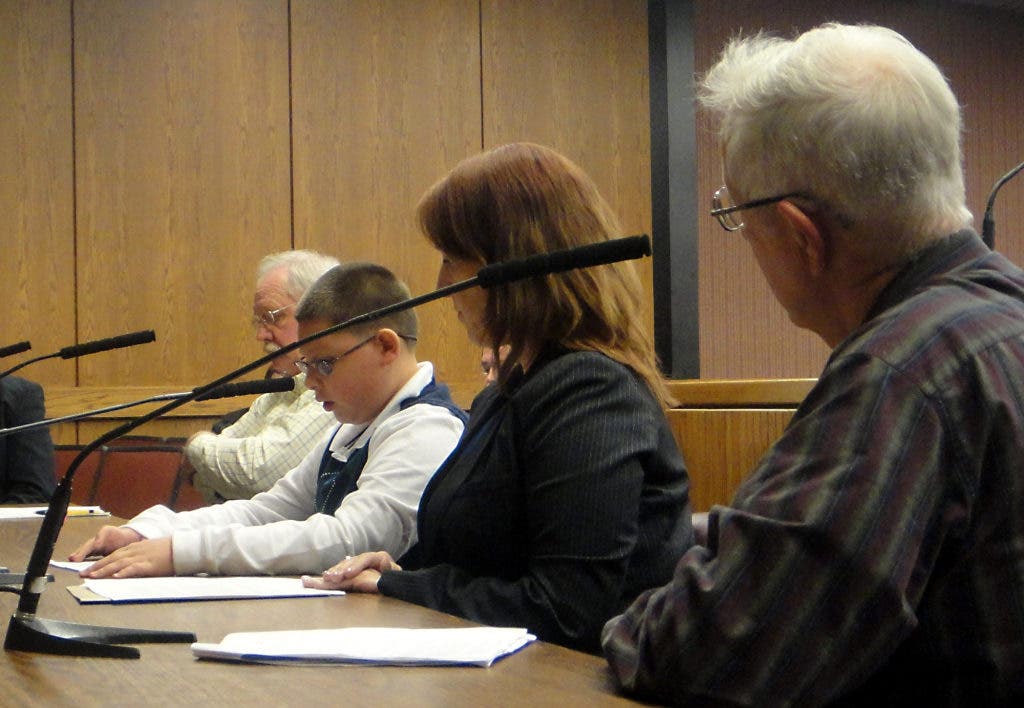
However, stopping the flow of pollution into impaired waters requires political will, regulatory vision, and of course, money. The Anne Arundel County Council recently heard a bill that would fund the restoration of the County's waterways by levying a $25-35 storm water fee on most landowners in the County. The bill was withdrawn in the hopes that instead, the Maryland state legislature will decide to pick up the tab instead. The reasoning? "It's just not a good time for a new fee in this county."
Of course, during our historically unprecedented 15 years of economic growth in Anne Arundel County from 1993-2008, it "wasn't a good time" either - a storm water restoration bill was narrowly defeated by the Council and opposed by two County Executives during that era. You see, despite record tax receipts and development rates, it wasn't "a good time" for a new fee or tax. So when will it ever be "a good time" for such a fee to support critical restoration efforts?
Find out what's happening in Edgewater-Davidsonvillefor free with the latest updates from Patch.
Not until the day when our elected officials and regulatory appointees decide that cleaning up our water is important enough to get done.
Anne Arundel's elected leaders, and Maryland's as well, are well known as being some of the most visionary and progressive in the nation when it comes to assessing and understanding environmental issues. But since storm water and restoration funding seem to cause such consternation, perhaps our leaders should look at how other highly progressive, highly effective municipalities have successfully tackled the de-listing of their local waters:
Huntsville, Alabama (Flint River). Listed for unknown impairment in 1998, revised to organic pollution and dissolved oxygen deficiency in 2002, the Flint River was highly impacted by agriculture and urban runoff. In just two years, the City of Huntsville and local Soil Conservation District allocated $300,000 to match a $250,000 EPA grant, and implement 2,000 acres of storm water and agricultural best management practices in just two years. Flint River was delisted from the Impaired Waters list in 2006.
Grant County, West Virginia (North Fork Potomac). After the North Fork Potomac was listed in 1996 for fecal coliforms, the North Fork Watershed Association worked with EPA to establish a non-point TMDL in 1998. The WV Governor's Office provided $45,000 , which was separate from a $250,000 line item appropriation from the state budget, $500,000 from the state's NRCS conservation allocation from USDA, and $1 million from EPA. Over the course of just 8 years, this impressive show of funding translated into the installation of best management practices on 85% of properties in the watershed - incredible by any standard. In 2008, the North Fork Potomac was delisted.
Virginia Beach, Virginia (Lynnhaven River/Bay). Failing septic systems, sewer overflows, storm water management facilities, and boat pump-out practices contributed to the listing of the Lynnhaven River & Lynnhaven Bay as impaired for fecal coliforms in 1998. The area was subsequently listed as impaired for purposes of shellfish harvest in 2002. The City of Virginia Beach worked aggressively with EPA to establish non-point and point-source TMDL goals, which were approved in 2006. Between 2006 and 2010, in this small watershed alone, the City of Virginia Beach spent nearly $5 million of municipal tax and fee monies on restoration projects, over $25 million of municipal fee monies on sewer connections and upgrades, and focused City employee staff time on procuring millions of dollars in additional federal and state grants. The shellfish harvest ban, in place for decades, began to roll back in 2007, and the watershed was partially delisted in 2010.
Let's get local again. Anne Arundel County is full of some of the nation's brightest, most innovative minds in municipal and state government. But these same minds, who proudly acknowledge how important clean water is to them and their constituents, have failed to make important commitments to clean water that fiscally conservative, anti-regulation, and tax-averse areas like Alabama, West Virginia, and southern Virginia have made and kept. They, like our County's leaders, believed that clean water was important. Unlike some of our County's leaders, those men and women took action.
I'd like to think that Anne Arundel County, and Maryland as a whole, can do better than northern Alabama and eastern West Virginia, but as we continue to debate whether we'll try to clean up the Bay's rivers by 2020, 2025… or maybe whenever our grandkids think "it's a good time," we can only hope to catch up to visionary leaders who advocate and act for clean water in other areas of the country, faced with water quality impairments.
But saying that $25 is too much to pay to clean up 300+ years of watershed pollution? That's impaired judgment.