Health & Fitness
Using Crystal Springs to Heal the South River
Can the development of the South River watershed be consistent with a healthy South River? We believe the answer is "yes."


Can the development of the South River watershed be consistent with a healthy South River? We believe the answer is “yes,” and that cooperation between two interests can benefit both.
Recent experience has shown that such collaboration can present opportunities to repair damage caused by the sins of past land use in the watershed. It is in that vein that over two years ago the South River Federation accepted the invitation to sit down at the table with the development team pursuing the Crystal Spring project. They solicited our input on environmental aspects of the project, asking for suggestions and strategies on how the project could minimize its environmental impact or “footprint.”
Our goal, from the outset, was environmental uplift. Admirably, the Crystal Spring developers have demonstrated a willingness to support that goal.
Find out what's happening in Edgewater-Davidsonvillefor free with the latest updates from Patch.
We established very early on that compliance with local, state, and federal environmental laws was merely a starting point. We expected them not only to neutralize the environmental impacts of their planned project on the site, but to improve the conditions of degraded sites in the vicinity. Over the past two years, the site plan has undergone countless revisions, many of which were precipitated by our requests that building footprints be shrunk, or moved entirely, to avoid sensitive forest, wetland, and natural resource areas.
By and large, the discussions have been productive, and the suggestions well received. The project is now in the entering the site plan approval process, with a significantly smaller footprint than originally offered.
Find out what's happening in Edgewater-Davidsonvillefor free with the latest updates from Patch.
As a watershed protection organization, we were pleased to be involved in the evolution of the site plan and to have our voice heard in order to get the best outcome for the environment. In addition, we wanted assurances that the non-developed portions of the property, including Crab Creek, would be well protected. To that end, we have entered into an agreement with the developers of the Crystal Spring project that will ensure that:
- The project will meet the requirements of the Maryland Forest Conservation Act entirely on site, including, potentially, on adjacent property that is actually more environmentally sensitive. Often mitigation employed to meet regulatory requirements is applied offsite, in other unrelated areas.
- The central stream valley through the site is spanned with a single span bridge, minimizing impacts to the stream and its forested buffer.
- A third-party engineering firm is hired during the construction phase to ensure that sediment and erosion control measures are handled properly.
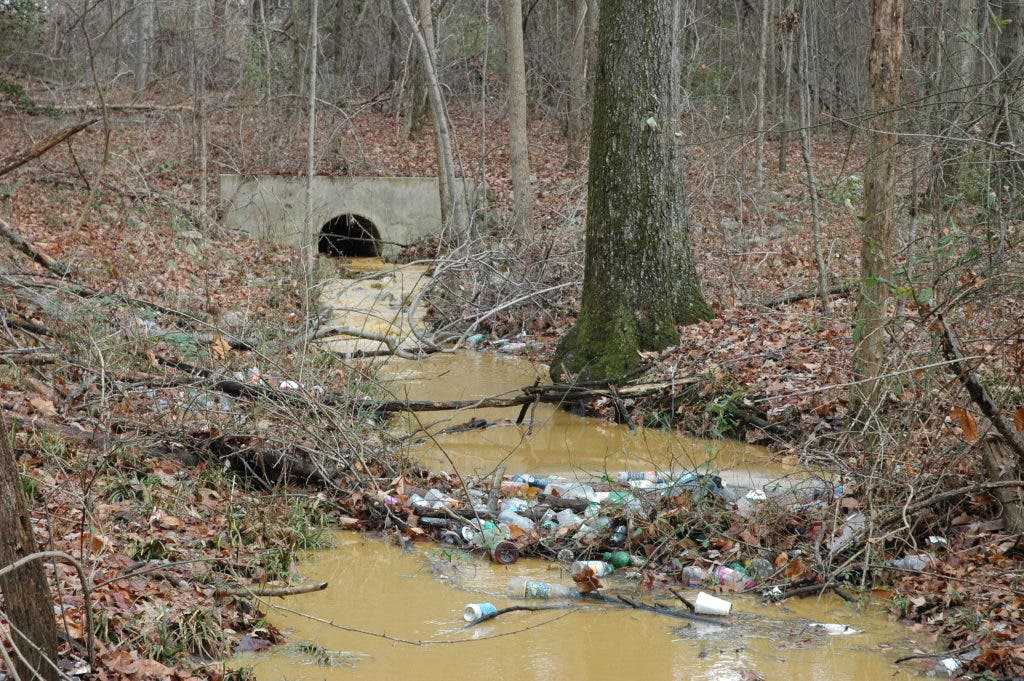
- Restoration of the degraded stream system from Newtowne 20 to Crab Creek is conducted.
- Restoration of the degraded stream system from Spa Road to Crab Creek is conducted.
Without our involvement, the above points, plus the reduced building footprints and accompanying forest retention would not have been included in the developer’s plans. These are significant achievements for the South River Federation and they are in keeping with our mission. Several of these elements have been successfully applied on other projects in the watershed, and have proven effective at protecting the resource.
We recognize that the scale of this project sets it apart from most other development in the watershed, but also that it presents an unprecedented opportunity to repair lingering damage to one of the South River’s most impaired creeks. That damage would otherwise likely remain untouched. As such, the South River Federation is placing its support behind the Crystal Spring Annapolis project and the innovative collaboration on behalf of the South River that it represents.
Simultaneously, the Federation recognizes that the community along the Annapolis Neck has legitimate concerns about traffic on the Forest Drive corridor, and we will continue to work with the developer, the city, and the county to advocate for a transportation plan that takes into account the aggregate impact of development in the area and makes the best of a difficult situation.