Community Corner
Mitten crab outbreak could be threat to life in the Chesapeake Bay
Mitten crabs are on the loose in the Chesapeake Bay, and scientists are reaching out to the public for help in determining how far the outbreak has spread.
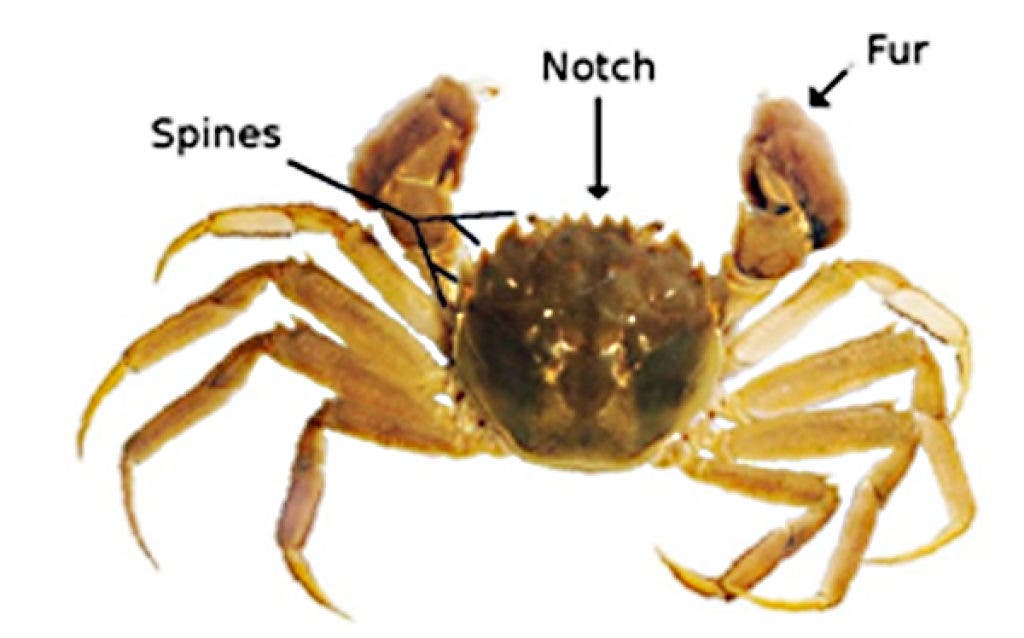
Anglers, crabbers and the general public are being warned by scientists to be on the lookout for the Chinese Mitten Crab in the Chesapeake Bay, a creature with a growing presence that could be a threat to the region, if left unchecked.
The crab, originally from East Asia, takes its name from its distinctive furry claws. It first appeared in the Chesapeake Bay in 2005, at the mouth of the Patapsco River near Baltimore. Since then, there have been more than 200 reports of mitten crabs between New York and Maryland, according to Monaca Noble of the in Edgewater.
While SERC scientists don’t believe the crabs have reached the level of an infestation, they’re reaching out to the public to help determine just how far they have spread over the years.
Find out what's happening in Edgewater-Davidsonvillefor free with the latest updates from Patch.
“We need the public’s help in order to find out how large the population is in the bay and where the crabs are spreading,” Noble said. “These crabs can be found in both the bay and its freshwater tributaries.”
Unchecked, the crabs could have serious economic and ecological impacts on the region, particularly if they became abundant. The species is listed as injurious Wildlife under the Federal Lacey Act, making it illegal to buy or sell them without a permit.
Find out what's happening in Edgewater-Davidsonvillefor free with the latest updates from Patch.
But how much damage can a crab with a body length under four inches do?
In the San Francisco Bay, large numbers of crabs impaired the operation of passage facilities designed to help in fish migration, causing the loss of thousands of native fish. Furthermore, when mitten crabs burrow, they increase erosion and sedimentation. Too much sediment can cloud the water, limiting sunlight and the growth of bay grasses.
“The reduction of bay grasses affects young fish, blue crabs, and other species that depend on bay grasses for food and shelter,” Noble said.
If anyone from the public catches or discovers a mitten crab, they are being advised by SERC not to throw it back alive. Instead, take a close-up photo for identification and record the location where the crabs were found. With that photo, log in to SERC’s Mitten Crab Watch’s Web site, located at http://mittencrab.nisbase.org/ and follow the directions there.
While the sighting is being processed by specialists, freeze the animal, keep it on ice, or as a last resort, preserve it in rubbing alcohol. Cases will be reviewed, and the crab may need to be sent in for analysis, Noble said.