Politics & Government
Q & A With Retired Maryland State Senator Bernie Fowler
Sen. Fowler has been working to clean up Maryland waterways for many years, particularly his beloved Patuxent River. He is perhaps most well-known for popularizing the 'wade in' event designed to engage people in water quality issues.
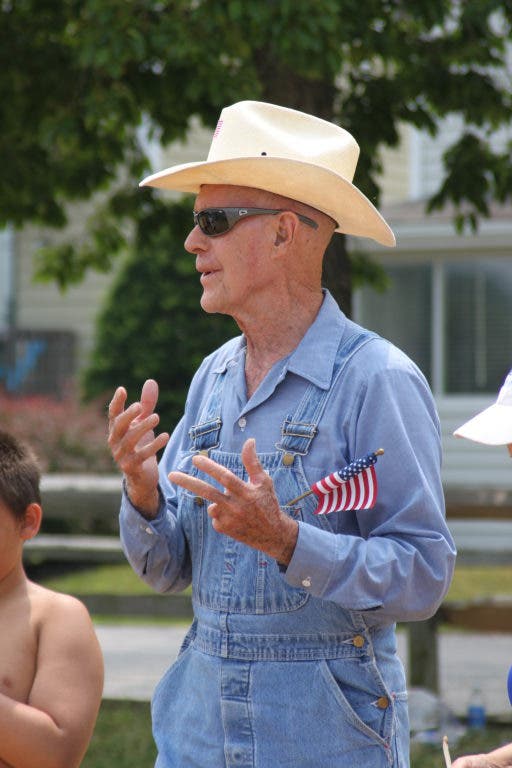

The basic idea behind the wade-in event is to don white tennis shows and walk into the water until you can't see your shoes anymore. Historically you could have waded all the way up to your chest in any of the states' rivers, but in recent decades you're toes are likely to disapear as the water rises just above your knees.
Patch: How did you come up with the idea for the wade-in event originally?
Fowler: Back in the late '60s, early '70s there were some of us that had worked in water and knew how things ought to be and we knew there was a transition taking place that was not good. I began to panic because I loved the river, my father worked the river, my brothers worked the river, my grandfather, my great grandfather, and on what was a river so abundant with aqua life.
Find out what's happening in Edgewater-Davidsonvillefor free with the latest updates from Patch.
To see the grasses disappearing, the crabs dropping off and the fish getting a little less, and the transparency of the water, that cloudiness, was really a hurtful thing. When I was a young man I could wade out into that river, chest high, and I could still look down and see those little critters and my feet clearly. A fellow by the name of Tom Wisner, we called him "The Bard," he said you’re always talking about wading out into the river and by God we ought to do that and see if it will catch on.
Patch: What do you think is the most important take away message for people participating in a wade-in?
Find out what's happening in Edgewater-Davidsonvillefor free with the latest updates from Patch.
Fowler: I think the most important message is to have people understand, that water quality is serious, it’s a serious health risk. These children we have, and their children and grandchildren, I don’t know how they’re going to make it unless we’re able to pull together.
Patch: What do you think is the biggest challenge you’ve faced in trying to convey that message?
Fowler: I have said over and over again, if we have failed in any area it would be the failure to get people connected to this and have them understand, that this is no joke, no show and tell, you’re grandchildren are going to suffer because of our lack of action.
Patch: What progress have you seen on the bay and it’s rivers since you started working on these issues?
Fowler: The Rockfish was saved with the Rockfish Program and the phosphate ban was a big step in the right direction. They fought us for years and years on that, said all our shirts would turn yellow, didn’t happen, it was a smoke screen. Establishing critical areas was a pretty good piece of legislation for the river. Those are the several big one’s that jump out at me, but of course there’s lots and lots of little things that have been done as recently as the curtailment of nitrogen in lawn fertilizers.
Patch: In your opinion, how much work is still left to be done to clean our rivers and the bay?
Fowler: There’s a big mountain to climb yet because we don’t even have the TMDL’s in place right now. How soon do I think we can see a change? I think its probably a minimum of 30 years down the road. And then it all depends on the economy because the money is not there the way it used to be.