Crime & Safety
Teen Once Accused of Murder Now Sits on Maryland Task Force
A Baltimore woman who served jail time for involuntary manslaughter is now on a state task force that looks at how minors are treated in the state's justice system.


By NATALIE KORNICKS
Five years after Jabriera Handy was charged with murdering her own grandmother, the 22-year-old sits on a statewide task force that assesses how criminal offenses committed by juveniles are handled in Maryland.
Find out what's happening in Eldersburgfor free with the latest updates from Patch.
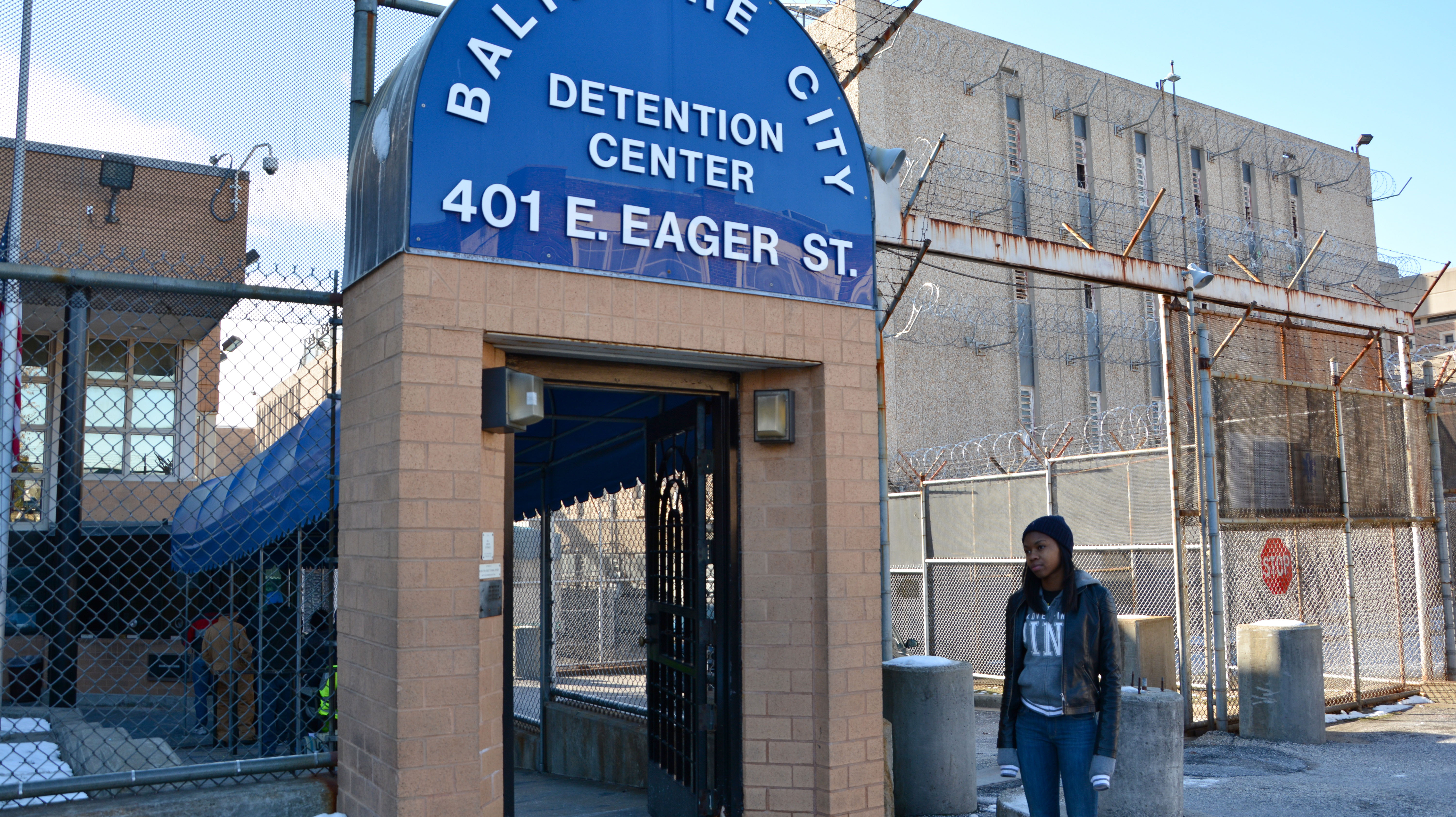
At 16 years old, the slim young woman was accused of killing 69-year-old Eunice Taylor - leading to 11 months in the Baltimore City Detention Center for a crime she was never convicted of.
Handy is not alone.
Find out what's happening in Eldersburgfor free with the latest updates from Patch.
More than two-thirds of youth whose cases originate in the adult criminal justice system in Maryland are either transferred to the juvenile justice system or have the charges against them dismissed, according to Kara Aanenson, a member of the Task Force on Juvenile Court Jurisdiction and director of advocacy initiatives for the Just Kids Partnership.
The task force was established by the Maryland General Assembly this year to examine current law and review best practices for handling offenses committed by youth. For example, offenses like first and second-degree murder, firearm violations, carjacking and armed robbery always originate in adult court.
“Our big concern is that kids are getting put in this adult system where they’re more likely to be victimized, they’re more likely to hurt themselves or someone else, they’re more likely to be victimized by guards, when a majority of the kids are actually coming back to the juvenile system,” Aanenson said.
Most youth wait up to an average of four months for a decision to be made about their case, she said. But Handy spent almost a year in the Baltimore jail, notorious for a violent inmate gang and recent allegations of prison guard corruption.
Handy candidly acknowledges that she had a “push and shove thing” in 2008 that resulted in her grandmother having a fatal heart attack.
“She was standing like really close to me,” said Handy, who was raised by her grandparents since infancy and considers herself her grandmother’s daughter. “And she kept pushing and shoving me and smacking my face, and told me to go, but I was, like, ‘no.’ I kind of tried to get her off of me and shoved her.”
Handy, 5 feet 6 inches tall and only 97 pounds at the time, was arguing with Taylor over the pictures that were hanging on the wall in the Northeast Baltimore home.
“[My younger brother] came and got me and said Bri, just leave, and that’s what I did—I left,” Handy said. She added that reports saying her brother had to pull her off of her grandmother are untrue.
Two hours later, Handy saw police car and ambulance lights at her grandparents’ house.
“I was basically thinking to myself, ‘Here grandma go again, she want to be playing games, but I don’t have time to be playing games,’” she said laughing at herself.
That mid-October night Handy was taken to the Baltimore City Police Homicide Unit. She was charged with second-degree murder, first-degree assault and second-degree assault.
After the arraignment the following night, Handy was sent home with her mother until further investigation. About a month later there was a warrant out for her arrest.
“The state’s attorney’s office and the police department were trying to decide how they were going to charge the case,” said David Addison, Handy’s juvenile jurisdiction public defender who suggested she turn herself in. “Honestly, it was a case that should have not been charged the way that it ultimately was charged.”
Nearly a month after her grandmother’s death and just four days after Handy’s 17th birthday, she was admitted to the Baltimore City Detention Center. Upon arrival she was placed in solitary quarantine while it was determined if she was a threat to the other teenage girls in the prison’s juvenile dorm.
Two weeks later, she was transferred downstairs to the juvenile dorm where she spent the next 11 months.
“My experience was awful….all the smells, all the noises … I showered with a woman twice my age, I witnessed acts that I think no child should witness. I seen a man bleeding out on the floor—I don’t know if he was dead or alive. I spent 36 days in a cell by myself with no adult contact at all, and it’s just no place for a child,” Handy said matter-of-factly.
Handy, one of seven children, bluntly said only one sister visited her the whole year, because most of her family considered her a murderer.
And so did the other juveniles.
“When you walk through everybody’s staring at you and pointing at you, and saying you should be ashamed of yourself even though they don’t really know what happened … I was a high profile case, so I was on the news, and a lot of times what happens it the correctional officers gossip and tell the juveniles,” she said.
Throughout Handy’s time in jail, three transfer hearings took place. Two different Baltimore circuit judges rejected her request to send the case to juvenile court because of prior school suspensions for misbehavior, according to Addison.
But on Nov. 2, 2009, more than a year after her grandmother’s death, Special Appeals Judge Shirley M. Watts accepted the transfer. Handy was allowed to re-enter the juvenile system if she pleaded guilty to involuntary manslaughter and was committed to a juvenile treatment facility in western Pennsylvania. She completed its program in about 7 months.
Today, in addition to her role on the state task force, Handy lives in Baltimore with her 11-month-old daughter and works part-time at the Just Kids Partnership, which aims to stop the automatic persecution of youth charged as adults. She has also served as a national spokeswoman for the organization and the Campaign for Youth Justice for the past 3 years.
Get more local news delivered straight to your inbox. Sign up for free Patch newsletters and alerts.