Schools
Baseball Cards, Bank Accounts and Balance Sheets: Kids and Finances
The Interim State Superintendent is enthusiastic about Howard County's financial literacy curriculum.




An investment banker told Bernard J. Sadusky, interim State Superintendent of Schools, his method for determining what businesses may be worth investing in.
“He said ‘I go to the mall and watch all of the young ladies,’” Sadusky recounted to a group of educators and administrators sitting in the Ilchester Elementary School library. Then, the banker said, he watches where the 10 - 13-year-olds shop.
That’s because kids are becoming consumers earlier and earlier, Sadusky said, and their shopping habits are important.
Find out what's happening in Ellicott Cityfor free with the latest updates from Patch.
Important, too are students' spending habits, the state has decided.
This is the first year that schools in Maryland are required to work financial literacy into their curricula for grades 3 – 12; how they do that is mostly up to each school district. In Howard County, financial literacy begins in kindergarten.
Find out what's happening in Ellicott Cityfor free with the latest updates from Patch.
Sadusky and several state administrators joined Howard County educators and administrators Monday at and to see how Howard County is implementing the state’s mandate. “We need to bring folks in and get them to see how you’re interpreted this,” Sadusky said, “because it’s working.”
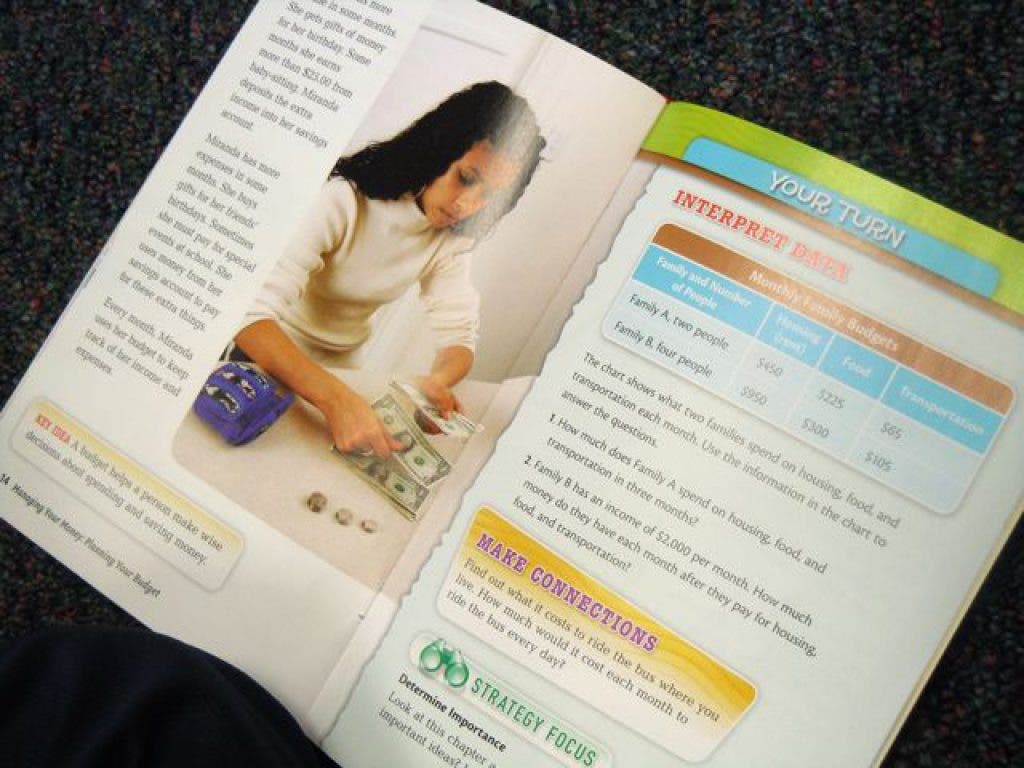
In Katie McKevitt’s fourth-grade-class, students learned about the different ways that they could make money – mowing lawns, lemonade stands, shoveling snow. They also talked about what to do with the money they earned. Students went through each option, referencing course materials to figure out what a Certificate of Deposit was and the benefits of bank accounts.
McKevitt explained to the dozen students, spread out on the floor, how stocks can appreciate in value. “Buying stock is like buying a baseball card,” she said, explaining that the more popular a player is, the more valuable his card becomes.
Teaching children the ins-and-outs of finances at such an early age is key to their success, according to several financial experts.
“Kids learn from trial and error and role models just like the rest of us,” said Mohamed Ben, principal accountant at Elhad Accounting Firm in Ellicott City. “And if they can't learn as children, the price of adult mistakes can be countless in terms of money and relationships.”
Ben said that once a child understands money -- “the fact that it can be exchanged for goods” – it’s time to start teaching them how to manage it.
“The key is … teaching the concepts early and often,” said Michelle Glassburn of MakingCHANGE, a non-profit Howard County organization that works with people to help improve financial literacy.
“Starting in elementary school, students need to understand how to differentiate between needs and wants. It seems basic,” Glassburn said, “but it is the core of so many adults’ financial troubles.”
During an exercise in teacher Kim Kettering’s technology class, students demonstrated that they knew that a Playstation is something they "want,” and that a house is something they “need.”
“When is it wise to use a credit card?” Kettering asked the students, adding “go home and tell you parents the answer.”
Students sat behind computers, clicking the keyboard and talking with each other to come up with the right answer: Use a credit card when you can pay the balance off at the end of the month.
“I’m especially excited to see the use of technology” in Howard County’s financial literacy curriculum, Sadusky said.
In kindergarten through fifth grade, financial literacy is integrated into the social studies curriculum. In sixth through eighth grade, personal finance is taught during family and consumer science courses. In 10th grade, students learn about personal finance in their American government class.
Once students reach high school, there are several different ways they can attain financial literacy education – in algebra, business, career research and development, or in stand-alone financial courses.
Financial expert Ben cautioned, however, that as good as the Howard County curriculum may be, school instruction is not always enough instill financial literacy in children.
“An African adage says, ‘it takes an entire village to raise one child,’” Ben, a native of Comoros Islands said. “Parents need to work with teachers and other parents to ensure that children are brought up well.”
And in Howard County, where the average family income is nearly double that of the state-wide average family income, “parents have the opportunities to teach the children earlier about money management,” he said.
Sadusky echoed Ben’s sentiments. “[Kids] have access to money,” he said, and Howard County’s financial literacy program will teach them how to manage it. Ultimately, however, in school or at home, everyone learns the importance of money management. It's just a matter of how.
“There are two ways to learn this lesson,” Sadusky said. “The hard way is the life lesson.”
Get more local news delivered straight to your inbox. Sign up for free Patch newsletters and alerts.