Community Corner
Hydrogen Peroxide: A Green And Versatile Cleaner
It can even be used in place of highly poisonous chlorine bleach.
I recently tried a new mouthwash recommended by my dentist. It was extremely bubbly and foamy, so while swishing I checked out the ingredients. I was surprised that it was just hydrogen peroxide with some mint flavoring.
I remember hydrogen peroxide from my childhood as something used to clean cuts and scrapes, but had no idea it was safe to put in my mouth.
But it is – and has a number of other surprising uses.
Find out what's happening in Ellicott Cityfor free with the latest updates from Patch.
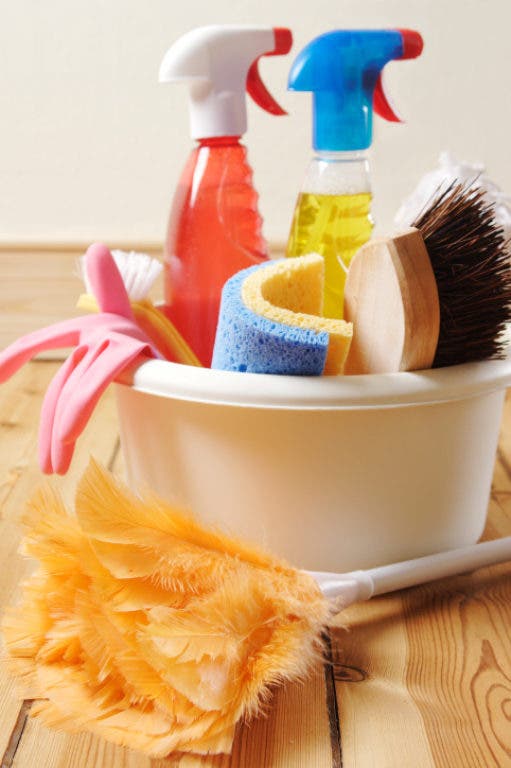
What is especially interesting is that hydrogen peroxide is a fairly green product, and can be used as an alternative for household cleaners such as bleach. And unlike chlorine bleach, for example, it doesn’t react with other elements to form toxins.
Here’s what I found out as I did a little research: Chlorine bleach is great for cleaning and disinfecting, but bleach is sodium hypochlorite, and it can “form more toxic byproducts such as dioxins and furans and other organochlorines when reacting with other elements” according to Green Living Tips.
Find out what's happening in Ellicott Cityfor free with the latest updates from Patch.
Hydrogen Peroxide is water with one extra oxygen molecule. It breaks down into oxygen and water. It's “produced by both animal and plant cells and is formed naturally in the environment by sunlight acting on water” notes Green Living Tips.
They also note that we should “be careful when purchasing and handling this substance as some commercially available food grade hydrogen peroxide is 35% pure, highly corrosive and can be toxic or fatal if ingested at that strength. Hydrogen peroxide should be diluted down to 3% as a base for most applications. It's also readily available in 3% solution from your local pharmacy or drugstore.”
But why are we talking about bleach vs. hydrogen peroxide? Even in its odd form as mouthwash, one can hardly compare it to bleach, which of course we wouldn’t think of gargling with or using to clean a wound.
Well, here’s why. According to the experts, you can use hydrogen peroxide to:
- clean cutting boards to help kill salmonella and other bacteria
- spray on and use as a bathroom and toilet disinfectant and cleaner
- spray on household areas (like tile) affected by mold
- add one cup of 3% hydrogen peroxide to your laundry in whites wash instead of bleaches
- blot on clothing to help remove stains
- use as a soak to remove yellowing from lace curtains or tablecloths
Other uses (not comparable to bleach!) include:
- mixing it with baking soda to make a whitening toothpaste
- use as a spray or soak to kill bacteria such as E. Coli on fruits and vegetables
Of course, don’t ingest hydrogen peroxide, as you would never ingest bleach. But do consider it as a more Earth-friendly alternative for many household needs.