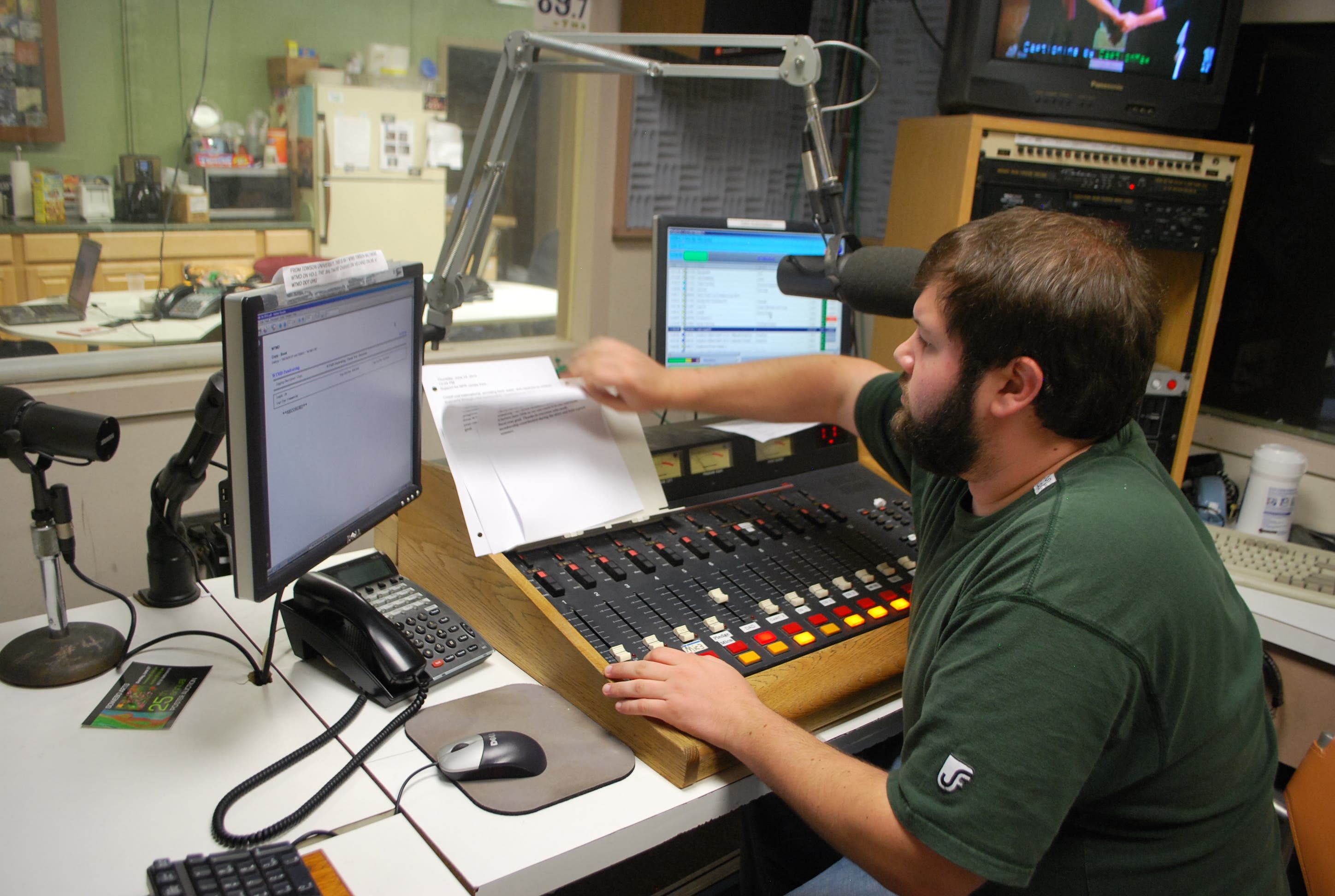
There are two public radio stations on my preset dial: WAMU, out of D.C., prototypical public radio delivering standard NPR fare; and WTMD, out of Baltimore, independent and alternative delivering anything but your standard music fare.
WTMD generally soundtracks my drive-time, dish-washing, and dinner-making, but its steady rhythm has been somewhat interrupted this week as the station soldiers through its winter membership campaign. The station’s PinfieldianDJs, usually discussing the most arcane of Arcade Fire tracks, stand instead one small step above begging for money from listeners.
Public radio fundraising drives are a test of listener patience. Get back to the music, we think. And geez, even Click and Clack can sound desperate.
Find out what's happening in Ellicott Cityfor free with the latest updates from Patch.
Then, yesterday, amongst the exhortations to donate, I learned that WTMD introduced Baltimore to Adele three years ago. If you’re reading this under a rock somewhere, or perhaps from deep in a cave in Pakistan, Adele is now an extraordinarily popular six-time Grammy winning singer. She is inescapable, blaring from grocery store aisles and in constant rotation across the commercial radio dial. That one fact, WTMD being the incubator for what come become superstardom, snapped the necessity of public radio into focus for me.
The frequently heard cry against public radio is that the federal government should not be in the business of running radio stations. There was a time I found this argument almost persuasive, but could never quite get over the cognitive heartburn frequently left behind by half-baked ideas.
Find out what's happening in Ellicott Cityfor free with the latest updates from Patch.
As it turns out, under the Corporation for Public Broadcasting construct, the federal government is less running radio stations than providing seed money. The average public radio station receives between 10 and 16 percent of funds from some government source. WTMD counts on the Corporation for Public Broadcasting for $115,000, or 11 percent of its budget. The rest comes from business—WTMD donations are almost exclusively from local Baltimore businesses—private foundation grants, and a lion’s share of listener contributions. Taxpayer dollars, then, simply provide initial conditions under which independent radio stations can operate. But independent from whom? There, as they say, is the rub.
Founded in 1972, Clear Channel now owns 850 stations, proudly describing itself as having “the largest reach of any radio or television outlet in America.” It may or may not be worth noting that Clear Channel is, in large part, owned by Bain Capital, the private equity firm which pays Mitt Romney millions of dollars for the position of retired partner.
To be honest, I don’t want the largest reach. I don’t find comfort in knowing that the same playlist is in rotation from Bangor to Baltimore, San Diego to St. Petersburg. I’m not fully comfortable with the company behind the radio programs of Glenn Beck, Sean Hannity and Rush Limbaugh being owned by a private equity firm with strong ties to a Republican presidential candidate. I prefer my radio to challenge my expectations, to be colored by the community around it, rather than painted some shade of corporate beige.
The backers and supporters of public radio are nothing if not transparent. Listen for 30 minutes (and you’ll probably have to listen that long to catch anything resembling an advertisement, not something most commercial radio stations can claim for any length of time) and you’ll hear “[Foundation/person/local business] is a proud supporter of [station]. It’s akin to the “I’m [candidate] and I support this message” heard after political commercials. (Those not funded by SuperPACs, at least.) The backers and supporters of public radio are you and me and them.
The backers of commercial radio are generally apparent too; the brands are prominently plastered throughout. But where those dollars go, and to what end, is a bit murkier. Want to see where federal CPB dollars end up? There’s a slick website for that. Want to know where Clear Channel dollars end up? Well, we’ll have to settle for a lot of corporate buzzwords.
Do not take this to be some anti-capitalist screed; I like money. (In fact, I enjoy it so much, feel free to send me some of yours, if you like.) It’s just that sometimes I would like respite from profit’s blind pursuit, to sit back and enjoy something free from constant advertising.
The modern world is amazing in the number of services offered up for no monetary cost, given to you in return for just a few seconds of your time. Just listen to a few words about the newest amazing product you need, please. But it is important to remember that this in and of itself comes with less obvious cost, that the things we have come to know and love and depend on are, in fact, in thrall to their own hidden corporate overlords.
Corporate-owned radio stations, like the Clear Channel roster, can’t take a risk, can’t afford a fickle audience turning the dial away because they played the latest Bon Iver track, lest in turning they also miss the 30-second spot for McDonald’s or Foot Locker or whatever profit-seeking interest has chosen to try and reach its target demographic via the magic of radio. Profit-driven means getting the most bang for the buck; the most perfect money-making radio station would be one where you’re neither so bored nor so overstimulated you ever feel compelled to change the station. A passive acceptance is preferred. (A goal refined by Clear Channel into something like this.)
To foster innovation, there need to be a select few willing to take on an above-average helping of risk, to take a flyer on some young gun, without fear of loss of quarterly profit. (Here’s a good readon precisely that problem in the energy sector, and where government can help.) This is as true in music as anywhere else, and a place like WTMD becomes a lab for innovation, a place we as a community to gather and discuss what could be the Next Big Thing. (Or not.)
The safe bets, the American Idol winners and the ‘70s AM rock will always have a place in the meaty center of the radio dial. But way down at the end, you’ll find me and my fellows, freed by our own donations from being spoonfed corporate-sanctioned gruel to be instead challenged, to be able to seek art for pleasure instead of pop for profit. Join us, won’t you?