Neighbor News
Before the Fall: Hazardous HOA-Owned Trees in Quail Valley
Why is the HOA denying that there is a problem at all, rebuffing residents instead? Chapter XXXII of "Living on Cuckoo Court"

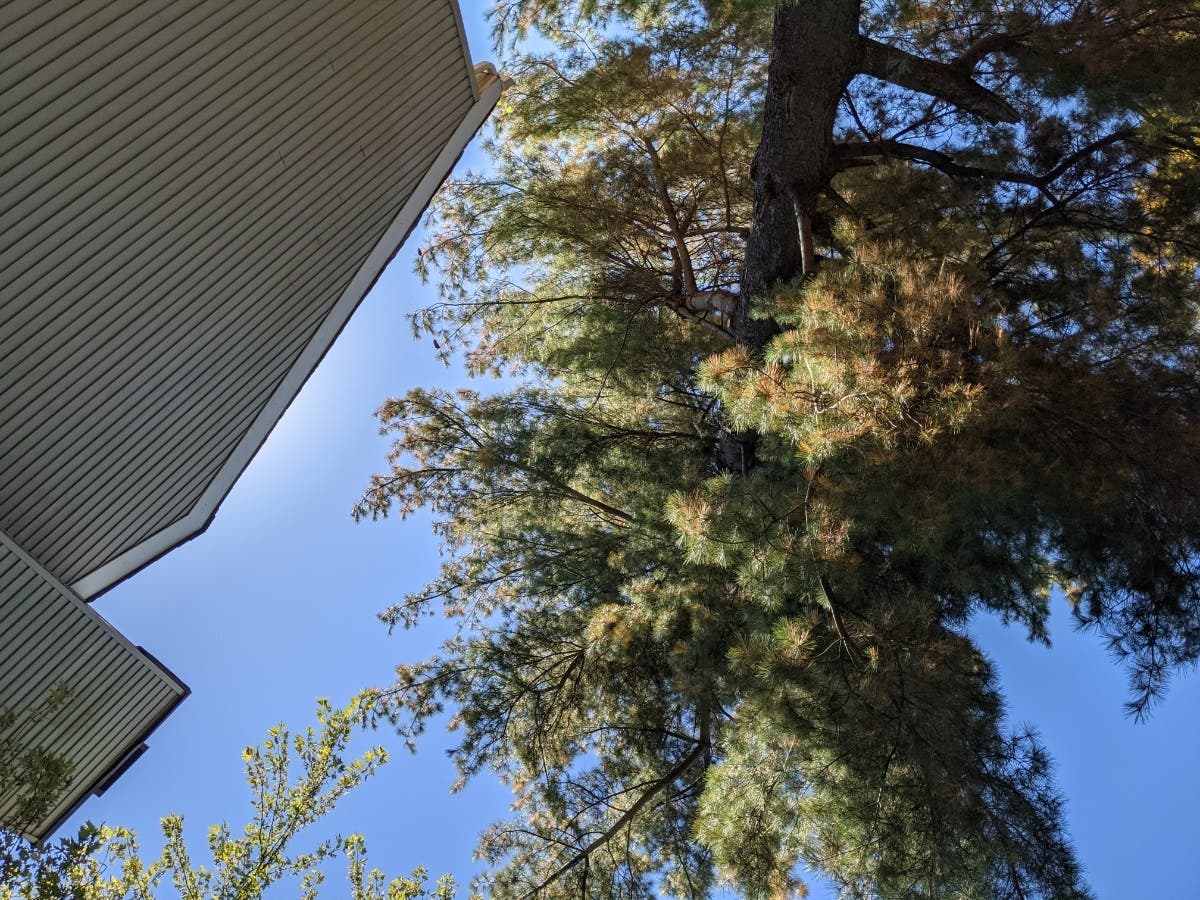

UPDATE 8/8/2022: The HOA has had a tree company survey all of the trees on the common-ownership property and identify hazardous trees that need removal. This looks like progress. We are hoping this new list of targeted trees overlaps 100% with the (shorter) list of trees that residents have expressed concerns about, such as those described here. Stay tuned. –S.L.
Dear Readers: The conversation below consists of statements made by the Quail Valley HOA property manager in an email of October 23, 2021, addressed to me, to some members of the board, and to other community members. I respond, below, to each quotation. The property manager's full message (from which the quotes are taken) follows after that back-and-forth conversation, for your reference. If it appears that I have made any factual errors, please let me know. – Steven Sellers Lapham, MuskratMusic@gmail.com.
Find out what's happening in Gaithersburgfor free with the latest updates from Patch.
***
Ms. Ruchita Patel, property manager: "I am not sure how using a 10 year old picture [Photo 2, above] is useful to make a point about the danger of trees."
Find out what's happening in Gaithersburgfor free with the latest updates from Patch.
Mr. Lapham, 21-year resident replies: I have been communicating with you, and the Quail Valley HOA board, at least since April 12, 2021 about hazardous trees in our community. I regret being so tardy. Some of my neighbors have been making similar pleas for years. The HOA's mismanagement of trees in Quail Valley threatens the life and limb of the residents. Many residents feel that this is a crisis of public safety, and a crisis of governance.
Allow me to explain to you why this photo from 2012 might be useful. It shows an HOA-owned white pine tree beside the house at 18748 Barn Swallow Terrace. The photo shows that, during a strong wind from the north, the tree dropped a limb that took a part of the gutter with it as it fell to the ground. By luck, the limb did not damage more of the house. This tree had, and still has, a permanent weak point (where the trunk split, and then new branches grew). This weak point is above the peak of the roof, so it’s hard to observe this point from the ground. The weight of everything growing above that point is also above the peak of the roof--and is in danger of falling on the house. I am very worried that you do not seem to understand these facts. The board members do not seem to understand them, or to exhibit appropriate concern and leadership. Binoculars can help you see up close (at perhaps 40 feet elevation) the mangled intersection of the main trunk and the multiple branches that emerge from that point. “That spot will be dropping heaving limbs, now and then, for many years. The main trunk will go on living, putting out new shoots at this juncture. These shoots will grow big and heavy, they will have green needles, but they are not attached in a healthy way to the main trunk,” says an arborist. “I would never consider the branches up there to be stable or safe.”
Ms. Patel: "Both [assistant property manager] Jennifer Rozier and I were on site on Friday doing our regular site inspection and neither one of us noted any damage to this home or any others due to damaged trees."
Lapham replies: But you did look at the photo, yes? The homeowner repaired the home back in 2012 (and then moved out), so it’s not surprising that you did not see damage there now. The damage was repaired. With regard to inspecting other trees, neither you nor Ms. Rozier are licensed as an arborist, to my knowledge, and thus you are not qualified to inspect trees. You may recommend an arborist to our board, but the Quail Valley HOA itself hires the arborist. In the end, the arborist should be giving directions to you, not the other way around, in these technical matters. [Added on 11/2/2021: A licensed arborist must evaluate any tree over 20 feet per Maryland State law.]
This is a crisis. Perhaps UME (University of Maryland Extension) or MAA (Maryland Arborist Association) can assist the HOA board in this matter. The board must hear directly from an arborist who would not in any way be beholden to you for jobs. In your position as a property manager, you recommend (or not) tree trimming companies to many communities.
Ms. Patel: "Over the past 10 years, we have experienced heavy thunderstorms, more than one tornado, blizzards and ice storms. As recently as September 1st, the remnants of Hurricane Ida came through with heavy winds and rain and the trees pictured did not sustain any damage. In fact, only two trees in the entire neighborhood were damaged and that damage was relatively minor."
Lapham replies: It is very alarming that there seems to be no HOA record of roofs being damaged--or crushed--by falling trees or tree limbs in Quail Valley during high winds and ice storms. Cars as well have been damaged. It was only by luck that nobody was killed when the tree fell on a home on Creeper Lane, across the boulevard from my home. I have spoken with that homeowner, and I plan to provide more details. This African American family appealed to the Quail Valley HOA at the time of the disaster and was not treated well.
Ms. Patel: Is it possible that branches will fall in storm events – yes. Insurance companies and the law recognize this to be an Act of God.
Lapham replies: Insurance companies are not forgiving if we are negligent and drive while refusing to wear seatbelts.
Ms. Patel: "If there is a question about whether a tree should be removed or pruned, we have an arborist inspect it."
Lapham replies: Again, this is backwards. An arborist should inspect all the trees in the community and give a report to you with a copy to the board. [Added on 11/2/2021: A licensed arborist must evaluate any tree over 20 feet per Maryland State law.] We have called for this survey of trees to be done, and a UM arborist strongly recommends exactly that. (NOTE 1). Has an arborist inspected the tree in the photo, at 18748 Barn Swallow Terrace? May we see the arborist’s report on this tree, and on each of the trees that had yellow tape on them? Should residents mark them again so that that professional inspection can happen? There are hazardous trees (endangering houses) that did not get marked with yellow tape. We don’t mean to imply that residents marked all of the hazardous trees. Again, a border-to-border survey of the community needs to be done.
Ms. Patel: "Quail Valley’s grounds contractor, Jennifer and I work together to identify trees that may be hazardous or are dead. We often inspect particular trees based on information provided by residents. We then work with the Board to have the trees removed or pruned. If there is a question about whether a tree should be removed or pruned, we have an arborist inspect it."
Lapham replies: The fact that the tree at 18747 Barn Swallow was neither taken down after the disaster in 2012, nor identified today as a life-threatening hazard, shows that many things are wrong with the vague procedures you describe, and the operations of our HOA generally. Again, this is a crisis, which it is my duty as a citizen to point out. Many residents are concerned about these things. We are providing information to you now. Yet we are rebuffed.
Ms. Patel: "Quail Valley can’t take down mature trees based on the possibility of branches falling or you would have very few trees left and your assessments would be sky high."
Lapham replies: Car tires will fail occasionally, but there are laws about minimum tread depth allowed on the road. There are also professional practices and standards for arborists. There are often symptoms and warnings that a tree is a clear and present danger. See Photo 2, above.
Ms. Patel: "While Mr. Lapham has put caution tape around many evergreen trees in the neighborhood, he has ironically identified very few trees that are actually a safety hazard and are already scheduled to be removed."
Lapham replies: I am not the only resident putting yellow CAUTION/CUIDADO tape on the many hazardous trees. In fact, I’ve tried to respond, myself, to residents' requests to put yellow tape on trees leaning toward their houses, which are within the fall line of a leaning tree. Apparently, property management crews have taken down tape from many of those trees, perhaps ten, which is not helpful. [S.L. adds on 10/29: May the residents please see a map showing the location of the "few trees that are an actual safety hazard." We think there are more than a few. May we please see what we have paid for? Or is this map secret knowledge?]
I have appealed to our county Office of Common Ownership Communities about earlier harmful actions of the HOA, to no avail. I’m doing what I can, now, to save lives and prevent injury. I'm seeking expert advice, providing information, and widening the circle of those who are aware of these happenings.
Quail Valley HOA is a community with 592 homes. The residents, who pay more than a half-million dollars in HOA dues each year, demand to see a written report (based on a survey of all the HOA-owned trees in the neighborhood) identifying each tree that presents a clear hazard to us. This report must be signed by an independent arborist who would not be beholden in any way to our property manager for jobs. This must happen soon. November is here, and the risk of breakage and falling generally increases with the weight of the wood and the passage of time.
NOTE 1 (added to this blog on 1/4/2022):
U-Md plant pathologist Dr. David L. Clement, "Goodbye to an Old Friend: Oaks are Dying throughout Mid-Atlantic," by Alisa Tang, The Washington Post (November 25, 2021), B1-2.
*** ********************************** **
Here is the entire email message from Ms. Patel, uninterrupted and unedited, except where indicated by [brackets]. –SL.
from: Ruchita Patel RPatel@tmgainc.com [QV HOA Property Manager]
to: [QV Resident who provided the 2012 photo]; Steven Lapham <muskratmusic@gmail.com>,[QV Resident]; Steve Drake <skdjmbd@gmail.com>,[QV Resident & HOA Pres.]; [others on the HOA board]
cc: Quail Valley Friendly Team <quail-valley-friendly-team@googlegroups.com>
date: Oct 23, 2021, 12:45 PM
subject: QV - RE: Hazardous trees NOT addressed
Dear All,
It appears that this picture was taken on June 30, 2012 according to the metadata. [Photo 2 above, and shown earlier at PATCH.com.]
Both Jennifer Rozier and I were on site on Friday doing our regular site inspection and neither one of us noted any damage to this home or any others due to damaged trees.
I am not sure how using a 10 year old picture is useful to make a point about the danger of trees. Over the past 10 years, we have experienced heavy thunderstorms, more than one tornado, blizzards and ice storms. As recently as September 1st, the remnants of Hurricane Ida came through with heavy winds and rain and the trees pictured did not sustain any damage. In fact, only two trees in the entire neighborhood were damaged and that damage was relatively minor.
I credit this to the fact that Quail Valley has spent over $125,000 in the past five years removing hazardous trees and limbs and developmentally pruning those that remain.
Is it possible that branches will fall in storm events – yes. Insurance companies and the law recognize this to be an Act of God. Look around the neighborhood – almost every home is in proximity to trees, evergreen and deciduous. Quail Valley can’t take down mature trees based on the possibility of branches falling or you would have very few trees left and your assessments would be sky high.
Instead, Quail Valley’s grounds contractor, Jennifer and I work together to identify trees that may be hazardous or are dead. We often inspect particular trees based on information provided by residents. We then work with the Board to have the trees removed or pruned. If there is a question about whether a tree should be removed or pruned, we have an arborist inspect it.
While Mr. Lapham has put caution tape around many evergreen trees in the neighborhood, he has ironically identified very few trees that are actually a safety hazard and are already scheduled to be removed.
I appreciate the point Mr. Lapham is attempting to make and, while the approach being taken by Quail Valley is different than what he would prefer, everyone is working toward the same goal of ensuring that hazardous trees are addressed.
Thank you,
Ruchita Patel, Agent for Quail Valley
** ************************************************ **