Neighbor News
Barnesville School Science Fair
7th Grade Students Learn Failure is Important to Scientific Discovery

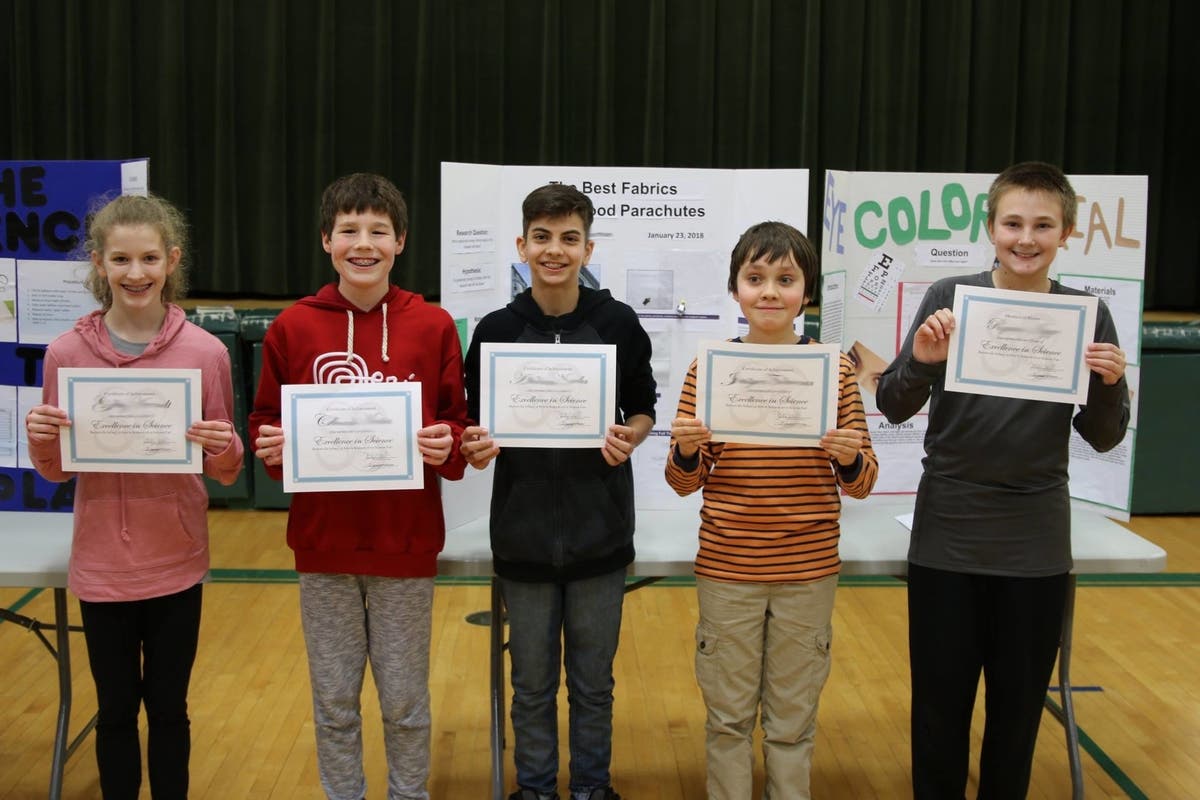

What is the effect of color on taste perception? Does the space between dominos effect how efficiently they fall? What is the effect of water salinity on plant growth? These are just a few examples of the questions posed and tested as part of the Barnesville School of Arts & Sciences annual Seventh Grade Science Fair. Participation in the Science Fair is a graduation requirement for all Barnesville students.
Many students, including first- and second-place winners, had findings that contradicted their original hypotheses. Others found flaws in their testing methods that may have allowed for too many unrelated variables to impact the results. Even when there was a lack of conclusive results, students developed knowledge about and appreciation for the scientific method by going through the process. They also learned that failure is an important part of scientific discovery -- getting different results than you expected is not only okay, it is necessary for scientific advancement.
In the fall, the class worked on a joint project that introduced the scientific method and concepts related to variables, data collection, and reporting. They also learned about the writing style that is appropriate for a scientific lab report. Students started working on their individual Science Fair projects in November, planning, drafting hypotheses, and conducting research.
Find out what's happening in Germantownfor free with the latest updates from Patch.
On Tuesday, January 23, the final projects were on display for a panel of judges: Dr. Mark Olcott, a veterinarian; Dr. DeAnne Cravaritis, a molecular biologist with National Institutes of Health; and Ron Harrington, an engineer with the Nuclear Regulatory Agency. Later in the day, students shared their displays with parents and students from other grades before hearing the results of judging.
2018 Seventh Grade Science Fair Winners:
Find out what's happening in Germantownfor free with the latest updates from Patch.
- First Place -- Jasper T. tested the effect parachute fabric had on the speed at which a Lego man would fall from a second story window. A plastic bag proved to be the most effective parachute -- allowing the Lego man to fall slower than fabric chute options. Judges noted that Jasper was very deliberate about the choices he made in conducting the experiment, being careful to consider factors that might impact the results. His data collection and analysis was very precise.
- Second Place (tie) -- Charlie M. compared bacteria growth on different metals. He was very careful to minimize external contamination of the coins he used to test his hypothesis. Aidan N. conducted a blind taste-test taste comparing preferences for various types of ice cream (organic, homemade, and more expensive brand-name).
- Third Place -- Gabby A. examined the presence of germs at a Walmart, finding that the floor harbored the most bacteria.
- Honorable Mention -- Ryan A. compared the electricity conductivity of fruits and vegetables.
The class will continue discussing the projects, focusing on the difference between causation and correlation.
Photos can be viewed on Facebook.
Barnesville School of Arts & Sciences is an independent private school in Montgomery County, Maryland offering innovative preschool through 8th grade programs. Cross-curricular teaching encourages students to explore how subjects relate to one another, helping them to make connections that spark inquiry and deepen understanding. Small classes enable skilled teachers to engage each child in an academically challenging environment. Our 30-acre campus is our extended classroom, and we integrate nature into everyday learning. Barnesville is certified as a Maryland Green School by the Maryland Association for Environmental and Outdoor Education, demonstrating achievement in curriculum and instruction, community partnerships, and best management practices.