Community Corner
Archaeology Project Digs Up Forgotten Texas History
Local resident, University of Maryland professor uncover Irish immigrant legacy in Cockeysville area.
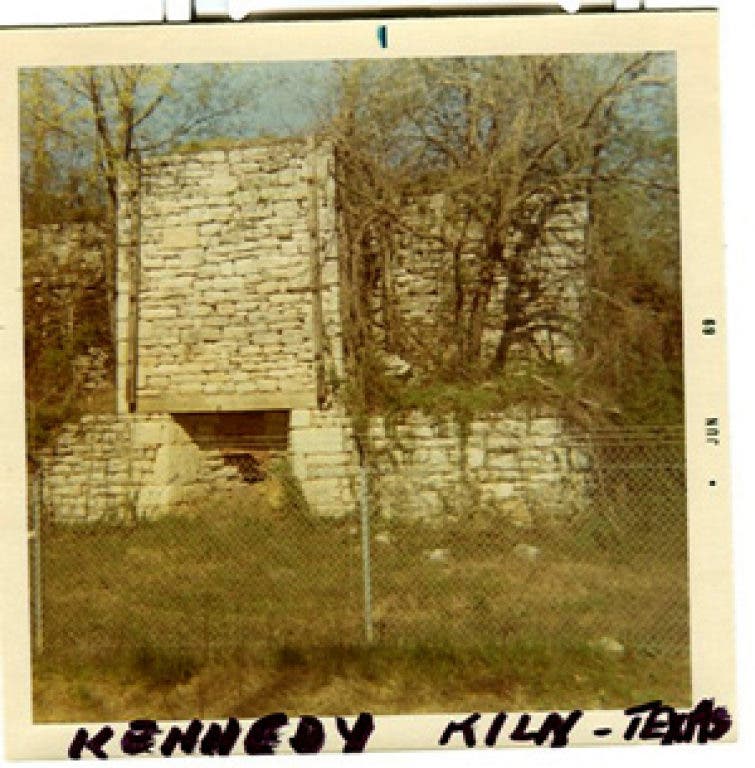

Cassie Thompson has been a lifelong Cockeysville resident. She grew up on Gibbons Boulevard. Her father grew up on Railroad Avenue, on the tracks, and would eventually work for the Pennsylvania Railroad and become a vice president in the AFL-CIO. But while Thompson and her father both grew up in the same town in Baltimore County, what Thompson now calls Cockeysville was known to her father as Texas, Md.
Irish immigrants escaping Ireland’s Great Famine first settled the village of Texas in 1847. Working in the village’s quarry mines, the marble and limestone collected by displaced Irishmen were used to build such monumental structures as St. Patrick’s Cathedral in New York City, the lower half of the Washington Monument in D.C., and Baltimore’s City Hall. By 1860, the tiny Irish settlement had transformed into a bona-fide Irish enclave, bustling and prosperous, which it would remain throughout the latter half of the 1800s. But in the opening decades of the 20th century, as cheaper deposits of better-quality marble and limestone were discovered in Pennsylvania, Connecticut and the Midwest, rich quarry owners abandoned their Texas operations, leaving them to larger conglomerates, like Genstar and Lafarge. Quarry mining became more consolidated and streamlined; fewer workers were needed in the quarries, which left people without work and families without sustainable livelihoods. The village of Texas dried up, in a sense, subsumed by what we know today as Cockeysville.
The last vestiges of Texas—St. Joseph’s Parish (built by the Irish immigrants in 1852) and stone houses built in the mid-1800s—can be found along Church Lane, directly across from Cranbrook Road on the opposite site of York Road.
Find out what's happening in Hunt Valley-Cockeysvillefor free with the latest updates from Patch.
Thompson, the founder of The Friends of Texas, Md., is working to ensure the historical legacy of the place is not forgotten. A partnership with the University of Maryland since 2009 has yielded two summers of archaeological digs, and in just over two years, more than 3,000 artifacts—all remnants of the former Irish immigrant families that originally settled in Texas—have been discovered. Teams of undergraduate and graduate students, supervised by Assistant Professor of anthropology Stephen Brighton, dig in plots of land near Church Lane (Baltimore County has granted them permission.) These summer field schools not only provide University of Maryland students with valuable field experience, but they also help bring awareness to a local history that not many Baltimore County residents know about.
“Texas was always off the beaten path,” said Brighton, 41. “What we have is almost like a time capsule . . . we can get into family identity, Irish identity. I’m doing everything I can to make sure people know about it.”
Find out what's happening in Hunt Valley-Cockeysvillefor free with the latest updates from Patch.
It was Thompson, a 57-year-old graduate student of public history at UMBC and the Texas, Md., project historian, who introduced Brighton to the village and its history. She got her hands on an archaeology report released by Baltimore County in the early 1990s, just before construction on the Hunt Valley Light Rail extension began in 1995. That report gave a listing of objects in the area that might be disturbed by the construction. Around the same time, Thompson was receiving boxes of objects given to her by people in Texas: they sent her copies of family histories, land deeds, death certificates, children’s toys, and more. Researching and cross-checking these names with names off St. Joseph’s parishioner list, Thompson discovered that roughly one-third of Texas residents could trace their ancestry to Ballykilcline, a village in Ireland.
“That whole story fascinated me because it was personal,” said Thompson.
A trip to Ballykilcline in 2005 resulted in Thompson and Brighton meeting. (Brighton was in Ireland seven years participating in an archaeological dig.) The rest, well, is history. The first summer dig in 2009, at a site behind where McDermott’s Tavern and Doyle’s Tavern used to stand, yielded several 5-cent beer tokens stamped “McDermott’s” and “Ed Doyle’s.” Further digs and exploration have yielded a number of material goods—tablewear, ceramic dishes, chamber pots and clay pipes, to name a few—as well as the foundation of what Brighton believes to be a burned-down icehouse. Religious medals devoted to St. Joseph and the Virgin Mary were also found.
“I’m trying to put together what everyday life was like in an industrial town,” said Brighton. “I mean, nobody has a clue [about Texas’ history] except people who grew up there.”
Ultimately, Thompson would love to house Brighton’s findings at the Historical Society of Baltimore County, which she and Brighton both think could serve as a permanent repository of the archaeological findings. Thompson also envisions recopied, family histories—of the kind she received in droves more than a decade ago—accompanying the objects in a Texas, Md., exhibit.
“Somebody’s story, even if it’s wrong, is as much a part of the history as the physical objects,” said Thompson. “It’s your memory, identity [and] community.”