Business & Tech
Program Training Novice Farmers Boasts High Success Rate
The Beginner Farmer Training Program, created by Future Harvest and the Maryland Agriculture Resource Council, started in 2009.


Walking into any grocery store, customers are instantly inundated with signs advertising “organic,” “fresh” and “local.”
There’s no doubt that consumers are becoming increasingly concerned with where their food comes from. One program, anchored at the in Cockeysville, is working to make the answer to that question is a little easier: it’s sustainably grown and close to home.
Future Harvest, a networking organization for farmers in the Chesapeake region, and the Maryland Agriculture Resource Council started the Beginner Farmer Training Program back in 2009 and to date, it’s been a huge success.
Find out what's happening in Hunt Valley-Cockeysvillefor free with the latest updates from Patch.
"So far, about 75 percent of the trainees are actively farming," said Alice Chalmers, a spokeswoman for Future Harvest.
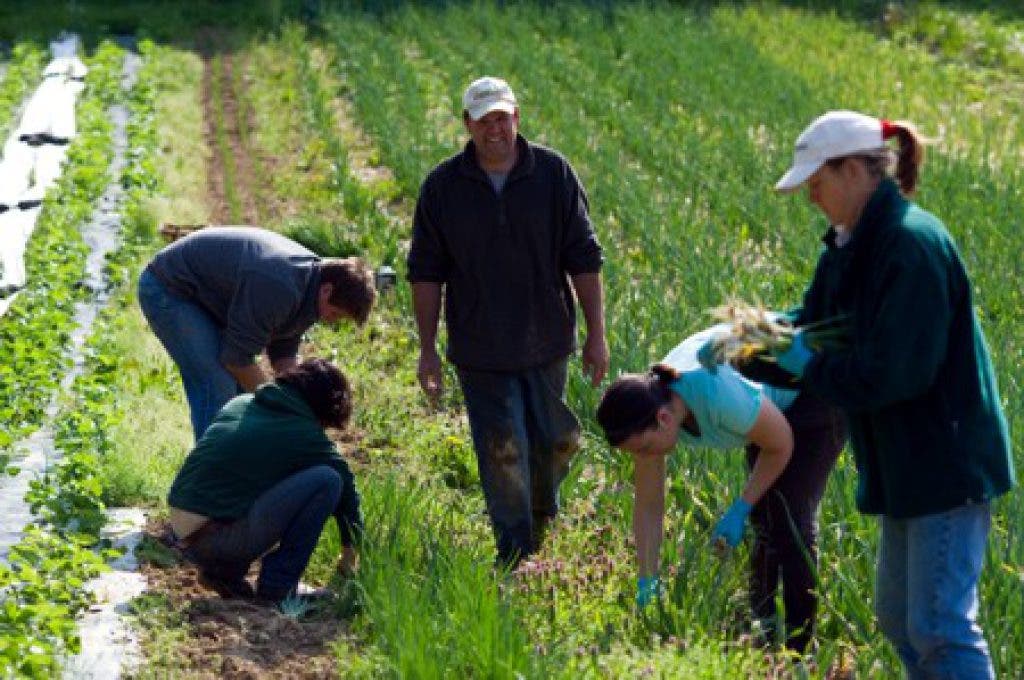
The goal of the program is to train and educate people in the fundamentals of operating their own farm.
Find out what's happening in Hunt Valley-Cockeysvillefor free with the latest updates from Patch.
Participants are given a chance to work with established farmers like Beckie Gurley, who runs Calvert's Gift Organic Herb & Vegetable Farm in Sparks.
"People want to be better connected with their food," Gurley said. "People are realizing that buying local is more nutritional and has less of an impact on the environment.”
Gurley explained that she believes that people are recognizing that locally produced foods are a healthier, safer option—as opposed to overseas imports that could lose nutritional value and are passed around more during their journey. Also, she adds, the resources required to transport foreign products hurts the environment.
As part of the program, participants also take classes such as "Marketing Essentials" and "Soil Fertility and Conservation on the Small Farm" at the agriculture center.
"Farming really is a business," Chalmers said. "We're teaching [participants] about production, marketing, finance. It's all necessary to succeed."
Kristen Carbone, a former community organizer for affordable housing who now runs the Radix Farm in Upper Marlboro, had already worked at several farms prior to enrolling.
"It was a great opportunity to see the [farming] season through," Carbone said. "I was able to learn about the overall importance of profitability and different ways of growing different crops."
The program is a great opportunity in an increasingly suburban world, where it can be hard to break into farming as a profession, Chalmers explained.
"We're really dedicated to training people who want to make farming their main career," Chalmers said.
It’s also very competitive—for the 2012 session, 11 people were chosen out of an applicant pool of 55 to participate in the initiative.
"It's a highly selective process," Chalmers said. "We want people to explore and find out whether or not this is something they really want to do before they apply."
Given the size of the Baltimore metropolitan area, Gurley said there's plenty of room for more farmers.
"There is certainly a demand for it," she said.
Get more local news delivered straight to your inbox. Sign up for free Patch newsletters and alerts.