Business & Tech
'Dump the Pump?' Whenever Prices Rise
Stations say customers stay away from the pumps whenever prices skyrocket—and customers agree.


Thursday marked the sixth anniversary of national "Dump the Pump Day," launched by the American Public Transportation Association (APTA) and recognized by Montgomery County's Department of Transportation (MDOT). The day highlights the use of public transit and other money-saving alternatives to driving. According to APTA's most recent report, a two-person household can on average save more than $10,000 a year by downsizing to one car and riding public transit.
Despite "Dump the Pump" day, according to station managers and drivers high gas prices are what's really keeping people away from gas stations. For station owners, "dumping the pump" happens not just once a year, but whenever prices skyrocket.
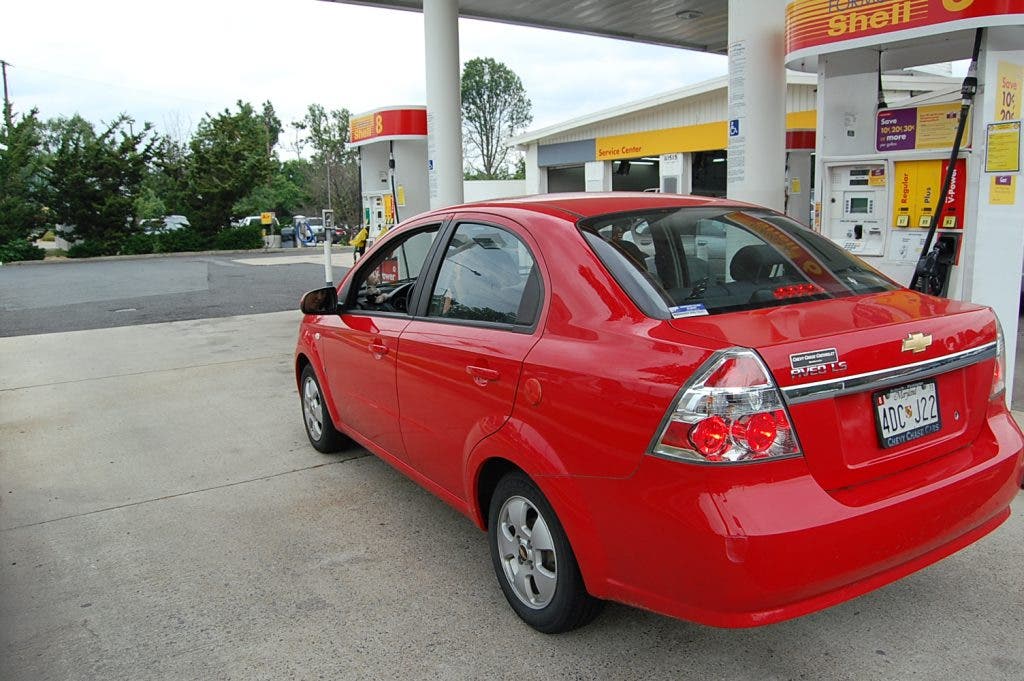
On Thursday afternoon in Kensingston, business at the Shell Station on Connecticut Avenue was steady, if somewhat sparse. Station Manager Indi Heddi wasn't aware of "Dump The Pump" day, but said business levels were the same as is normal, as of late.
Find out what's happening in Kensingtonfor free with the latest updates from Patch.
"Business is down 10-20 percent since last year. The reason is gas prices."
"Because of [high] gas prices, the store is slow, too," he continued." And not many repairs in the shop."
Heddi added that the widely-held perception that gas stations are making a lot of money isn't true. "At any [selling] cost, we can't make more than 10-12 cents a gallon. People who produce the gas—the refiners—and the people who transport, they get the higher percentage. The middle man makes the most profit."
Being a "brand-name" station also makes a difference in pricing, he said. "We are brand station, so it's more here. We sell at $3.83. Down the road [at a non-brand station] they can sell at about $3.69."
Find out what's happening in Kensingtonfor free with the latest updates from Patch.
It's by area, too, he said. "That's called 'territorial pricing.' In Aspen Hill, [they can sell] 15 cents below our price."
Teddy Womm, who works at the Getty station counter a few blocks down (with a mini Dunkin Donuts store inside), was also not aware of "Dump the Pump" day, but agreed that business was "the same as always"—lately, that is.
"Business is down when price is up," said Womm. "Nobody wants to move, they don't want to pump gas. Even me—when it's expensive, I don't want to go out. And I do it all at the same time [when I do go out]."
"Gas stations make money on volume. When the price is down, stations make money. When the price is up, they lose volume and so lose money."
Customers, though also unaware of the day's "Dump the Pump" designation, were in favor of the idea—even while pumping gas.
"Dump the Pump is workable, if there's a lot of public transportation...how often the buses run," said Kensington resident Rhoda Marte.
"Sometimes I'll take the bike. I use the smart phone for Metro [buses], which makes it very convenient, but Ride On doesn't have it."
Her friend Joy Cabanilla, also a Kensington resident added that "not all people can afford a smart phone. So if would help if they (Ride On) would post the bus times, and update them. Not all the ones posted are current, and not at all the stops have them."
Sara Simmons of Kensington, who stopped by to gas up her compact car, said she's already "Dumping the Pump" as much as possible. She said she often bikes the six miles to her job at Walter Reed National Military Medical Center
"I'm lucky to live close ... I bike to work when I can. If weather is decent and it's convenient, I bike in. I have two bikes, so I have one for backup. But sometimes I have to go somewhere right after work, and don't have time to get home first, so I drive. "
Simmons said her job is soon relocating to Bethesda's National Navel Hospital, as part of upcoming Walter Reed move, where she'll continue to bike whenever possible. "The move will help ... but traffic is already bad in that area."
Customer Sharon Palmer-Royston of Potomac is now retired, but says she's a big supporter of the "Dump the Pump" day idea and of public transportation.
"It's a fine idea. I don't drive three days a week. I walk to store, it's 1 1/2 miles away. When I do drive, I plan my outings for the same day. Many things you don't have to do.
She says although gas prices are high here, they're worse elsewhere.
"I have a son on the West Coast, where they have higher gas prices. He comes back and thinks gas prices here are low. He bikes to work, too.
Palmer-Royston said by making driving changes now, she's also thinking ahead.
"I'm preparing—if I have to deal with high gas prices, I'll be ready."
Station owners say the reverse is also true: when price fall, customers return.
"We suffer a lot when it [gas price] goes up. Now it's getting better, because the price is going down," said Womm.
Shell manager Heddi said much the same.
'"When prices fall, business will pick up."