Arts & Entertainment
Radnor-Winston Resident Wins Guggenheim Fellowship
Lia Purpura, writer-in-residence at Loyola University Maryland, discusses winning the fellowship, writing and reading.


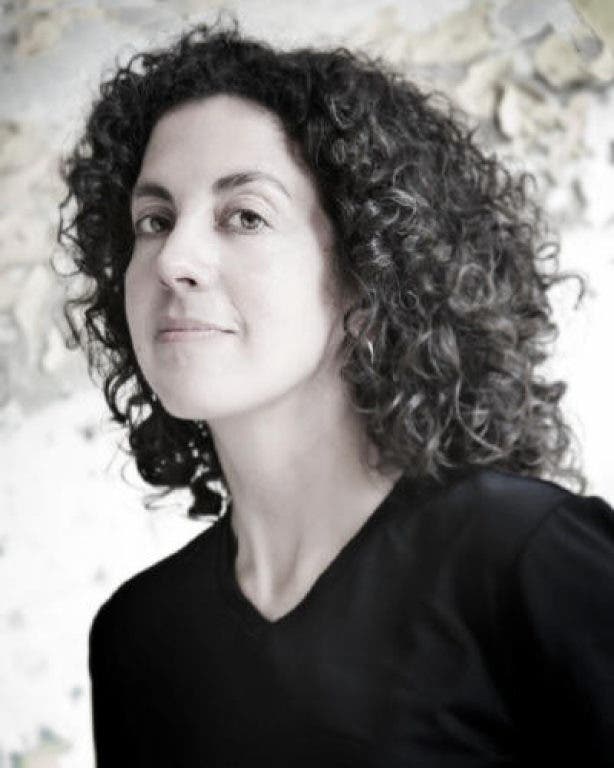
Lia Purpura, the writer-in-residence at , who won a prestigious Guggenheim Fellowship last week, sat down with Patch to discuss her writing, living in North Baltimore and teaching writing to a technology-obsessed generation.
Purpura has written several collections of poems and lyrical essays; her latest book a Rough Likeness, a collection of lyric essays was released earlier this year.
Patch: So, just in general, what does it mean to get a Guggenheim Fellowship?
Find out what's happening in North Baltimorefor free with the latest updates from Patch.
Lisa Purpura: It’s [laughs] a tremendous honor. I guess everyone says that but it really is humbling. To be read so thoroughly and so carefully by your peers, and to be chosen among so many worthy writers and artists, in part it feels like a crap shoot, and in other ways you know you’re among folks who are ready, in terms of their careers, for such a thing. It’s really just an honor.
Patch: So what is the process like going through and putting together everything for an application?
Find out what's happening in North Baltimorefor free with the latest updates from Patch.
LP: It’s not a terrible application really. But it requires a project proposal. The hard part, really, of putting a project proposal together is projecting what you expect to be writing over the course of a year. I have a new book out, it just came out in January [Rough Likeness], and it’s a collection of essays. And I find from book to book ideas seed themselves. So if there’s an unfinished idea, if there’s an unfinished theme or interest, that one essay can’t fully deal with, it kind of seeds the next essay in which that idea is taken up in a refracted way, in a different way. So I hope the next book will be a kind of continuation of thoughts, and interests, and ideas I’ve been laying out all my life.
Patch: You mentioned some of these ideas and thoughts that were in the previous book, and may lead into the next book, and in some ways have been with you your whole life. What are some of these ideas and thoughts?
LP: Well in the collection of essays that I published before Rough Likeness, called On Looking, many of those essays take up the charge to look at things and events that are not easy to look at, are not pleasant to look at, and in some ways shouldn’t be looked at. Rough Likeness kind of deepened that impulse and tries to find words for states of being that are really hard to pin.
The work that I’m doing now, that I will be developing with this Guggenheim funding, I think will have more to do with how we relate to debased and degraded environments, and the kind of violences that the land withstands, and how we manage to tell stories about that kind of land.
Patch: So what attracted you to the idea of debased or degraded land?
LP: Well, again, I guess it’s always been part of my consciousness. I was raised in the 60s, with a real attentiveness to what we called then pollution. I grew up near the beach, on Long Island, and was very close to that particular landscape. It was very important to me. It’s a concern that I’ve always had. My middle name is Rachel, after Rachel Carson, and in a very sort of roaming free way that I approach coming to the page, I found that I was paying attention to questions of degradation and things that are really hard to look at that people would really rather turn away from.
So some of the essays in Rough Likeness deal with this directly. One essay called There Are Things Awry Here, it was originally published in Orion, which is a really terrific, sort of activist, civic minded literary journal with amazing photographs as well, and that essay in particular looks at an awful sort of big box asphalted black top landscape in Alabama, and tries to find what stories existed on that land before it was over built. So that kind of impulse, though I didn’t know it at the time, really hit some deep core I’m interested in exploring.
Patch: You’re originally from Long Island, NY, but has being in Baltimore shaped the way that you looked at some of these degraded spaces?
LP: Being in Baltimore, I guess I should say first that I really love Baltimore. I miss New York but I really love Baltimore. So many of my essays are engaged with Baltimore environments, so you can really turn to any number of essays in Rough Likeness and you’ll be able to plot where they’re taking place in Baltimore or what I’m thinking about in terms of the landscape.
Where I am as sort of a geographical location is always very important to me. I like living in the city, and we also have a yard. So it’s that really interesting mix that Baltimore affords. You can be in the city and have a house and a yard.
I’m very attached to my neighborhood, which is Radnor-Winston. I think the people in that neighborhood are amazing. They’re deeply committed to that place and to the land. I’m part of our community garden there, which is a fantastic effort that is located right behind Popeye’s [laughs]. So it’s a real urban garden that feeds 20 families as well as the CARES food pantry. So I’m really involved in the landscape of Baltimore, in part because I walk through it and just keep my eyes open. So I don’t know if it’s changed the way I see things as much as been really fulfilling.
Patch: So what does your next year look like as you enter into the fellowship?
LP: Well, I don’t know yet [laughs]. I hope to do some traveling. And I’d like to visit some landscapes that I’m completely unfamiliar with, the desert for example, I’ve never been to the desert. I’ve never been to the Rocky Mountains in any serious long standing way. So I’d like to see what happens when I have to engage with landscapes I do not understand at all. I had a taste of that when I was in the far west for the first time a few years ago, and my sense of perspective was completely out of whack. I couldn’t tell what little white specs on mountains were. I couldn’t tell if they were little patches of snow, and a friend had to point out that was big horned sheep. So I’d like to have some encounters with landscapes that I just don’t understand, and I’d like to re-establish a really good sense of a writing life, which gets a little blown off course right after you have a book out, because there’s so much travel involved. I’ve been traveling a lot this semester. So I really just look forward to finding my way back into a pace, and traveling, and reading. That’s the other thing that I hopefully will have a lot more time for.
Patch: You’re teaching writing here at Loyola. Has it changed in the way that you approach students about writing now with everything being so technology inundated and the process being different? Has that changed in recent years or is it the same concept and principles?
LP: For me its very much the same concept and principles. If you’re going to write you need to keep a writer’s journal. You need to note down ways that you perceive the world in a really consistent and disciplined manner. You have to set aside time, I tell my students, and be willing to share your work with other people. In many ways I do offer students ways to walk through the world as a writer they might no have thought about because so much writing gets done on a computer.
But I do have them go out and walk and pay attention to the physical world. I also have them write by hand because different intellectual muscles are exercised when you actually write by hand. In the end I don’t really care how they do it at all, as long as they’re behaving in a disciplined way and they’re paying attention to the world around them. You know, not writing with headphones on, and not behaving in a distracted way as they’re moving through their day.
Patch: I know most writers I speak to are more fond of reading in a lot of ways than they are of actually writing at times. Do you have anything that you’ve read recently that you think is a really good read that people should check out?
LP: I recently have been reading books that really good writer friends of mine have said “you’ve absolutely got to read” or “I can’t believe you haven’t read this” or “you can’t live without reading this.”
So one was The Man Who Loved Children by Christina Stead, which is kind of astonishing and scary and takes place in Baltimore decades and decades ago. Another is Riddley Walker by Russell Hoban, and that’s a book that’s written in a kind of other language. It’s a character, a post apocalyptic character that has his own language, and once you get the hang of it you’re totally ensconced in this world. It’s just so beautiful and so wonderful. Those are sort of two I’ve recently read.
Alan Weisman’s The World Without Us has been very important to me recently, in it he talks about how long it would take for the land to re-establish a kind of quote natural state if humans were no longer on the planet. It’s a book length work of imagination that somehow works in incredible facts and teaches along the way about the kind of destruction that we’ve perpetrated. So that’s been really important to me.
Get more local news delivered straight to your inbox. Sign up for free Patch newsletters and alerts.