Neighbor News
Verizon's wireless network ranked #1 in Baltimore
Independent network testing firm, RootMetrics, publishes RootScore report card for second half 2015
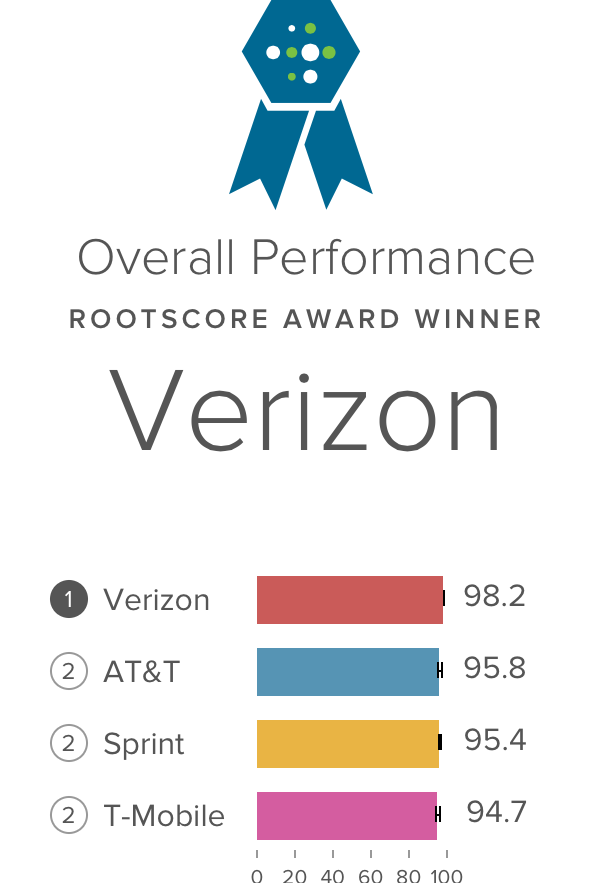
The results are in, and Verizon won first place in RootMetrics’ latest round of testing.
According to the Metro RootScore Report issued for the second half of 2015 by Seattle-based RootMetrics, Verizon won for Overall Performance, as well as reliability, speed, data and call performance.
Scores are based on RootMetrics testing performed from October 17 through October 23, 2015. The company evaluated all four U.S. wireless providers in six network performance categories: overall, reliability, speed, data, call, and text performance.
Find out what's happening in North Baltimorefor free with the latest updates from Patch.
RootMetrics uses scientific methods to conduct their rigorous testing regimen, based on where people actually use their mobile devices. Using off-the-shelf, unaltered smartphones, RootMetrics staff drove more than 1,130 miles and included 39 indoor locations to measure and analyze key performance indicators which provide an unbiased characterization of network attributes in and around the city of Baltimore.
In addition to winning RootMetrics’ Metro RootScore Report for Baltimore, Verizon also received the #1 ranking in RootMetrics’ State Score Report for Maryland for the first half of 2015. Verizon’s wireless network was recognized by RootMetrics as outranking the competition with the most wins or ties by state in the first half of 2015, with 47 Overall Performance RootScore Awards, including the state of Maryland.
Find out what's happening in North Baltimorefor free with the latest updates from Patch.
Verizon invested more than $10 billion last year to improve and fortify its network which covers 98% of the U.S. population. The company continues to enhance its network by deploying new technology such as small cells, distributed antenna systems as well as XLTE, which uses Verizon’s AWS (Advanced Wireless Services) spectrum to double 4G LTE bandwidth in cities coast to coast, with faster peak speeds and greater capacity than before. This means that more wireless interactions can occur with more people in the same location, so more people can send photos, download videos, surf the internet, and use real-time navigation.
To view the full report, visit: bit.ly/1PrNQf8