Politics & Government
Maryland Small Businesses Fear Costs from Health Care Ruling
While many businesses are still trying to learn how the Affordable Care Act will affect them, others say they are bracing themselves for higher costs.


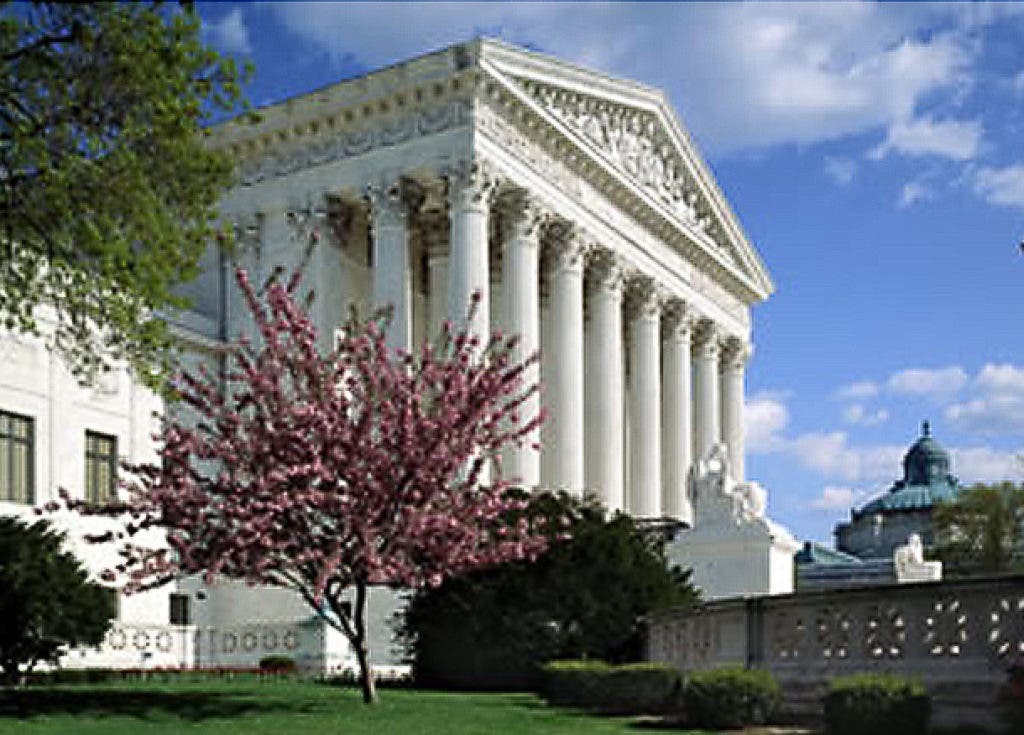
Many small business owners in Maryland said they are bracing themselves for new costs and potential penalties associated with insuring workers after the of President Obama's health care law.
While many business owners said the law won't affect them because they only employ a handful of people, those owners with larger staffs said they feared additional costs that could cripple their businesses.
Under the Affordable Care Act, small businesses will be required to offer insurance to workers if they employ more than 50 full-time people, or pay a penalty.
Find out what's happening in Odenton-Severnfor free with the latest updates from Patch.
"I know people who have started looking at the numbers, and for some of them it's going to be cheaper to pay the penalty than to cover their employees," said James King, the owner of in Gambrills and several other restaurants in Anne Arundel County. “These guys aren’t bad people, they just can’t afford it.”
King, a former state delegate and part-time adviser to the Maryland Department of Business and Economic Development, said he is still researching if he will be forced to offer insurance to workers at his businesses. Right now, he offers insurance for managers, but is approaching the cutoff where insurance will be required for all employees.
Find out what's happening in Odenton-Severnfor free with the latest updates from Patch.
“If I’m right on the margins, there’s no way I’d go higher,” said King, who employs about 600 people county-wide. “You’re going to find a way to get by without those extra employees."
Those small businesses already insuring their workers could save money under the new laws. Proponents of the law said that because it expands coverage to an additonal 32 million by 2019, small businesses will no longer be subsidizing the uninsured. (The White House contends that the cost of treating uninsured people adds $1,000 annually to every health care premium.)
In addition, businesses can take advantage of the Small Business Health Care Tax Credit, which will cover as much as 50 percent of all premiums starting in 2014.
Chamber of commerce leaders said the new law unfairly codifies business owners as the de facto place for workers to get insurance.
“Philosophically, insurance was something business offered as an incentive to attract good workers, and now all of the sudden it’s a mandate,” said Claire Louder, the president and CEO of the “Any time you are looking for a government mandate for businesses to spend money they don’t have, that’s a problem.”
Maryland Chamber of Commerce officials said their main focus now is working with state government to ensure health insurance remains affordable for small businesses. They’ve been involved with the state on setting up the Maryland Health Benefit Exchange, which was born out of a requirement that states create their own exchanges or participate in a federal exchange.
Once the government exchange is finalized there will be two insurance markets running parallel to each other: the government run market and the private market for insurance, said Ronald W. Wineholt, vice president of government affairs for the Maryland Chamber of Commerce.
Both plans will offer the same carriers, plus federal options in the government exchange that won't exist in the private market. One of the chamber's main concerns is to make sure the state doesn't require additional benefits to be offered by plans in the government exchange that make policies more expensive. They have pushed the state to offer an “essential benefits” package that offers a basic, but low-cost, insurance option for businesses and individuals.
"We've been working with the administration and the General Assembly with the implementation to make sure it competes fairly with the private marketplace," Wineholt said.
One area where business and the state clashed, he said, was a plan by O'Malley to allow the exchange to selectively exclude carriers.
"We think that's a bad idea. More competition would create more choice and better prices," Wineholt said.
Business owners acknowledged that they have yet to grasp the full scope of the law and its impact. Few said they read the more than 2,000-page law in its entirety, or fully understand all of the relevant provisions.
“I’m probably like the rest of the world, in that I have no idea what the health care law means,” said Adam Greenberg, the owner of Bagels N’ Grinds in Hanover and Potomac Pizza in Montgomery County. “There could be a difference between what it’s supposed to do and what it actually means.”
Nevertheless, Greenberg said he’s relieved that his businesses fall below the 50-worker cutoff.
“If I had to provide health care for all my employees, I’d go out of business,” he said.
Other small businesses—including those small enough to avoid any insurance requirements—said they would be watching closely to see how other business taxes and regulations might be impacted over time.
“I believe with the small amount of employees I have there is nothing in this law that will force me to do anything,” said Shaun Fair, the owner of a franchise in Odenton. “The proof will be how much [the] small business owners’ tax base at all levels—Medicare, [social security] business taxes, et cetera, will be affected. That is the unknown at this point. Time will tell.”
Get more local news delivered straight to your inbox. Sign up for free Patch newsletters and alerts.