Politics & Government
PHOTOS: Patch Editors Tour Medical Examiner's Office
Eight Patch editors toured the Office of the Chief Medical Examiner in Baltimore Wednesday and got a first-hand look into the science behind examining the deceased.



Whether people die in Reisterstown, Elkridge or the Potomac River, if they expire under uncertain circumstances in Maryland, their bodies go to the Office of the Chief Medical Examiner.
The office at 900 W. Baltimore St. in Baltimore City is a “24-hour emergency medical institution, open 24 hours a day, 365 days a year,” said Chief Medical Examiner David Fowler, M.D.
It has one job, and one job only, Fowler said: "Determine the cause of death with a reasonable degree of certainty."
Find out what's happening in Owings Mills-Reisterstownfor free with the latest updates from Patch.
Once first responders arrive at the scene of a death, they call in a forensic investigator who records and reports observations. The body is then transferred to the Office of the Chief Medical Examiner, where it undergoes an autopsy if required by a forensic pathologist.
On Wednesday, Patch editors toured the pressurized, refrigerated rooms in the state-of-the-art medical examiner facility, where the job of determining cause of death takes place.
Find out what's happening in Owings Mills-Reisterstownfor free with the latest updates from Patch.
The examination can involve CT and other scans, and surgical procedures to test parts of the body. Fowler said more than 99 percent of forensic autopsies are completed within 24 hours.
Michael Eagle, computer network specialist for the medical examiner’s office, said that the facility, which opened in 2010, is more technologically advanced than almost any other government agency.
In fact, class was in session for law enforcement and forensic investigators who had traveled from far and wide for training at the Baltimore office.
“We’re one of the most high-tech” forensic facilities in the world, said Eagle, who noted Zurich, Switzerland, was also a leader in high-tech forensics.
Fowler had just returned from Zurich, according to Eagle, and he was consulting with experts from Singapore when Patch editors met him in a room filled with ropes and other objects found at death scenes.
There is also a realistic "house" constructed in a section of the facility where trainers can stage death scenes for investigations by students. Funding for the room came from author Patricia Cornwell, famous for her novels about a female medical examiner.
"More deaths will have happened there than anywhere in Maryland," Fowler said jokingly.
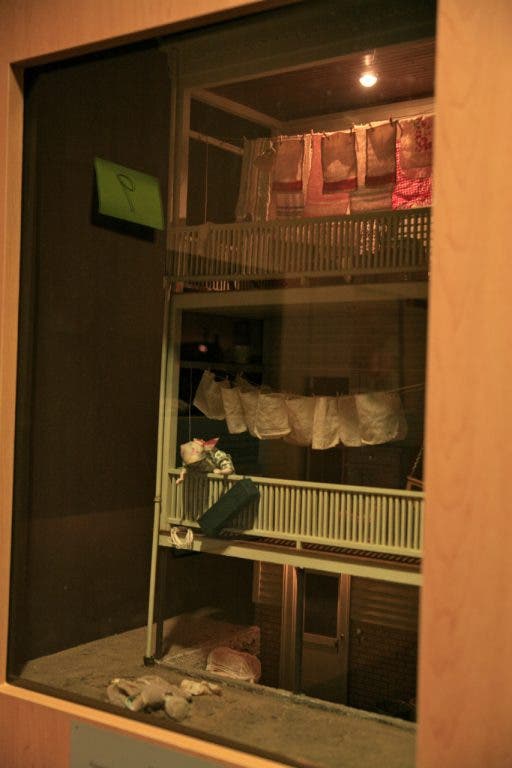
The facility also houses the , dioramas of death scenes hand-crafted in the 1930-40s and used to this day for training purposes.
Get more local news delivered straight to your inbox. Sign up for free Patch newsletters and alerts.