Politics & Government
State, County Planning I-795 Interchange
Officials are finishing the planning phase of a new interchange on I-795 at Dolfield Boulevard.

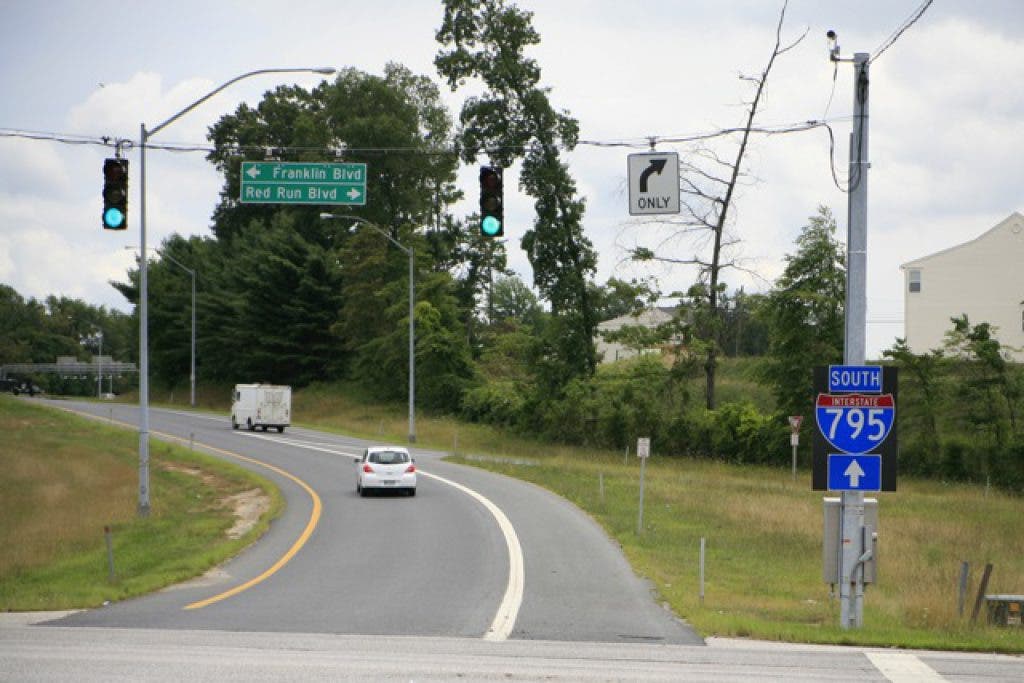
Baltimore County and the state of Maryland are wrapping up the two-year planning phase of a project that would see a new interchange built on Interstate 795 at Dolfield Boulevard.
But there’s no saying when the interchange will actually be built.
The state of Maryland funded the planning to the tune of $2.1 million and Baltimore County funded $625,000, but neither has allocated the money needed to take the project beyond the planning phase.
Find out what's happening in Owings Mills-Reisterstownfor free with the latest updates from Patch.
According to David Buck, a spokesman for the Maryland State Highway Administration, even if there were funding for the project, the timeline would be several years – at least two for the design phase before construction could begin.
“No new projects have been added just because of the economy [being down],” he said.
Find out what's happening in Owings Mills-Reisterstownfor free with the latest updates from Patch.
SHA workers conducted several surveys that looked at elevation changes, drainage and underground utilities at the site of the future interchange, just north of Owings Mills Boulevard.
That particular site was selected for three reasons, according to David Fidler, spokesman for Baltimore County Public Works.
“No. 1, it provides direct access to Dolfield Boulevard, which opens up commercial areas along Red Run Boulevard for future development,” he said. “It takes a load off of Owings Mills Boulevard and Franklin Boulevard [and] it provides another connection to Reisterstown Road.”
Less than nine miles long from the I-695 beltway to Maryland 140 northwest of Reisterstown, the full length of I-795 was completed in 1986 as a bypass for MD 140, though the roadway stopped short of reaching its original vision.
When planning ramped up in the 1970s, the Northwest Expressway was supposed to extend into Baltimore City, where it would have ended at Wabash Avenue, according to DCRoads.net, a website chronicling the history of Maryland, Virginia, and Washington, D.C., roads.
The route was planned specifically to be similar to that of the Baltimore Metro Subway, which runs through the median of the expressway north of the Baltimore Beltway.
But those plans were scrapped in 1973 after locals opposed the continuation of the highway inside the city limits, leaving the freeway in its current state.
Get more local news delivered straight to your inbox. Sign up for free Patch newsletters and alerts.