The construction and operation of Transit-Oriented Developments (TODs) have the potential to generate up to “ten times more tax revenue per acre than conventional suburban development,” according to a report issued by Smart Growth America. The cost savings is primarily achieved by the efficiency in which infrastructure such as water mains, sewer connections and street lighting can be built and maintained to service projects that attract and support dense populations.
The full content of “Building Better Budgets: A National Examination of the Fiscal Benefits of Smart Growth Development” is available at www.SmartGrowthAmerica.org It finds that smart growth development (1) saves between 38% and 50% on upfront infrastructure construction costs, (2) saves an average of 10% on the ongoing delivery of services and (3) generates 10 times more tax revenue per acre than conventional suburban development.
Find out what's happening in Owings Mills-Reisterstownfor free with the latest updates from Patch.
This study follows a published report in the April-May 2013 issue of Better! Cities & Towns that residential properties located near transit stations achieve and maintain higher values over the long-term. The New Real Estate Mantra: Location Near Public Transportation provided insight into how certain amenities, such as established transit stations and retail outlets, combined with trees, public spaces and a pedestrian-friendly environment can contribute to these sustained values and attract residents.
Find out what's happening in Owings Mills-Reisterstownfor free with the latest updates from Patch.
According to Smart Growth America, “local governments are facing unprecedented challenges in providing high-quality infrastructure and adequate public services to their residents. Choosing financially-responsible development can help communities protect their fiscal health for generations to come.”
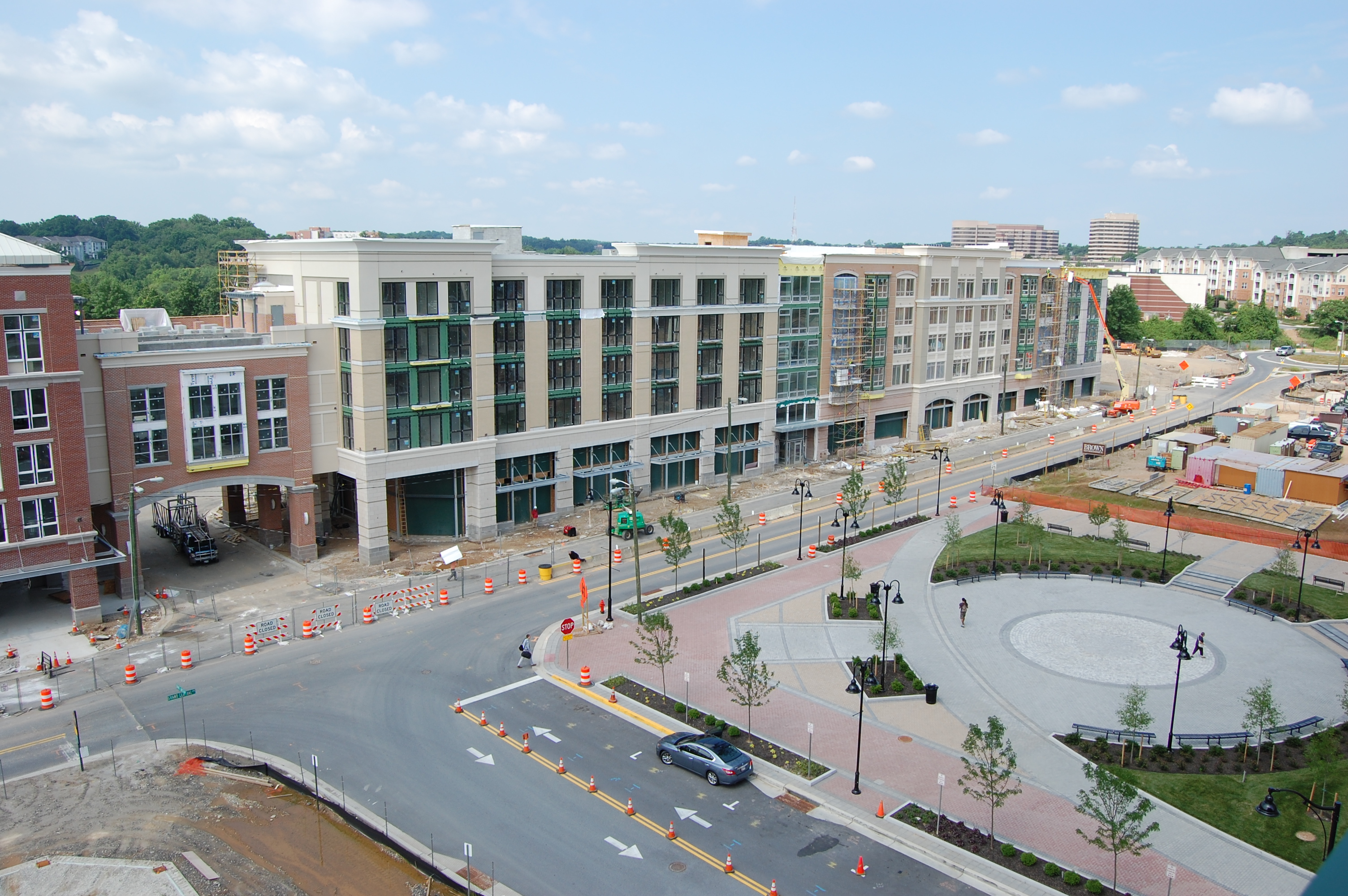
An example of a Maryland-area Transit-Oriented Development is Metro Centre at Owings Mills, a project encircling the Owings Mills Metro station in Baltimore County. Two five-story buildings, cumulatively containing 56,000 square feet of retail space on the ground floor and 240 market-rate apartment homes on the upper four floors, are nearing completion. The TOD’s first amenity, a 120,000 square foot building housing the largest branch of the Baltimore County Public Library and a new satellite location of the Community College of Baltimore, opened last month. Also underway is construction on a new four-story, 200,000 square foot Class “A” office building, which represents the inaugural phase of the 1.2 million square foot office component of the TOD.
Metro Centre at Owings Mills is being developed by Owings Mills Transit, LLC and will be managed by David S. Brown Enterprises, Ltd. It is designed to support more than 1.2 million square feet of Class “A” office space; 200,000 square feet of complementary retail space; 1700 residential units; educational facilities totaling 120,000 square feet and a hospitality component offering up to 250 rooms.
“Both studies demonstrate why compact, pedestrian-friendly communities represent the wave of the future in the United States from a financial and social perspective,” stated Howard Brown, Chairman of David S. Brown Enterprises, Ltd. “The integration of smart growth principles that achieve dramatic efficiency for large-scale projects place less stress on government resources. Compact communities such as TODs are rapidly becoming the project of choice among consumers who find comfort being connected by technology and public transportation,” he added.