Business & Tech
Dispatches: Farmer Tom Talks Turkey ... and Farming in Tough Times
Farmer Tom's Farm Fresh, located on Cockeys Mill Road, will process and sell thousands of turkeys for Thanksgiving and Christmas. But there's much more than poultry at this Reisterstown farm.

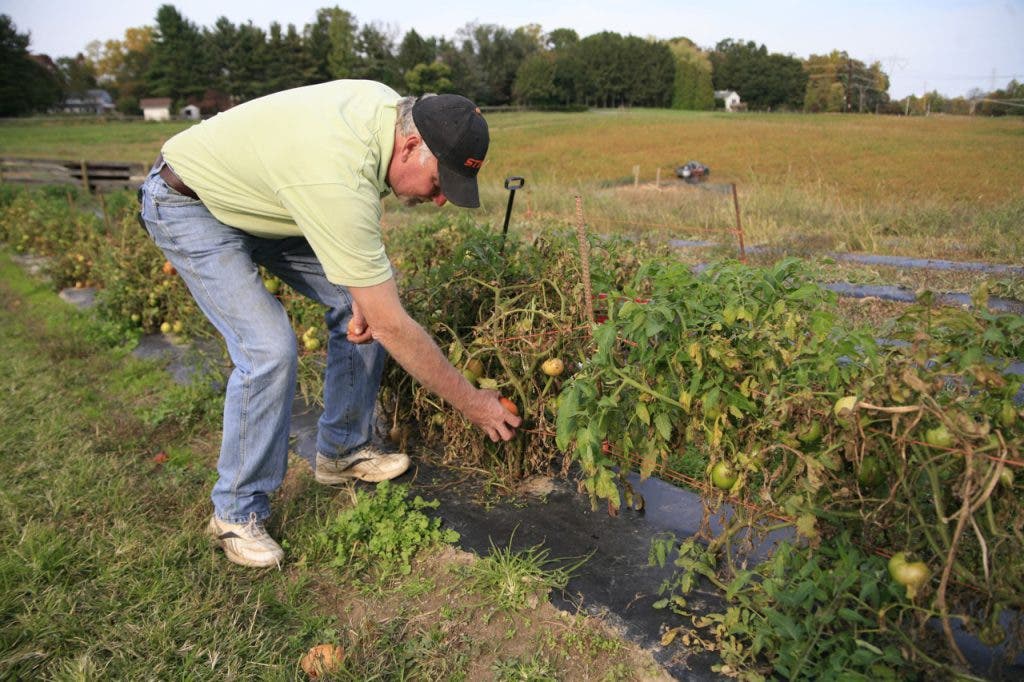


For Tom Reynolds, keeping his family’s farm alive hasn’t been a matter of cutting costs but of finding untapped markets.
Whether it’s the rabbits the farm sells, the manmade pond with catch-and-release fish or the farm’s poultry processing plant, has ventured into new businesses and ditched some old ones to stay afloat.
“To survive in today’s economy, you just need little niches,” Reynolds said. “You have to make every square inch of land count.”
Winters at Farmer Tom's are far from quiet, with pigs, horses and rabbits about, and beef cattle from being housed, and Tom's is a hub for Reisterstown families, drawing the community to its produce stand, hayrides and farm-fresh pumpkins.
"It’s about getting out, enjoying nature and what God gives us everyday.”
Although it was a tough summer, Reynolds said he is optimistically heading into turkey season. His farm will process and sell thousands of Thanksgiving and Christmas turkeys.
Born on the Farm
Reynolds' mother, Barbara Vaughn Reynolds, who still lives in Reisterstown, and her late husband, Lloyd W. Reynolds, bought the Cockeys Mill Road farm in 1952. Much of Tom’s childhood and teen years centered around farm life.
“In elementary school, we had pigs, cows and I had 20-30 breeding sows,” he said.
Breeding pigs earned Reynolds some spending money in high school and helped him pay for college. He graduated from Penn State in 1983 with a bachelor’s in agriculture business management, and he’s been on the farm ever since. Fresh out of college, he started a hay business and was responsible for a couple hundred head of cattle.
As times have changed, so has the farm. The once “very lucrative” wholesale hay business stopped about seven years ago, and while the farm still raises horses for racing, it’s not like it used to be.
“Horses have gone away because we have not kept up with the times with racing in Maryland,” he said.
Turkeys weren’t big business for the farm until the early 1990s, after Tom sent his father to get the family’s Thanksgiving turkey from another farm they knew. His father waited for two hours to purchase the turkey. The next year, 1992, the Reynolds’ farm raised 250 turkeys. These days, the farm sells about 2,500 turkeys each year and processes another 2,500 for smaller farmers and producers.
By combining raising and processing turkeys with rabbits, pigs, produce, some horse racing and family events, the farm offers enough product to stay competitive.
“Diversifying farms is just starting to become a necessity,” said Kelly Carneal, director of rural land for 1000 Friends of Maryland, an environmental advocacy group that supports independent farmers. “If your whole farm is in corn and we have a really bad season weather-wise, you could lose everything.”
Farmer Tom’s in 2011
The farm, which was originally 50 acres, covers 170 acres these days. It grows tomatoes, cantaloupes, watermelon, zucchini, squash, peppers, corn and a variety of other vegetables. The farm has two full-timers year round, and a third from the spring until December. A group of 12-15 teenagers helps Reynolds in the field and in the farm’s store.
Although it functions like a well-oiled machine, the farm is not without financial challenges. Each year, deer cause tens of thousands of dollars in damage to crops. The cost of maintaining the turkey operation and feeding other animals has gone up substantially over the years as the cost of feed has increased.
When the farm first had turkeys in 1992, feed was $200 a ton and turkeys sold for $1.49 a pound. Now, feed is close to $500 a ton, and turkeys sell for $2.69 a pound. That’s a nearly 250 percent increase in the cost of feed, and only a 180 percent increase in the cost of turkeys. Reynolds estimates he spends about $3,000 a week on feed.
Finding the Customer
Five years ago, Reynolds and several other local farmers formed a marketing group to stay competitive, and the farmers share and buy each other’s products. Liberty Delight Farms will sell about 300 of Farmer Tom’s turkeys this year, Reynolds said.
“We really stress and try to keep that bond together because the client is hard to find,” Reynolds said.
Carneal said such cooperation among farmers is becoming more commonplace.
Find out what's happening in Owings Mills-Reisterstownfor free with the latest updates from Patch.
“The Maryland Department of Agriculture and Economic Development, they don’t have as much money as they did years ago, so they’re not able to help farms promote as much they could in the past,” she said.
“As we lose farmland, we lose a lot of that infrastructure, processing plants and even stores that have farming equipment service.”
In one of its many efforts to keep farmers farming, 1000 Friends of Maryland threw a concert at Farmer Tom’s in October. Reynolds was surprised at how knowledgeable attendees were and how much they paid attention to what they put in their bodies, from food “down to the alcohol,” he said.
“There really, truly is a customer base out there that wants local agriculture and doesn’t want to put the miles on their food,” Reynolds said.
Those looking for Thanksgiving turkeys that haven’t traveled far can get what they need from Farmer Tom’s. They can also order from the farm’s new online store, but the turkeys would have to picked up from the farm.
Once turkey processing is in full swing, the farm will process 300 turkeys per hour in five-hour shifts. Reynolds might run a double shift this year to process 3,000 in a day.
Reynolds is about to begin constructing a new building to expand the processing plant and hopes to put solar panels on its roof. The new building will house office space and cooler space for more vats, which refrigerate turkeys after processing.
“I’d like to have the whole plant run off solar energy,” Reynolds said. “It’s a major investment, but when you put the pencil to the paper, it’s a no-brainer.”
The processing facility is somewhat green already. The water in the 750-gallon tank that loosens feathers on poultry is heated to 142 degrees with a wood-burning furnace that runs on scrap wood.
The Future of the Farm
While Reynolds would love to have the farm running entirely on solar energy, he’s got his eyes on 75 acres that his mother sold to developers a few years ago. Due to the economic recession, the land sits vacant and isn't being maintained, Reynolds said.
He wants to buy back the land on which he once fished and hunted, and restore it for farming and as a site for a Lloyd W. Reynolds Conservancy Association, which would serve as a hunting preserve for kids who don’t have the opportunity to hunt, and possibly for veterans and members of the military.
“I want to give the community kids a chance to have that exposure,” the father of two teenagers said. “It’s about getting out, enjoying nature and what God gives us everyday.”
Find out what's happening in Owings Mills-Reisterstownfor free with the latest updates from Patch.
You can find more articles from this ongoing series, “Dispatches: The Changing Amerian Dream” from across the country at The Huffington Post.
Get more local news delivered straight to your inbox. Sign up for free Patch newsletters and alerts.