Politics & Government
OPINION: Breezing Our Way to Good Jobs for Marylanders
Legislation to support the emergence of offshore wind power in Maryland represents a first step in promoting energy independence and economic development.

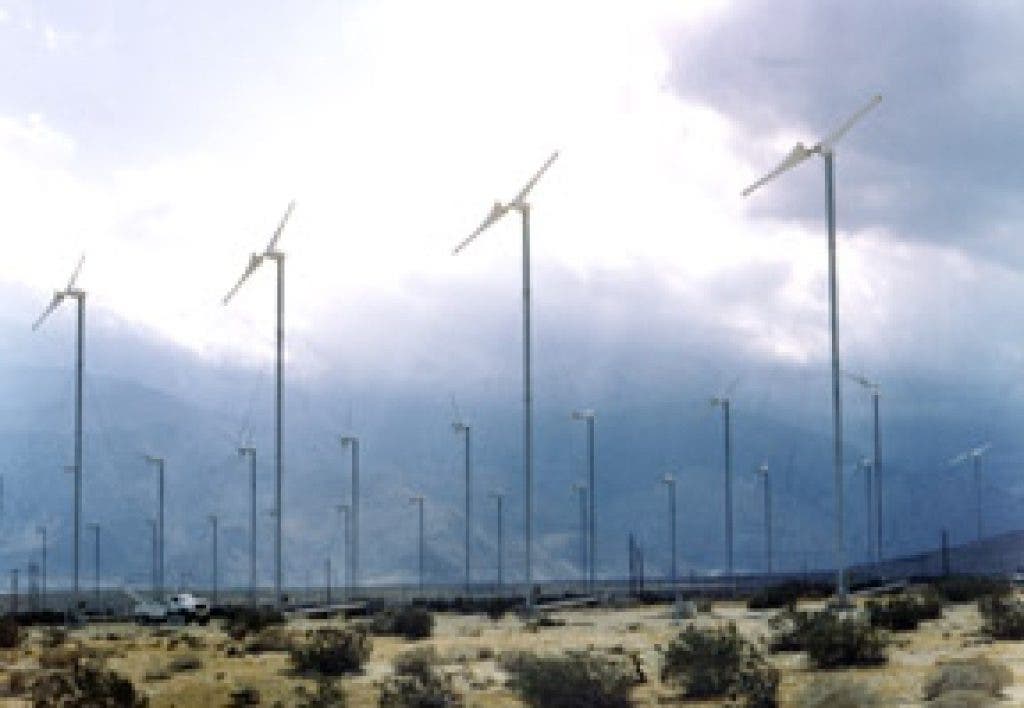
This month, introduced legislation to advance offshore wind power as a viable source of renewable energy for our state and region. The Maryland Offshore Wind Energy Act of 2012 proposes a framework to encourage private investment in this emerging industry and allowing for the generation of a clean, sustainable source of electricity.
Similar legislation was considered last year, but was ultimately tabled due to concerns about the possible costs of the program, and the potential impact on consumers. In response, the current legislation represents a new model for promoting offshore wind, and is based upon legislation that championed by New Jersey's Republican Gov. Chris Christie.
In August 2010, Christie signed into law the Offshore Wind Economic Development Act. The legislation established an offshore wind renewable energy certificate program (OREC) in New Jersey. This model did two important things: first, it provided a market for the purchase of wind power in the state, and second, it offered a series of tax incentives and other financial assistance to support the development of offshore wind projects.
Find out what's happening in Perry Hallfor free with the latest updates from Patch.
New Jersey's law directs its Board of Public Utilities to require power sold to the five regulated utilities in the state to include a certain amount of offshore wind generation. The board will then set a power purchase price for offshore wind projects, but only after a cost-benefit analysis that takes into account the impact on electricity rates, the economy and job creation, and the environment.
The OREC model proposed for Maryland utilizes these same basic procedures, and would allow at least a 450-megawatt project to be built. Estimates provided by the Maryland Energy Administration project of this size would lead to the creation of 1,800 construction jobs and 360 ongoing maintenance jobs. Positively, the bill would limit the anticipated rate impact to $2 per month for the average residential customer, which would not take effect until 2017. This increase is likely to be on par with future increases in the costs of fossil fuels used for the generation electricity.
Find out what's happening in Perry Hallfor free with the latest updates from Patch.
In September 2010, the National Renewable Energy Laboratory (NREL) estimated that nearly 213 gigawatts of wind power could be tapped along the Atlantic coast of the United States. NREL went on to indicate that the Atlantic states would "generate $200 billion in new economic activity and create more than 43,000 permanent, high-paying jobs if 54 gigawatts of the 212.98 gigawatts of available offshore wind resources were utilized." Given the shaky state of our existing national economy, it is in our collective best interest to jump-start new industries of all types.
Developing offshore wind farms would lead to the creation of jobs related to the design and manufacture of components for the wind turbines, jobs required to construct the farms themselves, and jobs necessary for the operations and maintenance of these facilities.
These jobs could revive Maryland's manufacturing sector, offering family-sustaining jobs for many. Thus, I agree with Gov. Christie when he said that "the development of renewable energy resources and industry is critical to [a] state's manufacturing and technology future."
Should the state invest in wind energy? Tell us in the comments.