Business & Tech
State, Local Experts Project Strong Crabbing Season
Crab population is at its second-highest level in the Chesapeake Bay since 1997, according to the 2011 Blue Crab Winter Dredge Survey.
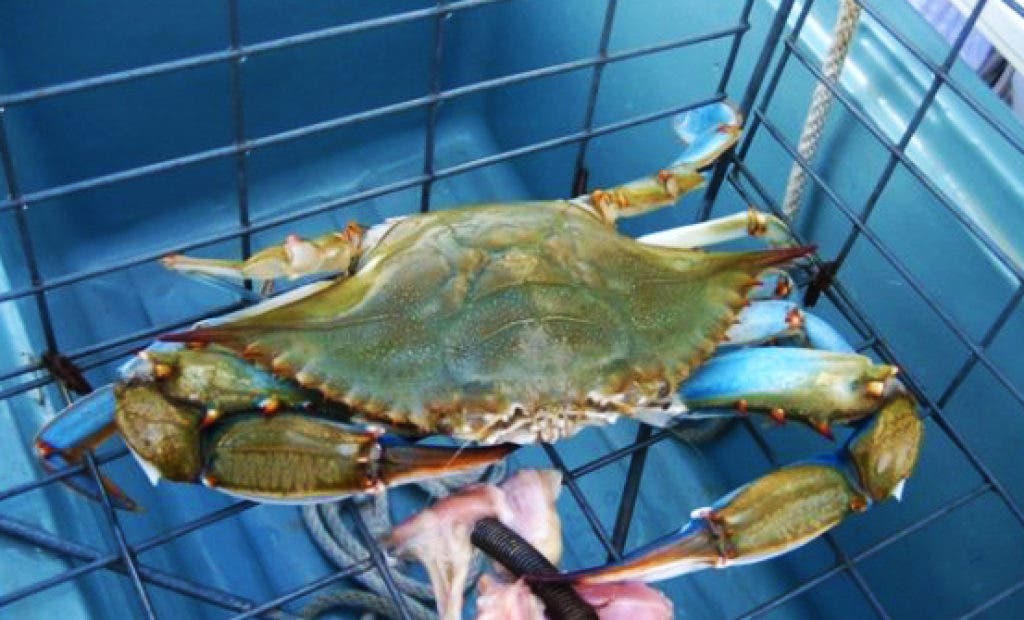
Just weeks into the commercial crabbing season, reports indicate a plentiful supply of large crabs, said Bill Paulshock, owner of on Belair Road in Perry Hall.
"It's looking like a good season," Paulshock said.
According to the 2011 Blue Crab Winter Dredge Survey, which was released on April 19, the Chesapeake Bay’s blue crab population is at its second-highest level since 1997 and well above the target for the third year in a row, setting the stage for a Bay-wide recovery.
Find out what's happening in Perry Hallfor free with the latest updates from Patch.
The report also found that 254 million adult crabs survived an unusually cold winter in the Chesapeake, above the current population target for the third year in a row. This marks the first time since the early 1990s that the Chesapeake Bay has experienced three consecutive years in which the adult population was above the target (200 million crabs) and the combined commercial and recreational harvest was below the target of 46 percent.
“This annual survey not only gives us the best accounting of our populations, it is also an excellent predictor of the upcoming harvest,” said Secretary John Griffin in a statement. “While we are heartened by these results, we remain committed to working with our partners and stakeholders to keep the harvest in balance with the population over the long term.”
Find out what's happening in Perry Hallfor free with the latest updates from Patch.
Blue crabs remain the most valuable commercial species in the Chesapeake Bay with a “dockside value of $54.2 million,” according to a state report.
The prices for the crabs will likely depend on the traditional concept of supply and demand.
"To be honest, I think that the supply has picked up at the crab houses," Paulshock said. Whale crabs, 7-9 inches long, are selling for $70 a dozen at Bill's Seafood, while 5-inch males are selling for $12 a dozen.
"You can feed three people with a dozen crabs for $12. That's cheaper than taking them all to McDonald's," he said.
It's a common misconception that rising gas prices lead to higher crab prices, he added. "Right now, crabs are as cheap as they were last year."
The state took aggressive steps dating back to 2008 to preserve the state’s crab population. In March, the state launched a program to buy and permanently retire some commercial crabbing licenses.
Tom O'Connell, fisheries director for DNR, said there are currently about 650 inactive watermen with such licenses.
“It becomes very difficult to manage the crab fishery to our annual target harvest level if even a fraction of these unused licenses chooses to re-enter the fishery," said O'Connell.
Two years ago, the state also developed new rules to protect the female crab population, which include daily bushel limits and seasonal closures.
In September 2008, the National Oceanic and Atmospheric Administration’s National Marine Fisheries Service responded to Gov. Martin O’Malley’s request for disaster assistance funding for watermen impacted by the declining blue crab population.
With support from Sen. Barbara Mikulski and Maryland’s Congressional Delegation, the state received $15 million in federal funds that extends into 2012 to assist management efforts and mitigate the impacts from the blue crab fishery disaster.
On the state level, O’Malley and the Maryland General Assembly also directed $6 million in capital funding toward these efforts over the previous two fiscal years.
Officials with the Maryland Watermen's Association are concerned about how tighter restrictions will affect their livelihood. They fear tighter restrictions will decrease revenues, which are already suffering.
A new group, called the "blue crab industry design team" is expected to help develop new management programs for the crab population that strikes a balance between conservation and business.
This season's projected crab population could benefit both. "I think that people can enjoy crabs this year," Paulshock said.