Politics & Government
Perry Hall Lawmaker Calls for Strategy to Curb Drug Abuse
Senator Katherine Klausmeier joins several officials calling for measures to address heroin problem in Maryland.


By Nate Rabner, CAPITAL NEWS SERVICE
A coalition of public officials and advocates presented a billTuesday that would increase punishments for heroin and fentanyl distributors by charging them with homicide when their drugs kill users.
“If there’s someone that’s distributing it and it caused the death, then ... I don’t think it’s inappropriate to go after the manufacturer and the distributor,” said Delegate Kathleen Dumais, D-Montgomery, the bill’s sponsor.
Find out what's happening in Perry Hallfor free with the latest updates from Patch.
A person who distributes heroin or fentanyl that is found to be a “contributing cause” to a user’s death would face a prison sentence as long as 30 years.
State senators have introduced several additional bills to address the use of heroin and other opioid painkillers. Susan Lee, D-Montgomery, is sponsoring a companion bill to Dumais’. Catherine Pugh, D-Baltimore, has sponsored a bill that would expand insurance coverage for abuse-deterrent opioid products, and Katherine Klausmeier, D-Baltimore County, has proposed the creation of a Maryland Opioid Use Disorder Consortium to develop a strategic plan to reduce drug abuse.
Find out what's happening in Perry Hallfor free with the latest updates from Patch.
Several state’s attorneys, police officials and family members of heroin addicts testified Tuesday in favor of Dumais’ bill before the House of Delegates Judiciary Committee. Proponents said a felony charge would fill a gap in the state’s legal authority, allowing prosecutors to “go up the chain” and hold distributors responsible for heroin-related deaths.
“There is not anyone out there dealing heroin that doesn’t know that a lot of people are dying of what they are distributing,” said Brian DeLeonardo, Carroll County state’s attorney. “The crime should reflect that.”
Heroin and fentanyl played a role in the deaths of about 700 Marylanders last year, said Montgomery County State’s Attorney John McCarthy, who helped draft the bill.
State Department of Health and Mental Hygiene data show a drastic increase, from 170 heroin-related and 31 fentanyl-related deaths in January-September 2010 to 428 and 141, respectively, in the same period in 2014.
- Montgomery County, State Experience ‘Heroin Epidemic’
- Fatal Overdoses Are Increasing in Maryland: State Health Report
- ‘Life-Saving Work’ Needed for Cecil County’s Drug Recovery
“I don’t care where you’re from,” McCarthy said. “Everyone’s being affected by this issue.”
He said the “catastrophic loss of life” among heroin and fentanyl users would have been even higher if not for the use of the medication Naloxone to treat overdoses, and encouraged delegates to ask first responders about nonfatal overdoses.
Heroin’s increasing accessibility is partly responsible for the rise in fatalities, McCarthy said. The state’s Prescription Drug Monitoring Program has made prescription painkillers such as oxycodone harder to obtain, while heroin is available at a fraction of the price of prescription drugs, and with increasing potency.Fentanyl, a synthetic opiate, can be lethal on its own or as an adulterant to heroin.
Maryland State Police Maj. James Pyles, Northern Command commander, said an increased punishment for heroin and fentanyl distributors would not alter police investigations into heroin networks. But it would help law enforcement officials “on the front line” against the drug, he said.
“There is a lot of moving parts within this fight against heroin,” Pyles said. “This is one moving part that will tremendously help law enforcement as we move forward.”
Dumais’ bill includes a “good Samaritan” clause, which provides immunity from criminal prosecution for anyone who calls for help for an overdose victim, as well as the victim.
Opponents said the provision, which reinforces a law passed last year, would not encourage heroin users to help one another during a medical emergency because it only blocks prosecution, but would not stop police from arresting a good Samaritan and charging him or her with a crime.
Opponents of the bill, including several relatives of addicts, argued that heroin is a public health issue and lawmakers should focus state resources on treatment and recovery instead of additional criminal charges.
“I simply don’t think it achieves the purpose that you’re trying to achieve,” Delegate Curt Anderson, D-Baltimore, told the state’s attorneys. “Why do we try to prosecute our way out of this when the obvious answer is treatment?”
Anderson, who said his sister died of cocaine use, criticized the state’s war on drugs, which he said has created a prison population in which many prisoners are drug offenders.
“We’ve been fighting this battle for 40 years, and I don’t think we’ve won anything,” Anderson said.
Nancy Rosen-Cohen, executive director of the National Council on Alcoholism and Drug Dependence of Maryland, said the bill was too vaguely worded and would lump in friends who share drugs along with major distributors.
“The goal of the bill, to go after the dealers-for-profit—the goal is not being achieved in the language as drafted,” Rosen-Cohen said. She added that the state already has punishments aimed at drug dealers, including a 20-year minimum sentence for a “drug kingpin” who manages a production or distribution network.
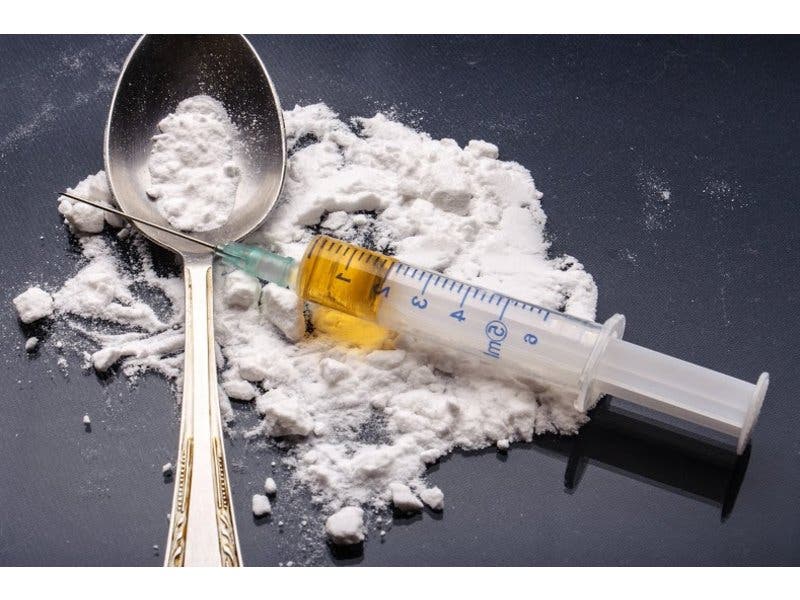
Photo Credit: Shutterstock
Get more local news delivered straight to your inbox. Sign up for free Patch newsletters and alerts.