Politics & Government
Watch Artemis II Splashdown On Livestream As Historic Moon Mission Ends
The historic Artemis II mission is coming to a close. Splashdown happens Friday, just after 8 p.m. EDT. Watch via the livestream below.


BALTIMORE COUNTY, MD — NASA's historic 10-day lunar flyby mission is coming to a close Friday, when astronauts Reid Wiseman, Christina Koch, Victor Glover and Jeremy Hansen return to Earth.
(See livestream link below.)
Artemis' April 1 launch marked the first piloted mission since the end of the Apollo program in the 1970s.
Find out what's happening in Perry Hallfor free with the latest updates from Patch.
Both Wiseman and Koch have ties to Maryland.
After course-correcting burns, the Artemis crew is expected to splash down in the Pacific Ocean, off the coast of San Diego, at 8:07 p.m. EDT.
Find out what's happening in Perry Hallfor free with the latest updates from Patch.
In a span of two hours after splashdown, recovery teams will be in place to retrieve the crew, assist them onto an inflatable raft and then transfer them by helicopter to the USS John P. Murtha.
"Once aboard, the astronauts will undergo post‑mission medical evaluations before returning to shore, where awaiting aircraft will take them to NASA’s Johnson Space Center in Houston," NASA said in its latest blog update.
A livestream of the event, which will go live starting at 6:30 p.m. EDT, can be watched below:
What's Happening Step-By-Step?
A breakdown of the splashdown, provided by NASA, shows:
7:33 p.m. EDT
Orion’s crew module will separate from the service module, exposing its heat shield for the spacecraft’s return through Earth’s atmosphere, where it will encounter temperatures of about 3,000 degrees Fahrenheit.
7:37 p.m. EDT
Following separation, Orion will perform an 18-second crew module raise burn, beginning to set the proper entry angle and align the heat shield for atmospheric interface.
7:53 p.m. EDT
When Orion reaches 400,000 feet above Earth’s surface while traveling nearly 35 times the speed of sound. The crew is expected to experience up to 3.9 Gs in the planned entry profile. This moment marks the spacecraft’s first contact with the upper atmosphere and the start of a planned six-minute communications blackout as plasma builds around the capsule.
8:03 p.m. EDT
Around 22,000 feet in altitude, the drogue parachutes will deploy, slowing and stabilizing the capsule as Orion nears splashdown.
8:04 p.m. EDT
At around 6,000 feet, the drogues will release, and the three main parachutes will deploy, reducing Orion’s speed to less than 136 mph.
8:07 p.m. EDT
Slowing to 20 mph, Orion will splash down in the Pacific Ocean off the coast of San Diego, completing the Artemis II crew’s return to Earth and a 694,481-mile journey.
Artemis II's Historic Mission Around The Moon
The Artemis II launch marked the first piloted mission since the end of the Apollo program in the 1970s.
Mission commander Wiseman grew up in Baltimore County's Cockeysville area, graduating from Dulaney High School in 1993. Crew member Koch lived in Anne Arundel County, joining the Severn Sailing Association and even going so far as representing a local eatery during her time in Antarctica.
Related:
The lunar trip tested the Orion spacecraft’s life support, communication and navigation systems, as well as its ability to keep astronauts safe, in preparation for future lunar landings.
The mission not only provided new glimpses of Earth and its lunar satellite, but also gave insight into the close bond of the four-person crew.
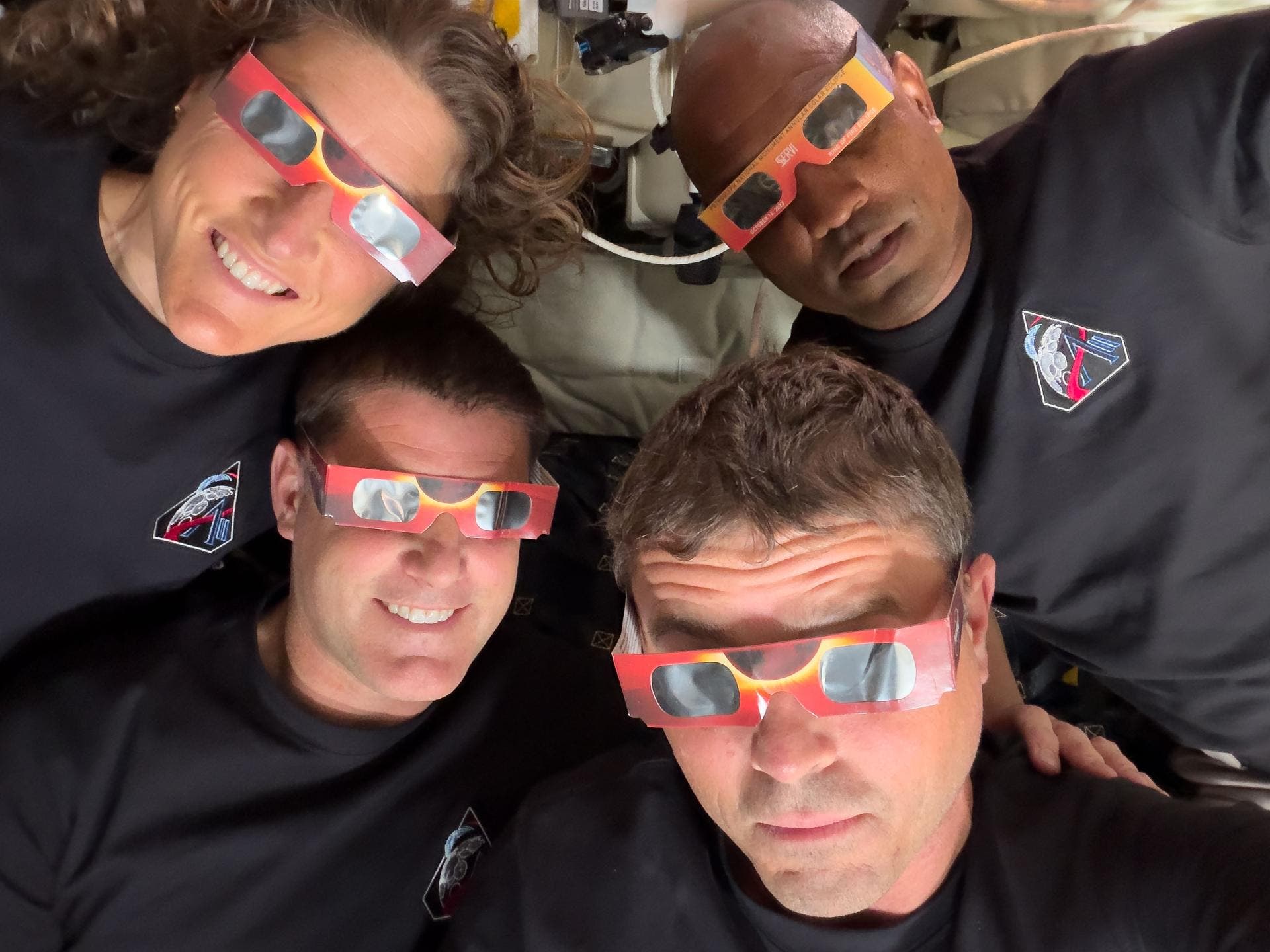
Ahead of the crew's observational period earlier this week, Hansen announced the team was proposing that two unnamed craters be given the names Integrity and Carroll.
Carroll is the name of Wiseman's late wife, who died in 2020 from cancer. She was 46 years old.
Live footage from the Orion spacecraft showed the crew embracing one another moments after Hansen's proposal was transmitted.
"That was an emotional moment for me," Wiseman later said.
The next Artemis mission won't be held until 2027, when commercial landers will be tested in low Earth orbit. The next manned missions won't be held until 2028, with Artemis IV and V.
Get more local news delivered straight to your inbox. Sign up for free Patch newsletters and alerts.