Community Corner
Fishing on the Potomac with a Trickster for a Guide
The thrill of catching a big bass turns to dismay as the river teaches a sobering lesson.


Long before iPads, Indian children would gather at night by the fire to hear stories about tricksters. The children would laugh when the trickster — often a raven or a coyote — made a vain warrior into a fool. They would tremble when a greedy hunter met a grisly fate.
The job of the trickster was not just to amuse, but to teach people how to live with each other and with their environment. Their lessons helped the people to survive.
We also have a trickster here in our midst. It is the Potomac River. Here’s one story of our trickster at work.
Find out what's happening in Potomacfor free with the latest updates from Patch.
The story begins at a meeting of the Potomac Smallmouth Bass Club. The featured event was a panel session in which five club members answered questions about their favorite techniques for catching the river’s iconic fish. It was a virtuoso performance.
After the session ended, I sought out the moderator, an engaging fellow named Jim Bullard. He listened sympathetically as I described my own fishing techniques. “That’s why you only catch small fish,” Jim said. “Try these.”
Find out what's happening in Potomacfor free with the latest updates from Patch.
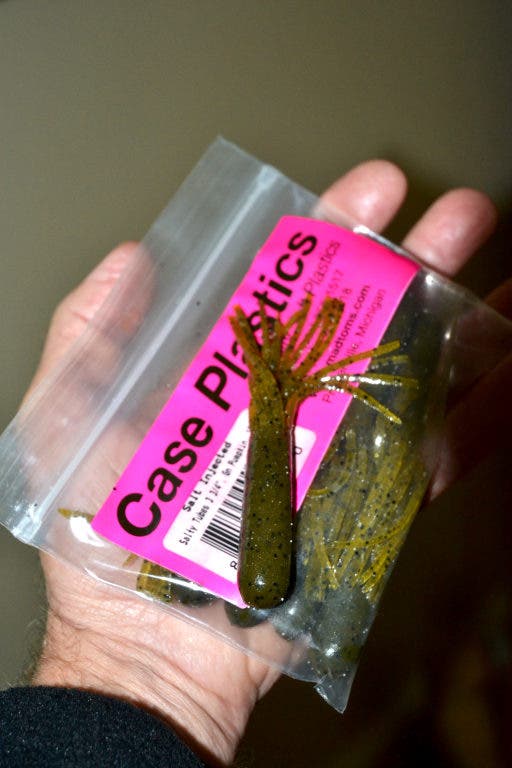
He handed me a pack of brown, fringed tubes from a display table. They felt rubbery and smelled bad. But if you twitch them just right, he said, bass will mistake them for crayfish. Bass love crayfish.
I bought the rubbery tubes with a flush of anticipation. More than mere fishing lures, they represented the knowledge of people who have spent many years studying the river and the habits of fish. That squishy packet was a kind of Holy Grail of local wisdom.
The first warm day in April I slipped my new lures into my fishing box, strapped my kayak to my car, and headed to Pennyfield Lock. Putting in at Muddy Branch, I paddled through the tunnel under the canal and followed the creek to the river. Battling gusty winds and a strong current, it took me an hour to reach the foot of Seneca Breaks.
There I traded my paddle for my fishing rod and began drifting back. I had my eye on a spot where the river bottom dropped into a hole. Here the fish could get out of the current while waiting for prey.
I flipped out my brown tube and let it sink to the bottom. Following Jim’s instructions, I lifted the rod tip to retrieve the lure in little chugs.
Immediately I felt a tap. My arm sprung back to set the hook and the rod bent into an arc. The line pulled taught and circled around my boat.
After a minute or so I had the fish by the side of the kayak. It was a fine smallmouth, maybe 18 inches long. From its gaping mouth emerged the brown tube lure.
It was an exhilarating moment. Once again, the river had shown how it rewards those who learn its lessons. But in true trickster fashion, the river had another message for me.
I grasped the fish by its lower jaw and lifted it up. On its flank was a lesion, red, raw, and ugly. I turned the fish around. Its left eye was white and sightless. My exhilaration turned to dismay.
I had seen such lesions before in photographs shown by Jeff Kelble, the Shenandoah Riverkeeper, at a seminar reported on in a . He and USGS fish pathologist Vicki Blazer described mysterious ailments in local rivers that were not only killing fish but also producing intersex fish―male fish that develop ovaries.
Scientists have not yet pinpointed the cause, they said, but it almost certainly has to do with the cocktail of chemicals that gets washed down sinks, flushed down toilets, and runs off land from lawns and farms.
I got in touch with Jeff. He said that sightings such as mine were relatively rare in the Montgomery County segment of the river.
John Mullican, large river specialist for Maryland’s Department of Natural Resources, confirmed what Jeff said. Sampling has shown that less than 10 percent of smallmouth bass and redbreast sunfish in the nearby Whites Ferry-Edwards Ferry stretch of the river have lesions.
DNR will be taking more samples this spring after river levels drop. In the meantime, anyone who catches a fish with lesions should email the information to JMullican@dnr.state.md.us or call him at 301-898-5443. Photos would be helpful.
Hopefully, my catch will remain the exception. But the river is issuing a warning. Something is sickening our fish, and perhaps other creatures that depend on the Potomac. Does that include us?
Want to know more? The Potomac Conservancy is holding a half-day forum on emerging pollutants in our waterways on June 3. Click here for information.