Crime & Safety
Ghosts of Potomac River Serve as Sobering Reminders
Patch took a river tour with Cabin John Station 10 to learn about the dangers of the river.


When someone dies in the Potomac River, one of the easiest ways to find the body is to wait until it begins to float.
Over a period of days or weeks a drowned person’s chest and abdomen begin to fill with methane and other gases produced by the breakdown of proteins, causing it to float to the surface, according to David R. Fowler, Maryland's chief medical examiner.
Finding these bodies is just one of the jobs carried out by the firefighters at Cabin John Park Volunteer Fire Department Station 10.
Find out what's happening in Potomacfor free with the latest updates from Patch.
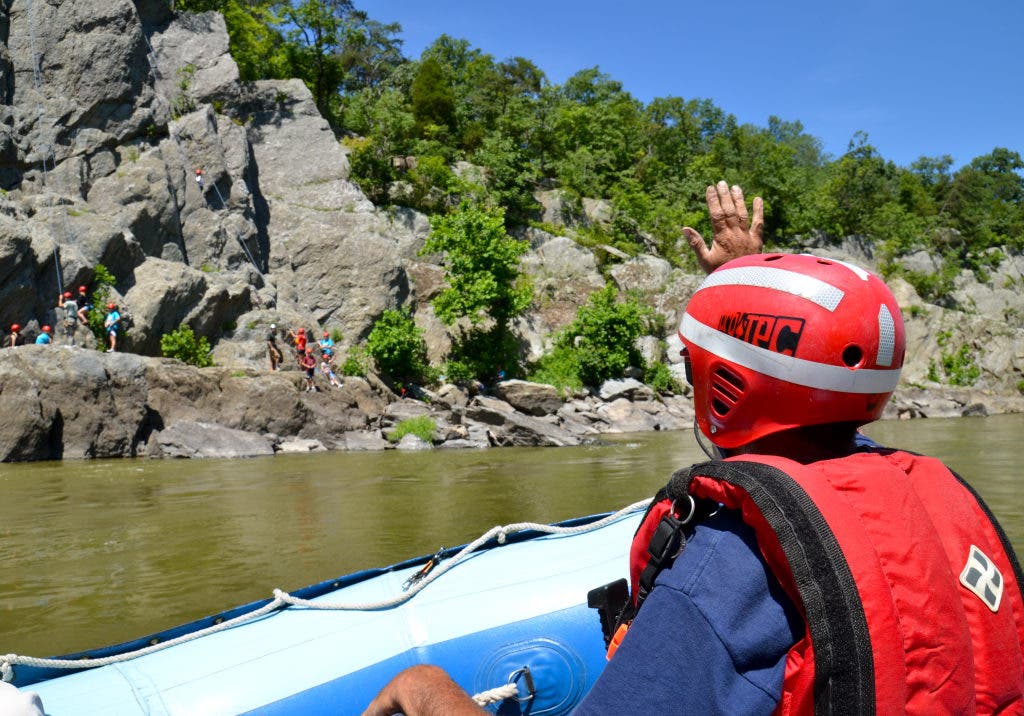
On a beautiful, sunny day Lt. Pat Mitchell positions himself at the bow of a small, inflatable boat directing Capt. Frank Doyle through the rocks and rapids of the Potomac River. Mitchell is a tall, mustached man with decades of experience under his belt. Underneath him the canvas of the boat ripples under the pressure of the water.
Today is a relatively calm day on the river. Its beauty is breathtaking. Bushels of trees highlighted by the sun reflect into the water. The bluffs of jagged rocks formed by millenniums of erosion serve as a rock climber's delight.
Find out what's happening in Potomacfor free with the latest updates from Patch.
But once Mitchell begins pointing out the ghosts of the river, its beauty becomes eerie.
“Two people died over there,” Mitchell says pointing to a small peninsula half a mile downstream of Difficult Run, aptly named due to the strong current at that point of the river.
Last summer a family was throwing a ball on the shore. The ball went into the water and the mother went to retrieve it.
According to Mitchell, the current in this section of the river spins in a circle, easily dragging people underwater.
"We found one body half a mile downstream and the other seven miles downstream," Mitchell said.
This story is repeated over and over as the boat makes its way through the rapids. A kayaker in Class 5 rapids fell from his boat and was never found — a man swept away by the current, Mitchell said.
The current in the Potomac River can be up to 20 mph on a regular day. Some parts reach up to 50 mph.
Doyle and Mitchell show a hardened reverence for the river. They are aware of its dangers, but can look past its record with optimism. Despite the morbidity of pulling waterlogged bodies from the river, these rescuers are committed to the highest standards of safety and welfare, according to Montgomery County Fire and Rescue Service's guiding principles.
According to Chief James P. Seavey, Station 10 makes 70 to 100 water rescues a year. The most frequent rescues are on the Billy Goat Trail. The trail parallels the river and is full of steep climbs and loose rocks. Due to the ruggedness of the trail it is easier to access injured climbers from the river than to walk along the trail.
Still, it takes precious time to extract the injured climber.
“You can take a sick person to the hospital in 15 minutes. But in a river call, it can take a couple of hours,” Mitchell said.
On the river, Mitchell and Doyle pull their boat ashore using a winch system attached to a trailer. . For now the river is safe.
The pattering of helicopter rotors and the rumble of boat engines in search of the missing are silent, though the ghosts of the river are still a constant reminder of strong undertows, fast currents and jagged rocks.