Neighbor News
Potomac Teen Beats Cancer Twice to Fulfill College Dreams
September is National Childhood Cancer Awareness Month. Read Marco's story to learn how he beat acute lymphoblastic leukemia.
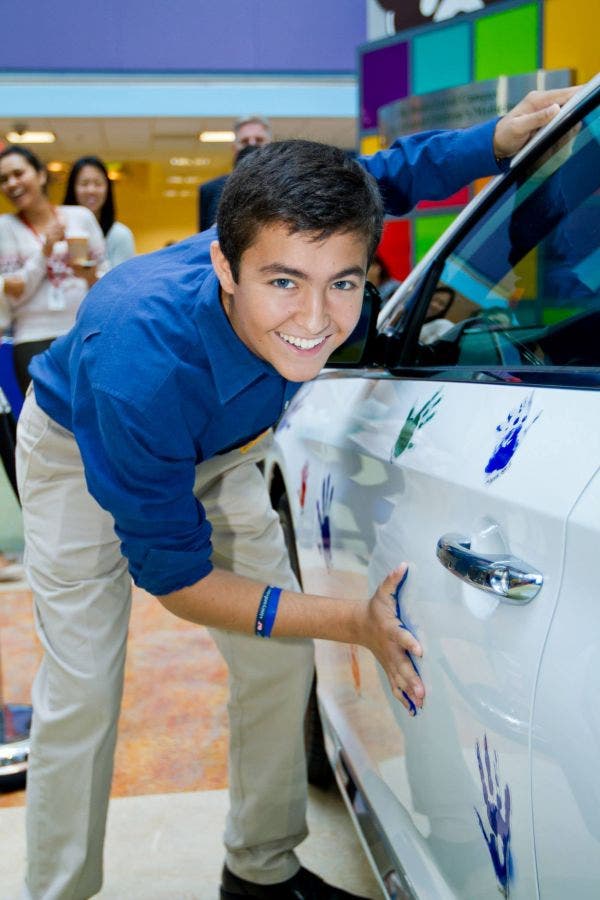
Marco Gutierrez, a 19-year-old from Potomac, Md., was enjoying dinner with family and friends after a University of Michigan football game when pain started to pulse through his chest and back. By the time dessert arrived, Marco’s pain was so strong that he and his mom headed straight for the emergency department at a nearby hospital.
After running tests, the physicians determined that his pain was caused by pericarditis, inflammation of the tissue surrounding his heart, but the tests also uncovered something much more alarming.
Years earlier at age 14, Marco’s doctors had diagnosed him with acute lymphoblastic leukemia (ALL). While leukemia is the most common form of childhood cancer with a five-year cure rate that has improved to 90 percent for most pediatric patients, Marco’s case was considered high-risk because of his age and the unique genetic makeup of his leukemia cells, requiring an intensive chemotherapy regimen. This treatment kept Marco in the hospital at numerous points during his freshman, sophomore, and junior years of high school – more than 500 days in total. By his senior year, however, Marco and his family believed the worst was behind him, and he was excited to attend the University of Michigan in the fall.
Find out what's happening in Potomacfor free with the latest updates from Patch.
On November 11, 2015, the new tests confirmed the cancer had returned. The following day, Marco and his mom flew back from Michigan and headed straight for Children’s National Health System and Shana Jacobs, MD, the oncologist at Children’s who had treated him during his first battle with the disease.
“He’s an amazing kid,” said Dr. Jacobs, recalling her time spent with Marco and his family. “Despite a number of setbacks during his first fight with cancer, he handled everything amazingly well. You always have a certain amount of worry that it would come back, but the more time that passed, the better we felt about it.”
Find out what's happening in Potomacfor free with the latest updates from Patch.
The moment Dr. Jacobs confirmed the cancer had returned, she and her colleague David Jacobsohn, MD, Division Chief of Blood and Marrow Transplantation at Children’s, knew chemotherapy and radiation treatments would not be enough to keep it from returning. Their next step in treatment was a bone marrow transplant (BMT).
Bone marrow is a soft, spongy tissue found inside bones. A bone marrow transplant involves taking healthy bone marrow cells from one person and transplanting them into another person after his or her own unhealthy bone marrow has been eliminated. Very few patients with ALL need a bone marrow transplant, but because Marco’s disease returned after aggressive earlier treatments, the doctors knew this was his best chance for cure.
Marco and his family waited two months for a bone marrow donor match, but on February 5, 2016, he received the transplant. While Marco experienced common bumps during recovery, his care team helped him enroll in a clinical trial that used a drug called abatacept to help ward off graft-versus-host disease. A frequent complication after BMT, graft-versus-host disease occurs when transplanted cells attack the recipient’s old cells. Dr. Jacobsohn credits this treatment, along with Marco’s determination, for helping to improve his outcome.
Despite needing to stay in isolation for months following the transplant, his University of Michigan classmates kept his spirits high, raising nearly $18,000 for his treatments during their basketball tournament – Marco Madness.
Now, just 200 days post-transplant, Marco is doing well and returned to college in early September.
“From the day I got sick, my number one goal was to go back to school – I didn’t think of anything else,” said Marco. Now that the day has arrived, he concludes, “I beat cancer twice. There’s nothing better than that.”