Schools
National Spotlight Shines on Goucher Prison Education Partnership
U.S. Education Secretary Arne Duncan, Attorney General Loretta Lynch announced grant program, with help from Goucher.


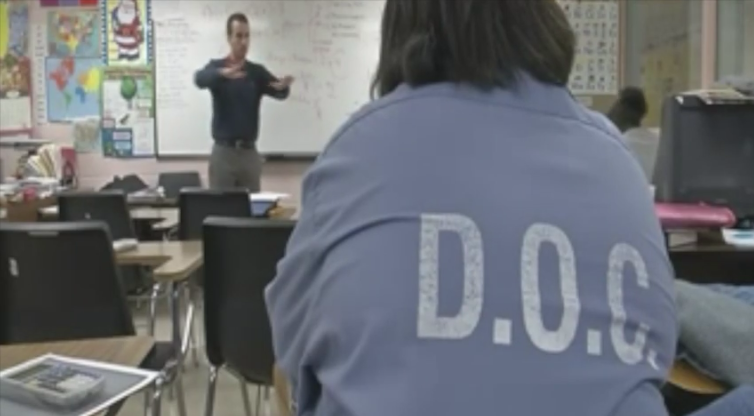
National leaders met in Jessup Friday to roll out an initiative they said could revolutionize the prison system through learning and save taxpayers money by reducing recidivism.
Goucher College helped host U.S. Secretary of Education Arne Duncan and Attorney General Loretta Lynch at a roundtable to announce the Second Chance Pell Pilot program, which will give inmates access to federal Pell grants.
Pell grants are provided by the federal government and do not need to be repaid.
Find out what's happening in Towsonfor free with the latest updates from Patch.
They were available to prisoners until 1994, when Congress barred incarcerated individuals from eligibility.
“Lifting the ban on Pell grants for a limited number of incarcerated students to pursue higher education is an important step forward as we seek to build avenues of opportunity from imprisonment to improvement,” Lynch said.
Find out what's happening in Towsonfor free with the latest updates from Patch.
“It can allow individuals to see themselves as more than their worst decision and encourage them to value themselves for what they can achieve,” Lynch said.
Goucher College has been providing free classes to inmates at the Maryland Correctional Institute for Women and Maryland Correctional Institute - Jessup through the Goucher Prison Education Partnership since 2012, according to Baltimore magazine.
In the program, Goucher professors teach courses inside the jails, holding incarcerated students to the same academic standards as pupils on the Towson campus, the magazine reported.
The program is offered at no cost to the inmates, through various partnerships and private donations, according to the college.
The initiative incorporates Goucher students, who visit the jails as tutors, Baltimore reported.
This year there are 70 students participating in the Goucher Prison Education Partnership, and national authorities are looking to the Goucher program as a model for success, according to WBAL.
A study funded by the U.S. Department of Justice found that inmates who participated in correctional education had recidivism rates 43 percent lower than their counterparts, officials said.
Duncan and Lynch announced the creation of a pilot program disbursing Pell grants to inmates, with priority given to those expected to be released in five years, to encourage more colleges and prisoners to participate in postsecondary education.
The U.S. has the highest incarceration rate worldwide, with 1.5 million individuals in prison, according to Duncan.
“Giving people who have made mistakes in their lives a chance to get back on track and become contributing members of society is fundamental to who we are–it can also be a cost-saver for taxpayers,” Duncan said.
“Pell grants cost less than $6,000 [a] year, [while] locking someone up is about $40,000. Where would we rather invest?” he asked. “As the President recently noted, for the money we currently spend on prison we could provide universal pre-k for every 3- and 4-year-old in America or double the salary of every high school teacher in the country.”
The deadline for postsecondary institutions to apply for the pilot program is Sept. 30, 2015. The program will begin with the 2016-2017 academic year.
Screenshot of Goucher class being held in Jessup prison from YouTube.
Get more local news delivered straight to your inbox. Sign up for free Patch newsletters and alerts.